

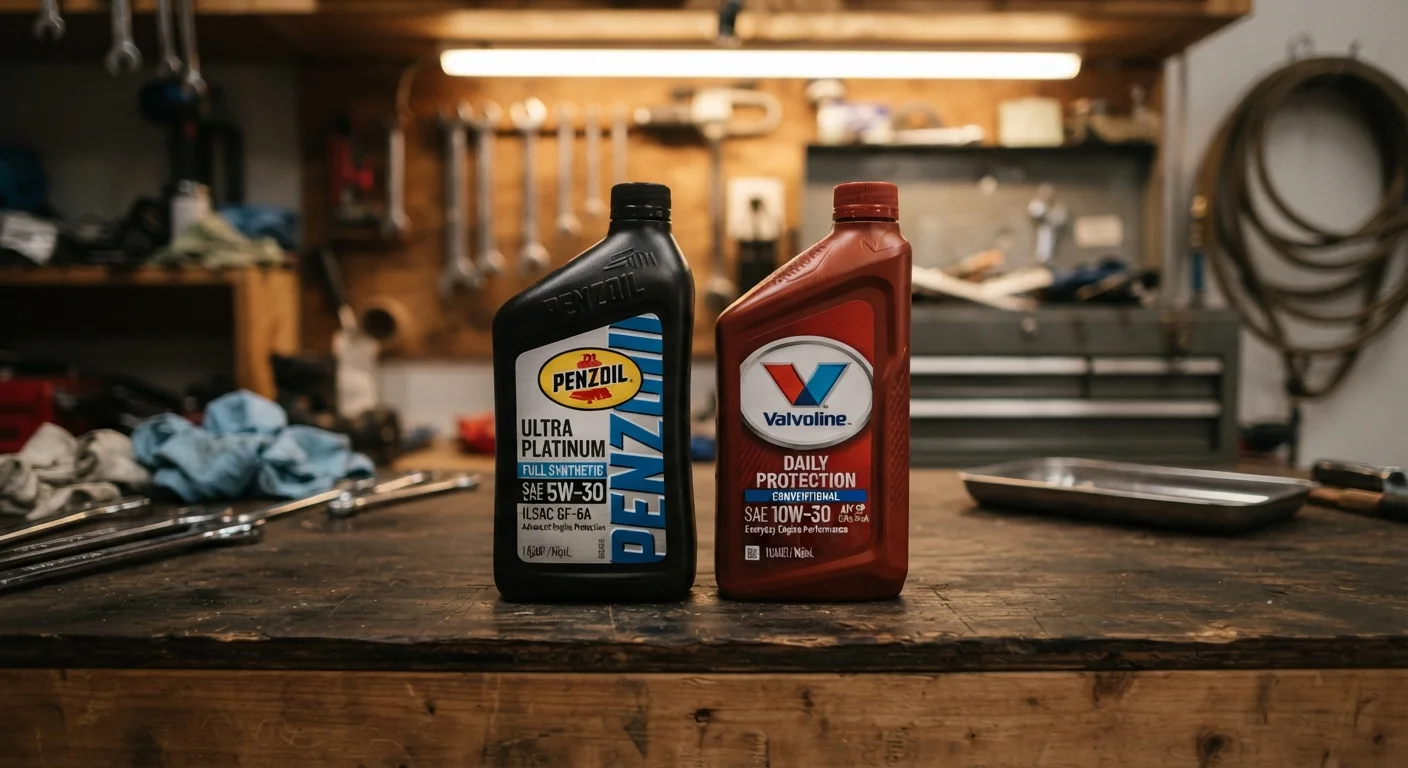
Key Takeaways
- Synthetic oil is chemically engineered for uniform molecules, while conventional oil is refined directly from crude petroleum.
- Synthetic oil generally lasts 7,500-15,000 miles per change; conventional oil typically requires changes every 3,000-5,000 miles.
- Synthetic oil costs more per quart but may save money over time through fewer oil changes and better engine protection.
- Always follow your vehicle manufacturer's oil specification - the owner's manual is the definitive source.
- Switching between oil types is generally safe, but consult your mechanic before changing an established routine on a high-mileage engine.
Option A
Synthetic Motor Oil
The engineered, high-performance option.
Best for: Drivers with newer vehicles, turbocharged engines, or those operating in extreme temperature conditions who want longer drain intervals.
Option B
Conventional Motor Oil
The time-tested, widely available standard.
Best for: Owners of older vehicles with simple engines and low-to-moderate mileage who follow frequent oil change schedules.
If you drive a newer vehicle with a turbocharged or high-performance engine
Synthetic Motor Oil
Turbocharged engines run hotter and require oil that resists breakdown under high stress. Most manufacturers of these engines specify full synthetic.
If you own an older vehicle with a simple, naturally aspirated engine and normal driving habits
Conventional Motor Oil
Conventional oil meets the basic lubrication needs of straightforward engines, and frequent changes keep it effective at a lower per-change cost.
If you drive in extreme cold winters or very hot climates
Synthetic Motor Oil
Synthetic oil flows better at low temperatures and holds its viscosity at high temperatures, protecting your engine during cold starts and summer heat.
If you want longer intervals between oil changes and less frequent maintenance
Synthetic Motor Oil
Synthetic oil is engineered to resist degradation longer, making extended drain intervals realistic when paired with a quality oil filter.
If you're managing a tight maintenance budget on an older, high-mileage vehicle
Conventional Motor Oil
Conventional oil is significantly less expensive per quart, and older engines with worn seals may actually perform better with its slightly thicker composition.
What Makes These Two Oils Different
Motor oil has one fundamental job: reduce friction between your engine's moving metal parts. Both synthetic and conventional oil do that, but they're made very differently - and those differences matter in real-world driving.
Conventional motor oil starts as crude petroleum pumped from the ground. Refiners remove impurities and add performance additives, but the base oil still contains naturally occurring molecules of varying shapes and sizes. That molecular inconsistency is what limits its performance range.
Synthetic motor oil is built from scratch in a lab. Chemists create uniform, purpose-designed molecules that flow predictably across a wider temperature range and resist breakdown under stress. The result is an oil that maintains its protective properties longer and more consistently than conventional alternatives.
A third option - synthetic blend oil - mixes both types. It's a middle-ground choice in both cost and performance, often recommended as a step up for vehicles that don't require full synthetic but would benefit from improved protection.
| Criterion | Synthetic Motor Oil | Conventional Motor Oil |
|---|---|---|
| Base material | Chemically engineered molecules | Refined crude petroleum |
| Typical change interval | 7,500-15,000 miles | 3,000-5,000 miles |
| Cost per quart | Higher (roughly 2-4x more) | Lower upfront cost |
| Cold-weather performance | Flows quickly at low temps | Thickens more in cold |
| High-heat stability | Resists breakdown under heat | Degrades faster under stress |
| Best engine type | Turbocharged, high-performance, newer | Older, naturally aspirated engines |
| Availability | Widely available | Universally available |
Performance, Longevity, and Real-World Cost
One of the most practical differences drivers notice is oil change intervals. Conventional oil generally calls for a change every 3,000 to 5,000 miles. Synthetic oil, depending on the formulation and your vehicle's demands, can last 7,500 to 15,000 miles between changes - though always verify the interval in your owner's manual rather than relying on generalizations.
3,000-5,000
Miles per conventional oil change
This is the range commonly cited by mechanics for vehicles using conventional oil under normal driving conditions.
7,500-15,000
Miles per full synthetic oil change
Many full-synthetic formulations are rated for extended intervals, though the right interval depends on your specific vehicle and manufacturer guidance.
~20%
Engine wear occurs during cold starts
Industry estimates suggest a significant portion of engine wear happens in the first moments after startup before oil fully circulates - where synthetic oil's flow advantage is most relevant.
Synthetic oil costs roughly two to four times more per quart at the point of purchase. However, when you factor in fewer oil changes per year, the annual cost difference can narrow substantially or even reverse. For example, a driver who changes conventional oil six times a year may spend comparably to one who changes synthetic oil twice - without accounting for labor savings.
Cold-weather performance is another meaningful distinction. At sub-freezing temperatures, conventional oil thickens and flows slowly on startup - a window of time when engine wear is disproportionately high. Synthetic oil's engineered molecules resist that thickening, reaching critical engine parts faster after a cold start.
How to Know Which One Your Engine Needs
The single most reliable guide is your vehicle's owner's manual. Manufacturers specify an oil viscosity grade - such as 5W-30 or 0W-20 - and often specify whether full synthetic is required. Ignoring that specification can affect engine warranty coverage and long-term reliability.
Several factors generally point toward synthetic oil:
- Turbocharged or supercharged engines, which run at higher internal temperatures
- Vehicles designed for extended oil-change intervals from the factory
- Driving in extreme heat or cold climates
- Towing, hauling, or frequent stop-and-go traffic that stresses oil faster
Conventional oil may remain appropriate if:
- Your manufacturer explicitly approves it for your engine
- Your vehicle has high mileage and has run on conventional oil throughout its life
- You maintain a disciplined, frequent change schedule
High-Mileage Engines: A Special Consideration
Vehicles with over 75,000 miles may have slightly worn seals and gaskets that have expanded to fit conventional oil's characteristics over time. Switching abruptly to full synthetic on these engines can, in some cases, cause minor seal leaks due to synthetic oil's different cleaning and flow properties. This doesn't mean synthetic is harmful - but it's worth discussing with a mechanic who knows your vehicle's history before making the switch.
If you're uncertain, a qualified mechanic can review your vehicle's service history and driving conditions to help you make the right call - especially before switching oil types on a high-mileage engine.
This article is for general informational purposes only. Always consult your vehicle's owner's manual and a qualified mechanic for maintenance decisions specific to your engine and driving conditions.