

Key Takeaways
- Attic insulation slows heat transfer, directly affecting comfort and energy use in every season.
- R-value measures insulating power; higher numbers mean better performance.
- Common insulation types include fiberglass batts, blown-in cellulose, and spray foam.
- Insulation degrades over time due to moisture, pests, settling, and age.
- Signs of underperforming insulation include uneven room temperatures and high energy bills.
- Adding more insulation is often a DIY-friendly project, but some situations call for a professional.
Attic Insulation
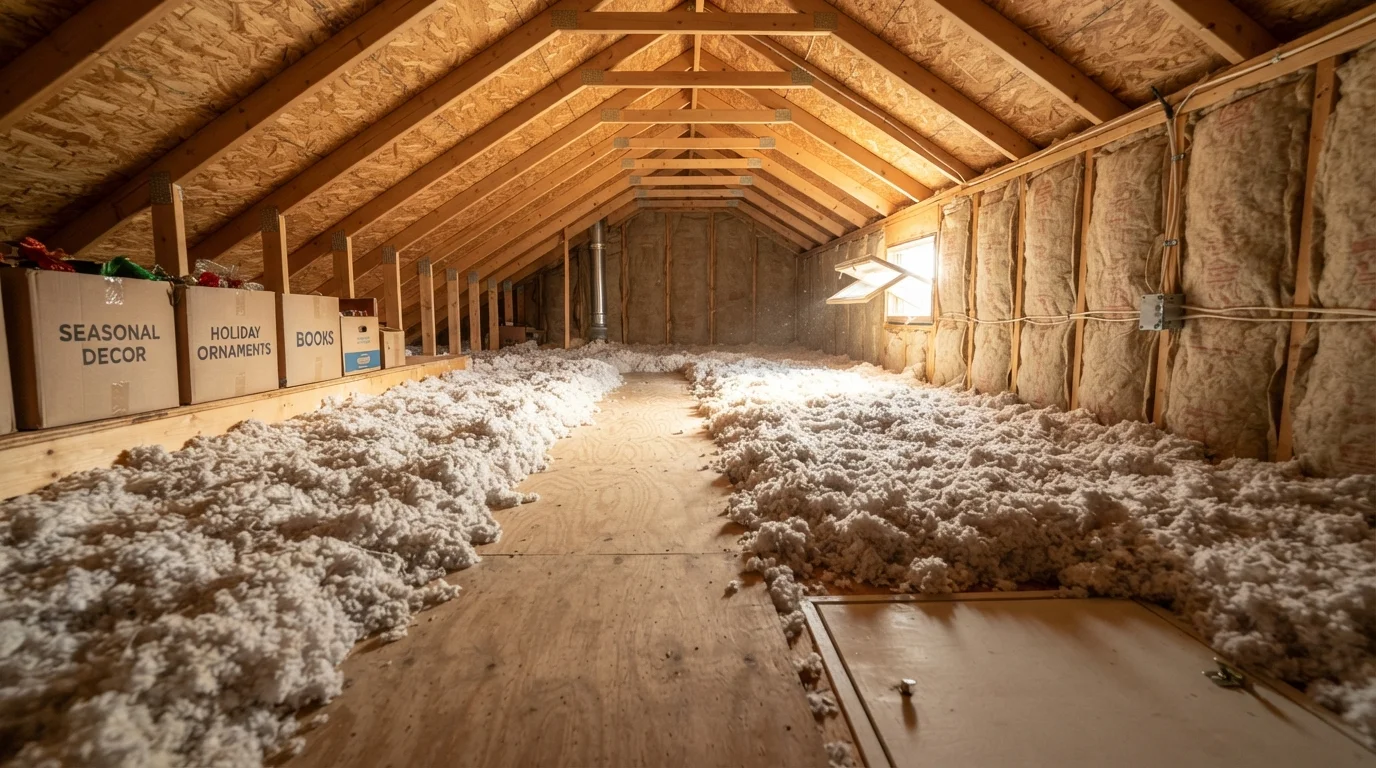
Attic insulation is a layer of material installed in your attic to slow the movement of heat between your living space and the outdoors. In winter, it keeps warm air from escaping through the ceiling; in summer, it blocks outdoor heat from pushing down into your home. The better it performs, the less your heating and cooling system has to work.
Performance is measured in R-value — a rating of thermal resistance. Higher R-values indicate greater resistance to heat flow. The U.S. Department of Energy recommends R-38 to R-60 for attics in most American climate zones.
How Attic Insulation Works
Heat always moves from warmer areas toward cooler ones — a principle that works against you every season. In winter, the warm air your furnace generates rises toward the ceiling and tries to escape through the attic. In summer, solar-heated air in your attic presses downward into your living space. Insulation slows both of those processes.
The material itself doesn't generate warmth. Instead, it traps millions of tiny air pockets that resist heat flow. The thicker and denser the insulation layer, the harder it is for heat to pass through — and the less work your HVAC system has to do to maintain a comfortable temperature.
R-value is the standard measure of that resistance. Every insulation product carries an R-value rating, and the higher the number, the better the material performs. A 6-inch layer of fiberglass batt typically provides around R-19, while 12 inches of blown-in cellulose might reach R-44. For a full comparison of insulation materials and their typical R-values, see our guide to insulation types.
R-38 to R-60
Recommended attic R-value for most U.S. climate zones
According to U.S. Department of Energy guidance for residential attics across American climate zones.
130°F+
Typical peak summer attic temperature
Poorly ventilated and underinsulated attics commonly reach these temperatures, increasing cooling loads significantly.
~11%
Share of home heating/cooling loss through the ceiling
The U.S. Department of Energy estimates ceiling and attic heat loss accounts for a meaningful portion of a home's overall thermal inefficiency.
Why Attic Insulation Degrades Over Time
Insulation is not a one-time installation that performs indefinitely. Several factors chip away at its effectiveness over the years:
- Settling: Loose-fill insulation — blown-in cellulose or fiberglass — naturally compresses over time. A settled layer may look thick but delivers less R-value than when it was first installed.
- Moisture damage: Roof leaks, condensation from poor ventilation, or bathroom exhaust fans vented into the attic (rather than outside) can soak insulation. Wet insulation loses most of its thermal resistance and can harbor mold.
- Pest activity: Rodents tunnel through batt insulation to build nests, leaving gaps and compacted areas. Their waste also creates health and contamination concerns that may require full removal.
- Air movement: Insulation works best in still air. If your attic has air leaks around light fixtures, plumbing penetrations, or the attic hatch, warm air bypasses the insulation entirely — a problem called thermal bridging or bypassing.
Air sealing is closely connected to insulation performance. Our article on caulk, grout, and weatherstripping explains how sealing gaps in your building envelope supports the work your insulation does.
Air Seal Before You Insulate
Adding insulation on top of air leaks is like piling blankets on a drafty window — it helps, but not nearly as much as fixing the source. Before adding any new insulation, spend time identifying and sealing gaps around ceiling penetrations, attic hatches, and top plates with caulk or low-expansion spray foam. This step dramatically improves the return on your insulation investment.
Signs Your Attic Insulation Is Underperforming
Attic insulation problems often show up as comfort issues before they appear as visible damage. Watch for these indicators:
- Uneven room temperatures: Rooms on the top floor feel noticeably warmer in summer or colder in winter than rooms lower in the house.
- Higher-than-usual energy bills: If your heating or cooling costs have crept upward without a clear explanation, degraded or insufficient insulation is a common culprit.
- Ice dams in winter: In cold climates, ice dams form along roof edges when heat escaping through the attic melts snow, which then refreezes at the cooler eaves. They're a strong indicator of heat loss through an underinsulated attic.
- Cold ceilings: Run your hand along your ceiling on a cold day. If it feels noticeably cold to the touch, heat is escaping upward.
- Visible thin or patchy insulation: A quick look into your attic with a flashlight can reveal obvious thin spots, bare areas, or compressed sections.
When and How to Add More Insulation
Adding insulation to an attic floor is one of the more approachable home improvement projects for a confident DIYer. Blown-in insulation requires renting a blower machine (often available where the insulation is purchased), while batt insulation can be cut to fit with a utility knife and straightedge.
Before adding new insulation, always:
- Inspect existing insulation for moisture, mold, or pest damage. Address those problems first.
- Seal air leaks around recessed lights, plumbing stacks, electrical boxes, and the attic hatch with appropriate caulk or spray foam.
- Ensure attic ventilation is working properly. Blocking soffit vents with insulation can cause moisture buildup.
Work in a well-ventilated space, wear an N95 respirator, eye protection, and gloves. Attic temperatures can be extreme — schedule the work for a mild day and limit time in the attic if heat is a concern.
Some situations call for a licensed insulation contractor: cathedral ceilings, finished attic conversions, spray foam applications, and any space with suspected mold or significant structural concerns. If you're weighing a full attic conversion, our article on attic conversion planning covers the structural and thermal factors involved.
Permits and Local Codes May Apply
In most jurisdictions, adding insulation to an existing attic floor does not require a permit. However, rules vary by municipality, and any work tied to a larger renovation or attic conversion may trigger inspection requirements. Check with your local building department before starting, especially if you're also altering electrical, HVAC, or structural elements in the attic.