

Key Takeaways
- Passive reading rarely leads to lasting retention - active engagement with text is essential.
- Techniques like the SQ3R method and self-questioning improve comprehension and recall.
- Spaced review and retrieval practice after reading dramatically strengthen long-term memory.
- Brief written summaries in your own words are among the most effective post-reading habits.
Why Passive Reading Fails Most Learners
Reading through a chapter and absorbing very little of it is one of the most common frustrations in education - at any age. The problem isn't concentration or intelligence; it's method. Most people were never taught to read for retention, only for completion.
Passive reading - moving your eyes across lines without deliberate engagement - keeps cognitive load low. That feels easier in the moment, but it produces shallow encoding. The material barely makes it into working memory, let alone long-term storage.
Retention vs. Familiarity: Know the Difference
Finishing a reading and feeling like you understood it is not the same as being able to recall or apply it later. This sense of familiarity - sometimes called the fluency illusion - can make passive rereading feel productive when it rarely is. Awareness of this gap is the first step toward choosing strategies that actually work.
Understanding why passive reading falls short is the foundation for choosing better techniques. For a deeper look at the science behind memory and learning, see key learning science concepts every student should understand.
Active Reading Practices That Build Retention
Retention isn't about reading more slowly or more carefully - it's about reading more actively. The following practices shift reading from a passive experience into a deliberate mental workout. Each one is grounded in established learning research.
Survey the material before you read a single sentence
Previewing headings, subheadings, figures, and summaries gives your brain a framework to slot new information into. Cognitive science refers to this as schema activation - prior structure makes new content easier to encode and retain.
Convert headings into questions before you read each section
Turning a heading like 'The Water Cycle' into 'How does the water cycle work, and what drives it?' gives you a purpose for reading. This technique - central to the SQ3R method - keeps your attention focused and activates curiosity, which improves encoding.
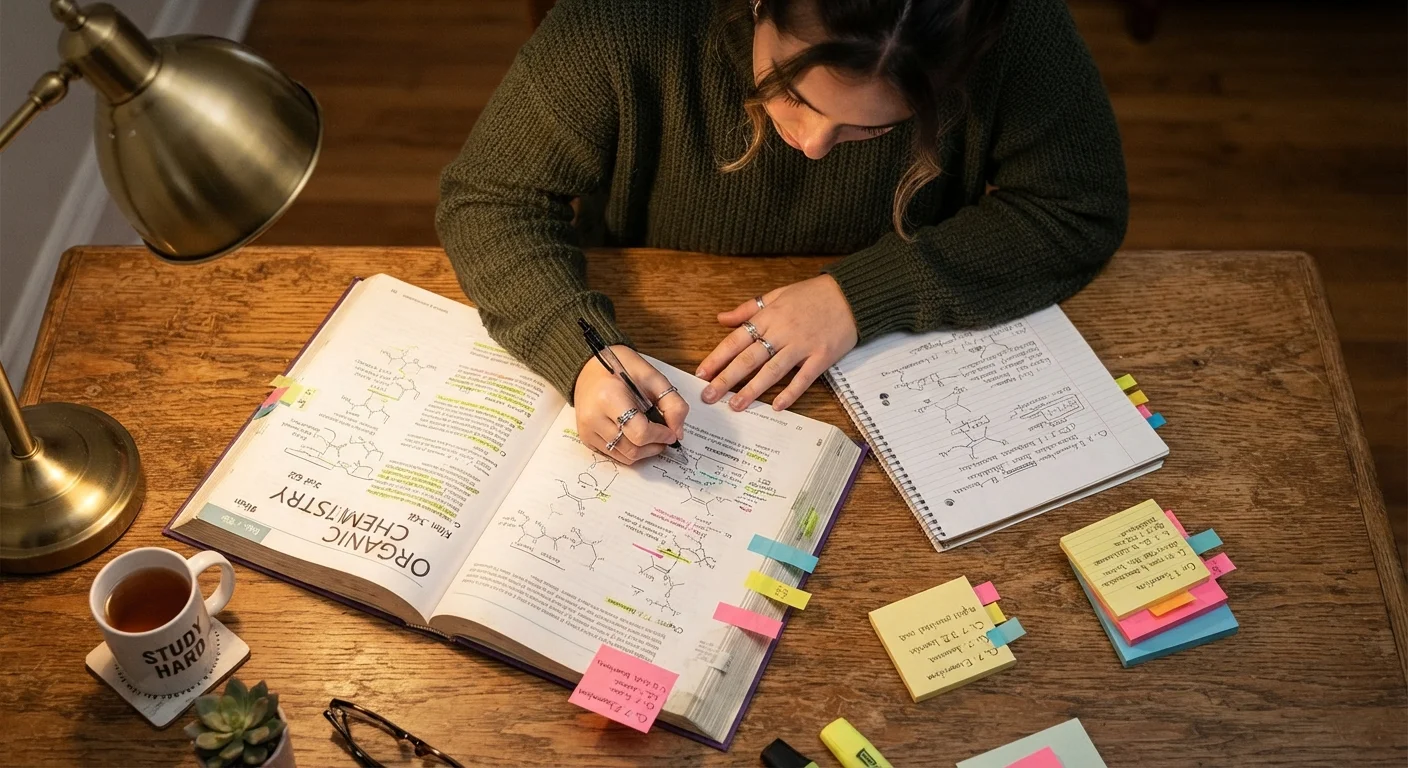
Annotate actively using your own words, not just highlights
Highlighting creates an illusion of engagement while requiring little mental processing. Writing brief margin notes or paraphrasing key ideas forces you to interpret the material - a cognitively demanding step that strengthens memory traces.
Write a brief summary from memory immediately after finishing a section
Closing the book and writing what you remember - even imperfectly - is a form of retrieval practice. Research consistently shows that retrieving information strengthens it more than re-exposure does. This is sometimes called the testing effect.
Return to the material at spaced intervals rather than in one sitting
Spaced repetition leverages the forgetting curve: reviewing content just before it fades from memory significantly strengthens long-term retention compared to massed, single-session study.
These practices integrate naturally into any study routine. If you're building consistent habits around them, structuring your study session intentionally makes a meaningful difference.
Quick Starting Points You Can Use Today
You don't need to overhaul your entire study approach at once. Start with one or two of these targeted actions during your next reading session and build from there.
Consistency matters more than perfection. Pairing these habits with a broader learning routine - like those outlined in building a learning habit that actually sticks - helps them become automatic over time.
“The key to memory is meaning. We remember best when we understand deeply, connect new information to what we already know, and actively engage with the material rather than passively receiving it.”
— Henry Roediger III, Memory researcher and co-author of 'Make It Stick: The Science of Successful Learning'
For learners who want to extend these principles beyond reading, active recall techniques offer a powerful complement to active reading.
~50%
Information forgotten within an hour of reading
Research building on Ebbinghaus's forgetting curve suggests roughly half of new information is lost within 60 minutes without active review strategies.
2x
Retention improvement from retrieval practice vs. rereading
Multiple studies in cognitive psychology have found that self-testing after reading approximately doubles long-term retention compared to passive re-reading alone.