

Key Takeaways
- The 'eight glasses a day' rule has no firm scientific basis and varies widely by individual.
- Coffee and tea in moderate amounts contribute to daily hydration, not dehydration.
- Thirst is a reliable hydration signal for most healthy adults.
- Food contributes roughly 20% of daily fluid intake for the average American.
- Overhydrating carries real risks - more water is not always better.
Why Hydration Advice Gets So Muddled
Americans are surrounded by hydration guidance - from fitness apps nudging hourly water reminders to labels on water bottles implying a magical daily target. Much of this advice is well-intentioned but loosely grounded in science. Hydration is genuinely important: water supports virtually every body system, from temperature regulation to joint lubrication to nutrient transport. But the specific rules most people follow are often oversimplified or outright inaccurate.
Part of the problem is that rigid numbers are easy to communicate and remember. "Drink eight glasses a day" fits on a refrigerator magnet. The nuanced truth - that needs vary by person, activity, diet, and climate - does not. The result is a landscape of myths that lead some people to chronically under-drink, others to over-drink, and most to feel vaguely guilty about their habits.
Myth
Everyone needs exactly eight 8-ounce glasses of water per day.
Fact
Fluid needs vary significantly by body size, activity level, climate, and diet - no single number fits all adults.
The "8x8" rule is one of the most repeated health guidelines in the U.S., but it lacks a strong evidence base. The National Academies of Sciences, Engineering, and Medicine suggests general adequate intake levels of about 3.7 liters per day for men and 2.7 liters for women - but these totals include fluids from all food and beverages, not just plain water. A sedentary person in a cool climate has meaningfully different needs than someone doing outdoor labor in summer heat. Factors like kidney function, medications, and certain health conditions also shift requirements. Rather than chasing a fixed number, most healthy adults are better served by drinking when thirsty and monitoring their urine color - pale yellow is generally a good indicator of adequate hydration.
Myth
Coffee and caffeinated drinks dehydrate you.
Fact
Moderate caffeine consumption does not cause net fluid loss; caffeinated beverages count toward your daily fluid intake.
Caffeine is a mild diuretic, meaning it can increase urine output slightly. However, research consistently shows that the fluid you take in with a cup of coffee or tea more than compensates for this effect - particularly at typical consumption levels. A review published in PLOS ONE found that moderate coffee intake produced hydration outcomes comparable to water in habitual consumers. This doesn't mean unlimited caffeine is harmless - very high doses can cause other issues - but a few cups of coffee per day is not draining your body's water reserves. See our nutrition myth-busting guide for related misconceptions worth revisiting.
Myth
If you feel thirsty, you're already dangerously dehydrated.
Fact
Thirst is a normal, functional signal - not a sign of a hydration emergency in healthy adults.
This belief has caused many people to drink far more than their bodies require, out of fear that thirst itself is a warning sign. In reality, thirst is simply the body's way of signaling that fluid replenishment is due - much like hunger signals the need for food. For most healthy, non-elderly adults, the thirst mechanism is quite reliable. The situation is somewhat different for older adults, whose thirst sensitivity can diminish with age, making proactive sipping more important. Similarly, during intense exercise or extreme heat exposure, waiting for thirst may be less reliable. But for everyday life, trusting your thirst is a reasonable and evidence-supported strategy.
Myth
You can only stay hydrated by drinking plain water.
Fact
Beverages like milk, herbal tea, and juice, along with water-rich foods, all meaningfully contribute to hydration.
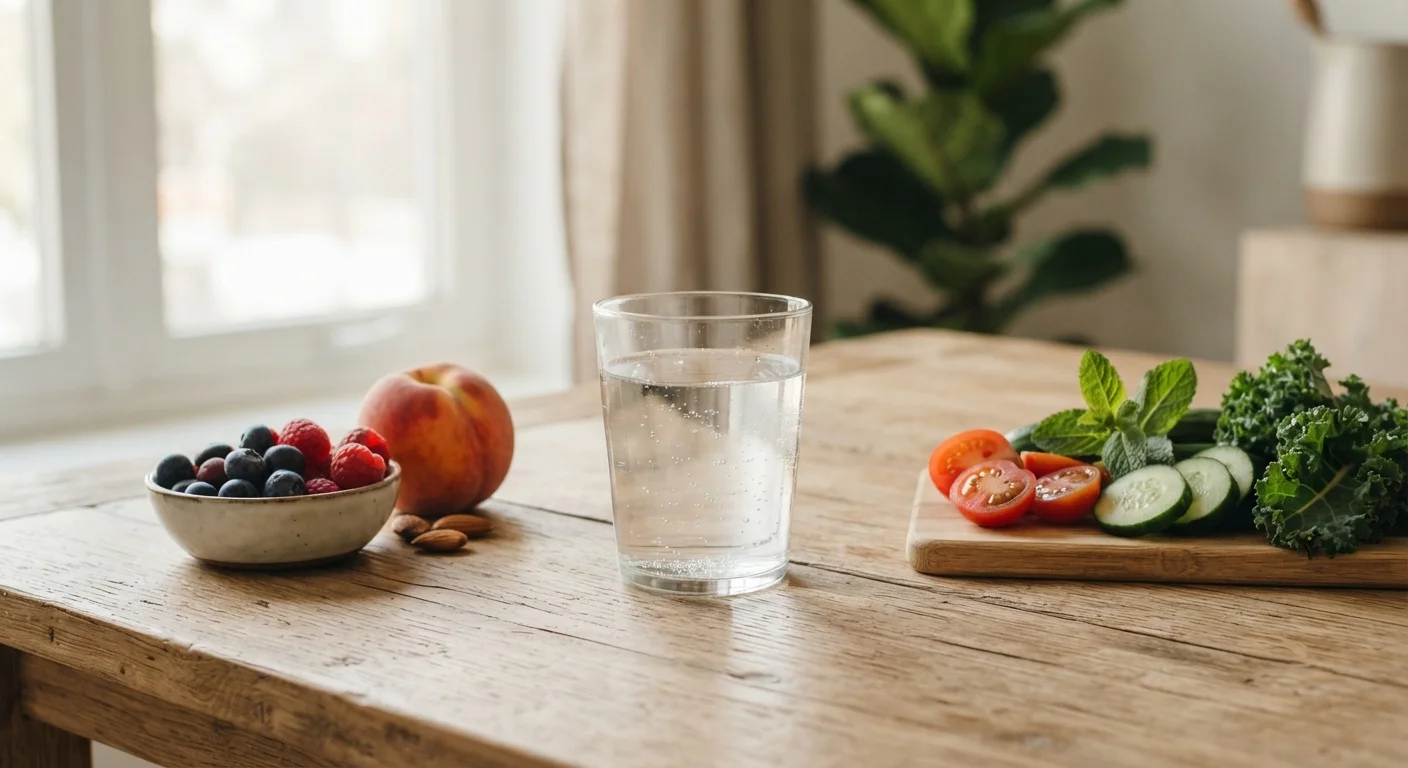
Plain water is an excellent choice, but it is far from the only path to hydration. Fruits and vegetables - particularly cucumbers, watermelon, strawberries, and celery - have water content above 90% by weight and contribute substantially to daily fluid balance. Research suggests that food accounts for roughly 20% of total daily water intake for the average American. Soups, smoothies, milk, and herbal teas are also effective hydration sources. Understanding this is especially useful for people who struggle to drink enough plain water. You can explore this further in our article on how food affects your water balance.
Myth
Drinking more water is always better for your health.
Fact
Overhydration, or hyponatremia, is a real and potentially serious condition caused by drinking excessive amounts of water.
Water is essential, but the body has limits on how quickly it can process and excrete fluid. Drinking very large amounts of water in a short period can dilute sodium levels in the blood, a condition called hyponatremia. Symptoms range from nausea and headache to, in severe cases, seizures or loss of consciousness. This risk is most common in endurance athletes who drink heavily without replacing electrolytes, but it can occur in others who dramatically over-consume water. Health authorities do not recommend drinking far beyond thirst in the belief that "extra" water provides extra benefit - the kidneys can only filter a limited volume per hour.
What Actually Signals Good Hydration
Rather than tracking ounces, a few practical signals are more useful guides. Urine color is one of the most reliable: pale straw-yellow generally indicates adequate hydration, while consistently dark yellow or amber suggests you may need more fluids. Clear urine all day, on the other hand, can indicate over-drinking.
Energy levels, skin elasticity, and the absence of persistent headaches can also reflect hydration status - though these are less specific indicators and can be influenced by many factors. The key insight is that for most healthy adults, the body's own feedback system is reasonably trustworthy when you pay attention to it.
Overhydration Is a Real Risk
Drinking excessive amounts of water in a short period can dangerously dilute blood sodium levels, causing hyponatremia. This risk is highest during prolonged endurance exercise when water is consumed without electrolyte replacement. If you experience nausea, confusion, or swelling after heavy water intake, seek medical attention promptly. More water is not automatically more protective.
Just as understanding what is actually in your diet matters for broader health, so does understanding what counts as hydration. As the nutrition myths article discusses, many health beliefs feel intuitive but don't hold up to scrutiny.
This article is for general informational purposes only and is not a substitute for personalized medical advice. If you have concerns about your fluid intake, kidney function, or any related health condition, consult a qualified healthcare professional.