

Key Takeaways
- Blue light from screens can suppress melatonin, but individual sensitivity varies considerably.
- The content you consume - stimulating vs. passive - may matter as much as the light itself.
- Brightness, distance, and duration of use all influence how much screens affect sleep.
- Practical adjustments like reducing brightness and enabling night mode can lower the impact.
- A consistent sleep schedule may buffer some of the effects of occasional evening screen use.
- No single habit change guarantees better sleep; a combination of small adjustments tends to work best.
Blue Light and Sleep Disruption
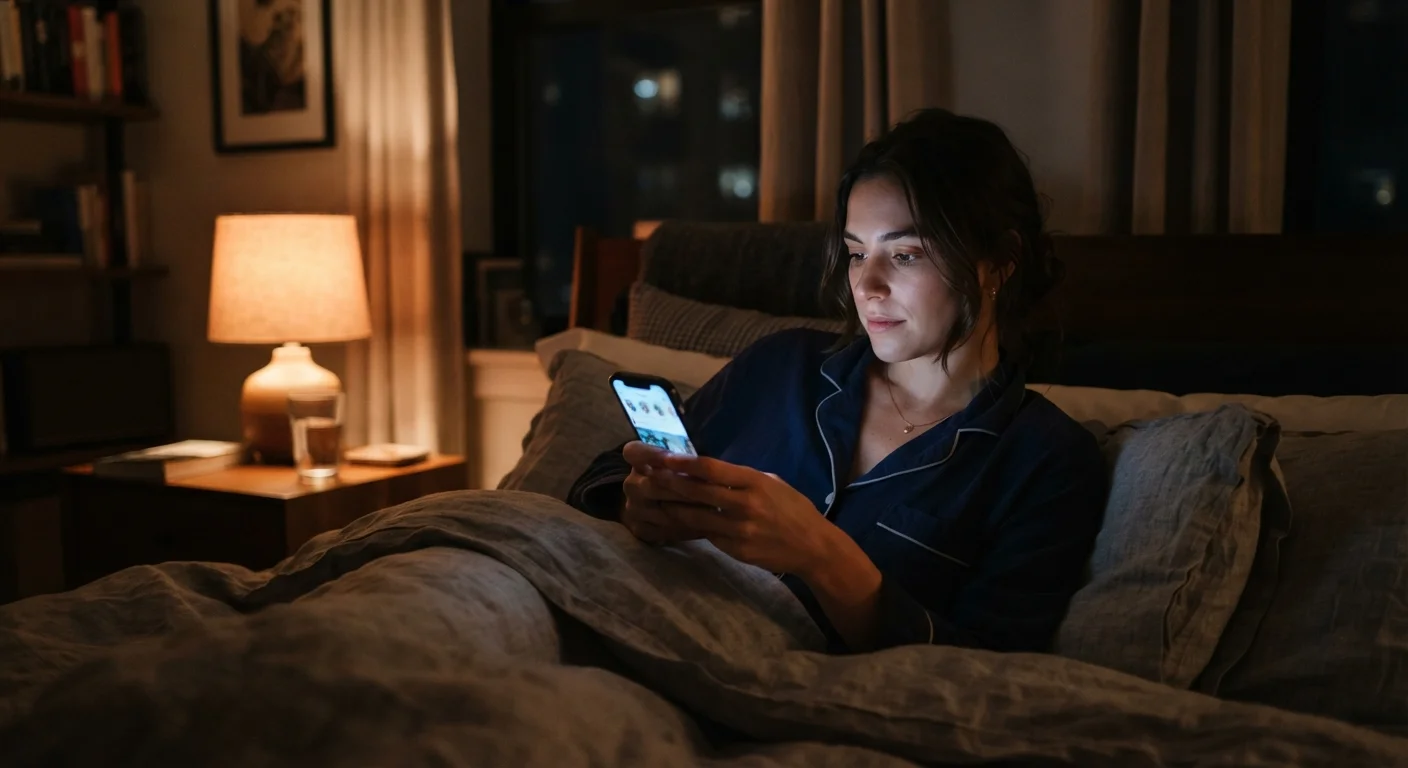
Blue light is a high-energy wavelength emitted by phones, tablets, and computer screens. When your eyes are exposed to it in the evening, it can suppress the production of melatonin - the hormone that signals your body it's time to sleep. This can make it harder to fall asleep and may reduce sleep quality. The degree of disruption depends on factors like screen brightness, how close the screen is to your eyes, and your individual sensitivity.
Melatonin suppression from blue light is mediated primarily by intrinsically photosensitive retinal ganglion cells (ipRGCs), which are particularly sensitive to short-wavelength light in the 460-480 nm range.
What the Research Actually Says
The idea that screens ruin sleep has become conventional wisdom - but the science behind it is more textured than a blanket ban suggests. Studies have confirmed that blue light from device displays does interfere with melatonin production, particularly in the hour or two before your natural sleep window. A frequently cited study published in PNAS found that reading on a light-emitting device before bed delayed melatonin onset and reduced next-morning alertness compared to reading a printed book.
However, researchers have also noted that the magnitude of the effect depends heavily on screen brightness, room lighting, and duration of exposure. Staring at a phone at full brightness in a dark room for two hours is meaningfully different from using a dimmed tablet for 20 minutes in a well-lit room. Context matters.
It's Not Just the Light
Researchers increasingly emphasize that psychological arousal from screen content - news alerts, social comparison, engaging video - contributes to sleep disruption independently of blue light. Even a screen with a perfect night filter can delay sleep if the content keeps your mind activated. What you're watching or reading matters alongside how bright the screen is.
Content type is another variable that researchers are increasingly examining. Passively browsing low-engagement material may be less disruptive than watching fast-paced video or engaging in emotionally charged social media - both of which elevate arousal and make it harder to transition to sleep regardless of the light involved.
The Melatonin Mechanism - and Its Limits
Melatonin is produced by the pineal gland and rises naturally as light dims in the evening, signaling the body that sleep is approaching. Blue-wavelength light - abundant in LED-backlit screens - tells the brain it's still daytime, delaying that rise. This is the core biological mechanism behind screen-related sleep concerns.
~90%
Adults who use a device in the hour before bed
National Sleep Foundation surveys have consistently found that a large majority of American adults use an electronic device in the hour before sleep.
1.5 hrs
Average melatonin delay from evening screen use
Research published in PNAS found that reading on a light-emitting device before sleep delayed melatonin onset by approximately 1.5 hours compared to reading a printed book.
460-480 nm
Blue light wavelength most disruptive to melatonin
This short-wavelength range is most effective at activating the retinal cells that suppress melatonin production, according to circadian biology research.
That said, melatonin suppression is not the whole story. Individual sensitivity varies substantially: some people show a significant delay in melatonin onset from just 30 minutes of screen exposure, while others are less affected. Age, genetics, and existing sleep habits all play a role. This is why a one-size-fits-all rule is difficult to apply and why researchers tend to recommend adjustments rather than absolute cutoffs.
For a broader look at how evening habits interact with your stress levels and overall wellbeing, see how morning and evening routines shape daily stress.
Practical Adjustments That Evidence Supports
Rather than demanding a cold-turkey device ban, sleep researchers tend to point toward a cluster of low-friction adjustments that can meaningfully reduce impact:
- Lower screen brightness. Reducing brightness - especially in a dark room - substantially cuts blue light exposure. Most devices allow automatic brightness adjustment based on ambient light.
- Enable night mode or a warm color filter. These settings shift the screen's output toward longer, warmer wavelengths in the evening. The benefit is real, if modest.
- Increase viewing distance. Light intensity drops sharply with distance. Holding a phone closer than 12 inches concentrates exposure; moving it further away helps.
- Wind down content before you wind down the device. Switching to lower-stimulation material - a podcast, a calm show, or simple reading - in the final 30 minutes may reduce arousal even if the screen remains on.
- Protect the last 20-30 minutes. If there's one habit the evidence consistently supports, it's creating some buffer between active screen use and lights-out. It doesn't need to be an hour.
For a structured approach to the full evening, our evening wind-down checklist offers a practical, evidence-informed sequence of habits to try.
Try a 20-Minute Buffer, Not a Full Ban
If eliminating screens before bed feels unrealistic, start smaller. Aim to put down your device at least 20 minutes before you want to fall asleep - with brightness already lowered in the 30 minutes before that. Small, consistent changes tend to be more sustainable than strict rules that rarely stick.
Keeping It in Perspective
Screen time before bed is a real factor in sleep quality - but it's one variable among several. Sleep schedule consistency is considered by many researchers to be equally or more important than any single evening behavior. Caffeine timing, room temperature, stress levels, and overall sleep debt all interact with whatever you're doing on your phone.
The goal isn't perfection. It's making incremental adjustments that reduce friction at bedtime without requiring a wholesale lifestyle overhaul. For most people, dimming the screen, winding down the content, and protecting a short pre-sleep buffer will make a more meaningful difference than eliminating devices entirely - especially since the latter is rarely sustainable.
If you're noticing persistent difficulty falling or staying asleep, that's worth discussing with a healthcare professional. General information about sleep hygiene is not a substitute for personalized medical evaluation.
This article is for general informational purposes only and does not constitute medical advice. Always consult a qualified healthcare professional for concerns about your sleep or health.