

Key Takeaways
- Prolonged sitting is linked to increased health risks independent of overall exercise habits.
- Short movement breaks every 30-60 minutes can help offset the effects of extended sitting.
- Simple habit anchors - like standing during calls - make consistent breaks easier to maintain.
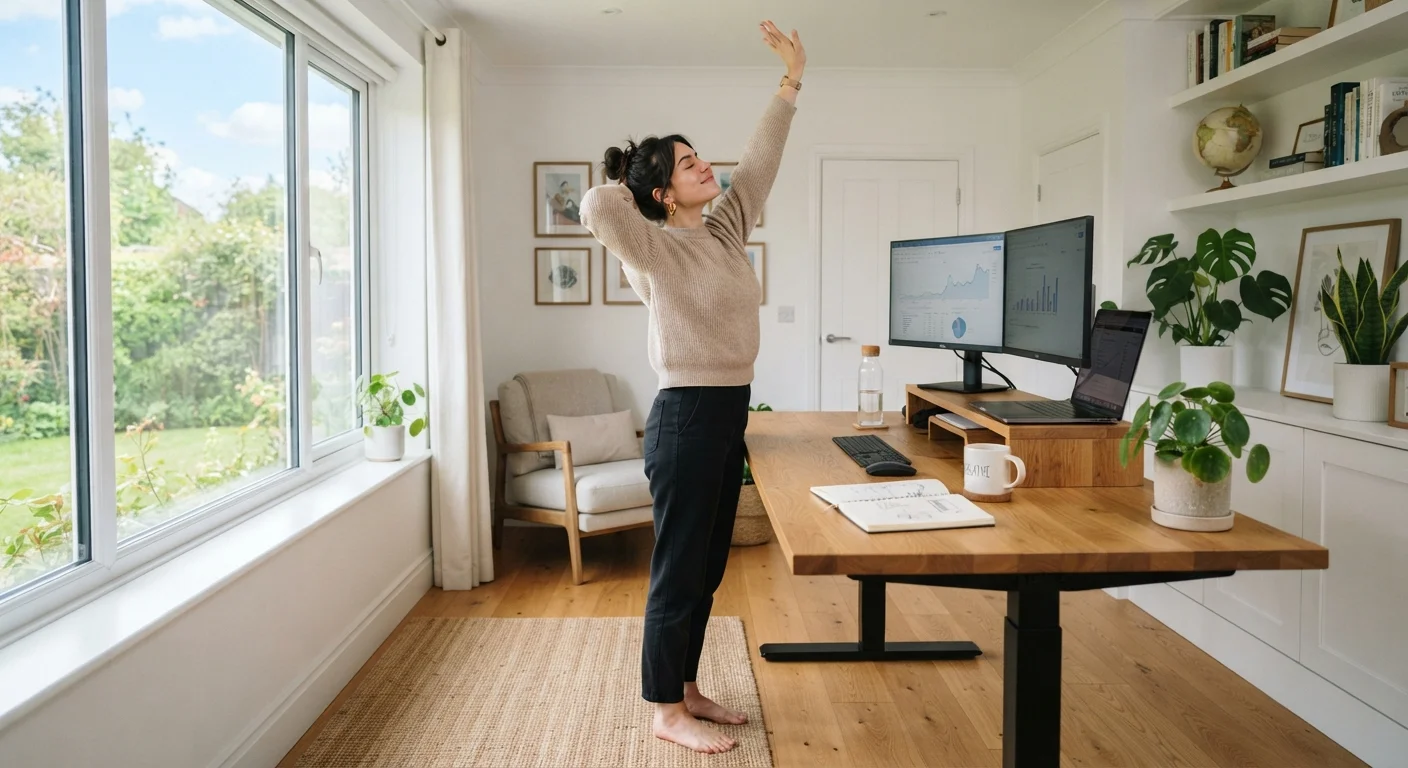
- You don't need a standing desk or gym membership to meaningfully reduce sedentary time.
- Pairing movement breaks with other daily habits improves long-term adherence.
What you will need
Why Sitting Duration Matters Beyond Exercise
Public health researchers have drawn a consistent distinction between being physically active and avoiding prolonged sedentary behavior - and the two don't always overlap. Someone can meet general exercise recommendations and still spend the majority of their waking hours seated. Evidence from large observational studies suggests that extended, unbroken sitting is independently associated with elevated risks for cardiovascular issues, metabolic disruption, and musculoskeletal discomfort, regardless of whether a person exercises regularly.
More Exercise Doesn't Cancel Out Sitting
Research suggests that a single gym session does not fully counteract the metabolic effects of sitting for eight or more hours a day. Frequent, distributed movement throughout the day appears to matter on its own terms - not just as something offset by a workout.
The practical implication is that small, frequent movement breaks distributed across the day serve a different function than a morning run or an evening gym session. Both matter, but they address different aspects of how the body responds to sustained stillness. For more on how daily movement connects to mental and physical wellbeing over time, see Everyday Habits and Long-Term Health: A Complete Overview.
This Is General Information, Not Medical Advice
The guidance in this article is intended for general educational purposes only and is not a substitute for personalized advice from a qualified healthcare professional. If you have a chronic health condition, injury, or concerns about your activity level, consult your doctor before making significant changes to your daily movement habits.
What You'll Need Before You Start
Getting started requires very little. Most movement strategies described here work with whatever space and equipment you already have at home or in a typical office environment.
What you will need
A timer is the most consistently useful tool, since memory alone rarely sustains new habits past the first few days. Other items can be added gradually if they help.
Timer or Phone Alarm
Set recurring reminders every 30-60 minutes to prompt a movement break without relying on memory.
Standing Mat
Provides cushioning if you plan to stand at a counter or desk for extended periods.
Wireless Headset or Earbuds
Allows you to walk or stand freely during phone or video calls without being tethered to your desk.
Step-by-Step: Building Movement Into Your Existing Day
The following steps are designed to be implemented incrementally. You don't need to adopt all of them at once - starting with the first two or three and building from there is a more reliable path to consistency. Movement breaks also pair naturally with other daily habits; if afternoon energy is part of your concern, Eating for Sustained Energy Throughout the Day offers complementary strategies.
Audit Where Your Sitting Time Actually Accumulates
Before changing anything, spend one day noting when and where you sit the longest - at a desk, during commutes, watching TV in the evening. Most people underestimate how sedentary their afternoons are compared to their mornings. Identifying your two or three longest unbroken sitting blocks gives you a clear target rather than a vague plan to "move more."
Set a Break Interval and Use a Timer
Decide on a realistic break interval - most public health guidance points to interrupting sitting every 30 to 60 minutes as a reasonable starting point. Set a recurring alarm or use a free timer app so you don't have to rely on remembering. When the alarm goes off, that's your cue to stand up, regardless of what you're doing.
Choose a Simple Movement for Each Break
Each break doesn't need to be a workout. The goal is to interrupt stillness. Effective options include: standing and walking to another room, doing a brief set of calf raises or shoulder rolls, walking to get a glass of water, or simply standing for two minutes while reviewing notes. Variety helps - rotating between a few options prevents boredom and engages different muscle groups.
Turn Calls and Passive Tasks Into Standing Time
Phone calls, podcasts, audiobooks, and casual video calls are natural opportunities to stand or walk without sacrificing focus. Pair these with a wireless headset and you can move freely. This strategy is especially useful in the afternoon, when sedentary time tends to peak and energy often dips. Pairing movement with something you'd do anyway removes the feeling of interruption.
Anchor Breaks to Fixed Points in Your Day
Rather than relying entirely on timers, identify two or three fixed daily events - lunch, a specific meeting, the end of your workday - and attach a movement habit to each one. Walk around the block after eating. Stand while reviewing your task list at the start of the afternoon. This approach, sometimes called habit stacking, makes breaks feel less like interruptions and more like part of a familiar rhythm.
[tip_callout]Review and Adjust After One Week
After seven days, revisit your original audit. Which breaks are you actually taking? Which are getting skipped? Adjust your intervals or anchors based on what's realistic rather than ideal. Sustainable, imperfect movement habits reliably outperform ambitious plans that collapse under schedule pressure.
Keeping the Habit Going Over Time
The most common reason movement break habits fade is that they feel disruptive to productivity. Framing them differently helps: brief breaks are associated in research with maintained or improved concentration, not diminished focus. If you work in a shared space, normalizing standing or short walks during calls can reduce any social friction.
The daily habits most linked to long-term mental wellbeing consistently include physical movement as a meaningful contributor - not just structured exercise, but the general pattern of staying physically active throughout the day. Small and consistent beats large and occasional, nearly every time.
This article is for general informational and educational purposes only and does not constitute medical advice. Always consult a qualified healthcare professional before making changes to your health or activity routine.