

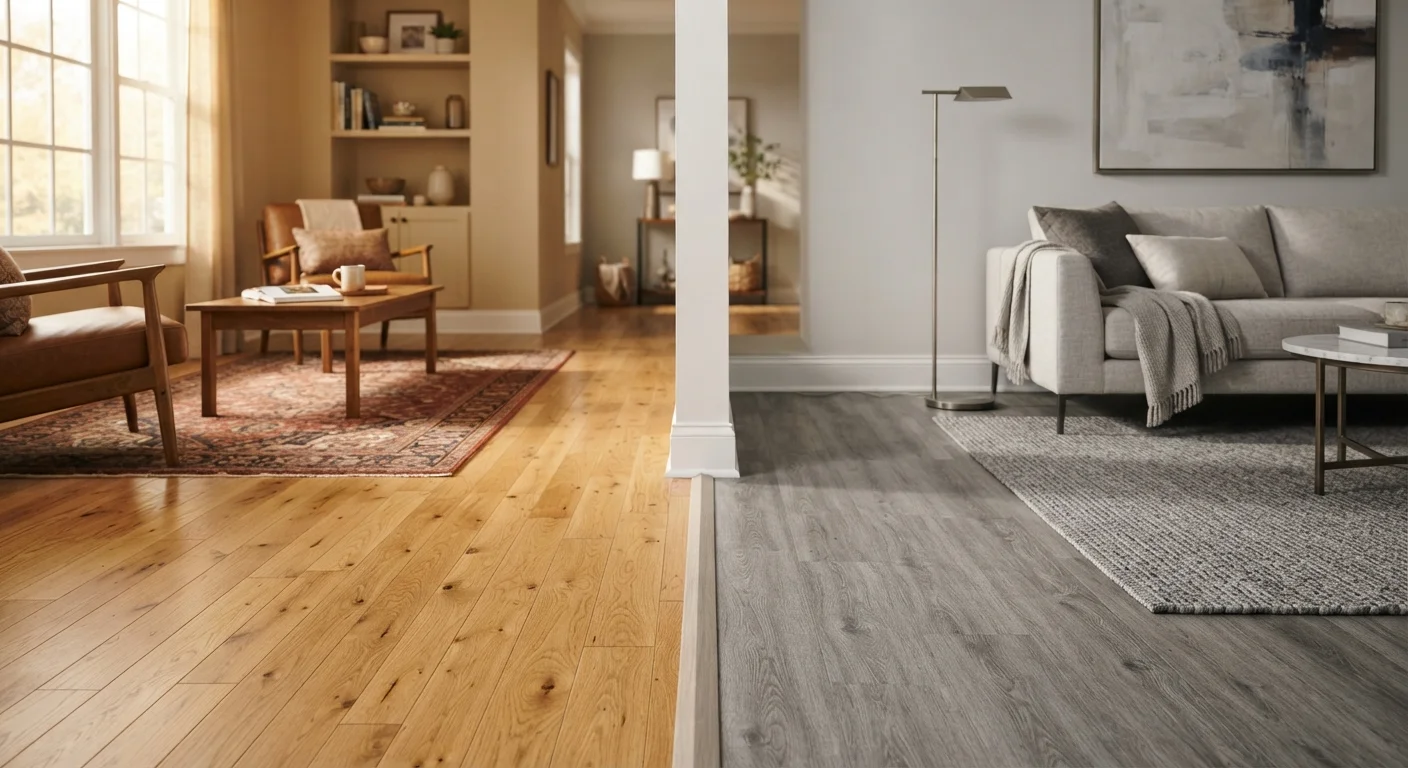
Key Takeaways
- Hardwood can be sanded and refinished multiple times, extending its lifespan to 50–100 years with proper care.
- Luxury vinyl plank is fully waterproof, making it the stronger choice for kitchens, bathrooms, and basements.
- Hardwood typically costs significantly more per square foot installed than LVP.
- LVP installation is more DIY-friendly, often featuring click-lock systems that float over existing subfloors.
- Hardwood can add resale value to a home; LVP is increasingly well-regarded by buyers for practicality.
- Neither option requires heavy maintenance, but each has specific care requirements to maximize lifespan.
Option A
Hardwood Flooring
The timeless, high-value classic.
Best for: Homeowners prioritizing long-term home value, natural beauty, and refinishing potential in low-moisture rooms.
Option B
Luxury Vinyl Plank (LVP)
The resilient, budget-friendly modern alternative.
Best for: Households needing waterproof, durable flooring in high-traffic or moisture-prone areas at a lower upfront cost.
If you want to maximize long-term home resale value
Hardwood Flooring
Solid hardwood is widely recognized by appraisers and buyers as a premium feature that can positively influence home valuations, particularly in living rooms and bedrooms.
If you're flooring a moisture-prone area like a kitchen or bathroom
Luxury Vinyl Plank (LVP)
LVP's waterproof core means spills, humidity, and occasional flooding won't cause warping or swelling, unlike hardwood which is vulnerable to moisture damage.
If you're a renter or planning a quick renovation on a tight budget
Luxury Vinyl Plank (LVP)
Lower material costs, easier DIY installation, and no need for acclimation or finishing make LVP a practical choice for budget-conscious projects.
If you want a floor that can be restored rather than replaced
Hardwood Flooring
Solid hardwood can be sanded down and refinished several times over its life, allowing you to update the color or repair surface wear without a full floor replacement.
If you have pets or young children and need a highly durable surface
Luxury Vinyl Plank (LVP)
Most LVP products carry a thick wear layer rated for heavy use and resist scratches and stains better than unfinished or lightly finished hardwood surfaces.
Understanding the Basics of Each Flooring Type
Hardwood flooring is milled from solid timber — species such as oak, maple, hickory, and walnut are common in American homes. Each plank is typically ¾ inch thick and can be nailed, stapled, or glued to a wood subfloor. The natural grain variation from board to board gives hardwood its characteristic warmth and uniqueness.
Luxury vinyl plank, by contrast, is an engineered product composed of multiple synthetic layers: a rigid or flexible core, a photographic design layer printed to replicate wood grain, and a clear wear layer on top. Modern LVP is visually convincing, and many homeowners find it difficult to distinguish from wood at a glance. It's important to note that LVP is distinct from older sheet vinyl or standard vinyl tile — it's thicker, more durable, and far more realistic in appearance.
Cost Comparison: Upfront and Long-Term
Flooring costs vary widely by region, material grade, and installation complexity, so the figures below reflect general ranges rather than fixed prices.
| Criterion | Hardwood Flooring | Luxury Vinyl Plank (LVP) |
|---|---|---|
| Typical material cost (per sq. ft.) | $5–$12+ | $2–$7 |
| Installed cost estimate (per sq. ft.) | $8–$20+ | $4–$10 |
| Waterproof | No — moisture-sensitive | Yes — fully waterproof |
| Can be refinished | Yes — multiple times | No |
| DIY-friendly installation | Moderate to difficult | Yes — click-lock systems |
| Expected lifespan (residential) | 50–100+ years | 15–30+ years |
| Scratch resistance | Moderate (species-dependent) | Good (wear layer-dependent) |
| Resale value perception | Generally higher | Increasingly favorable |
Hardwood carries a higher upfront investment, but its longevity can offset costs over decades. A solid hardwood floor installed properly can last the life of the home. LVP typically carries a manufacturer warranty of 15–25 years depending on the product line, though actual longevity often exceeds that in residential use. When budgeting, factor in subfloor prep, underlayment, transitions, and labor — all of which apply to both options.
54%
US homeowners preferring hardwood in living areas
According to the National Association of Realtors' surveys, hardwood floors remain among the most desired features buyers look for in an existing home.
3–5 days
Acclimation time required for solid hardwood
Flooring industry guidelines recommend allowing solid hardwood planks to acclimate to a home's temperature and humidity before installation to reduce post-install warping.
~$4–$10
Typical installed cost per sq. ft. for LVP
Industry cost data indicates LVP installation generally runs significantly lower than solid hardwood, making it accessible for larger square footage projects.
Installation: What Each Floor Demands
Hardwood installation requires more planning and skill. Solid hardwood needs to acclimate to the home's humidity for 3–5 days before installation. It must be fastened to a wood subfloor — it cannot be floated or installed over concrete without an engineered variant. Professional installation is strongly recommended for solid hardwood, particularly for nail-down methods.
LVP is more forgiving. Many products use a click-lock floating system that can go over concrete, existing tile, or plywood subfloors with minimal prep. This makes LVP a realistic DIY project for homeowners with moderate skill and patience. Still, proper subfloor flatness — typically within 3/16 inch over 10 feet — is essential for either material to perform well and avoid squeaks or gaps over time.
Check Your Subfloor Before You Commit
Both hardwood and LVP perform best over a clean, flat, structurally sound subfloor. If you're working with an older home, have your subfloor inspected for soft spots, squeaks, or moisture intrusion before choosing your material. Subfloor repairs are easier and cheaper to address before new flooring goes down. In some cases, local building codes may also require permits for significant subfloor work — check with your local municipality.
Durability, Maintenance, and Long-Term Performance
Hardwood is susceptible to moisture and humidity fluctuations. In climates with wide seasonal swings, boards may expand and contract noticeably. Scratches and dents are possible, though they can be sanded out during refinishing. Routine care involves sweeping, occasional damp mopping with a wood-safe cleaner, and maintaining indoor humidity between roughly 35–55%.
LVP resists moisture, staining, and most surface scratches thanks to its wear layer. It's comfortable underfoot when paired with underlayment and is generally warmer than tile. However, LVP cannot be refinished — once the wear layer is gone, the plank must be replaced. Avoid excessive heat or direct prolonged sunlight, which can cause some LVP products to expand or discolor over time. Daily maintenance for LVP is straightforward: sweep regularly and mop with a pH-neutral cleaner.