
Circuit Breakers, GFCI Outlets, and Smoke Detectors: What Homeowners Need to Know

| Standard household circuit rating | 15A or 20A (National Electrical Code (NEC) general guidance) |
| GFCI trip threshold | 4–6 milliamps (OSHA general electrical safety reference) |
| Recommended smoke detector test frequency | Monthly (U.S. Fire Administration) |
| Smoke detector replacement interval | Every 10 years (National Fire Protection Association (NFPA)) |
| GFCI protection required near kitchen sinks | Within 6 feet (NEC general requirements) |
| Detector placement: bedrooms | Inside every bedroom and outside each sleeping area (U.S. Fire Administration) |
Circuit Breakers: Your Electrical Panel's First Line of Defense
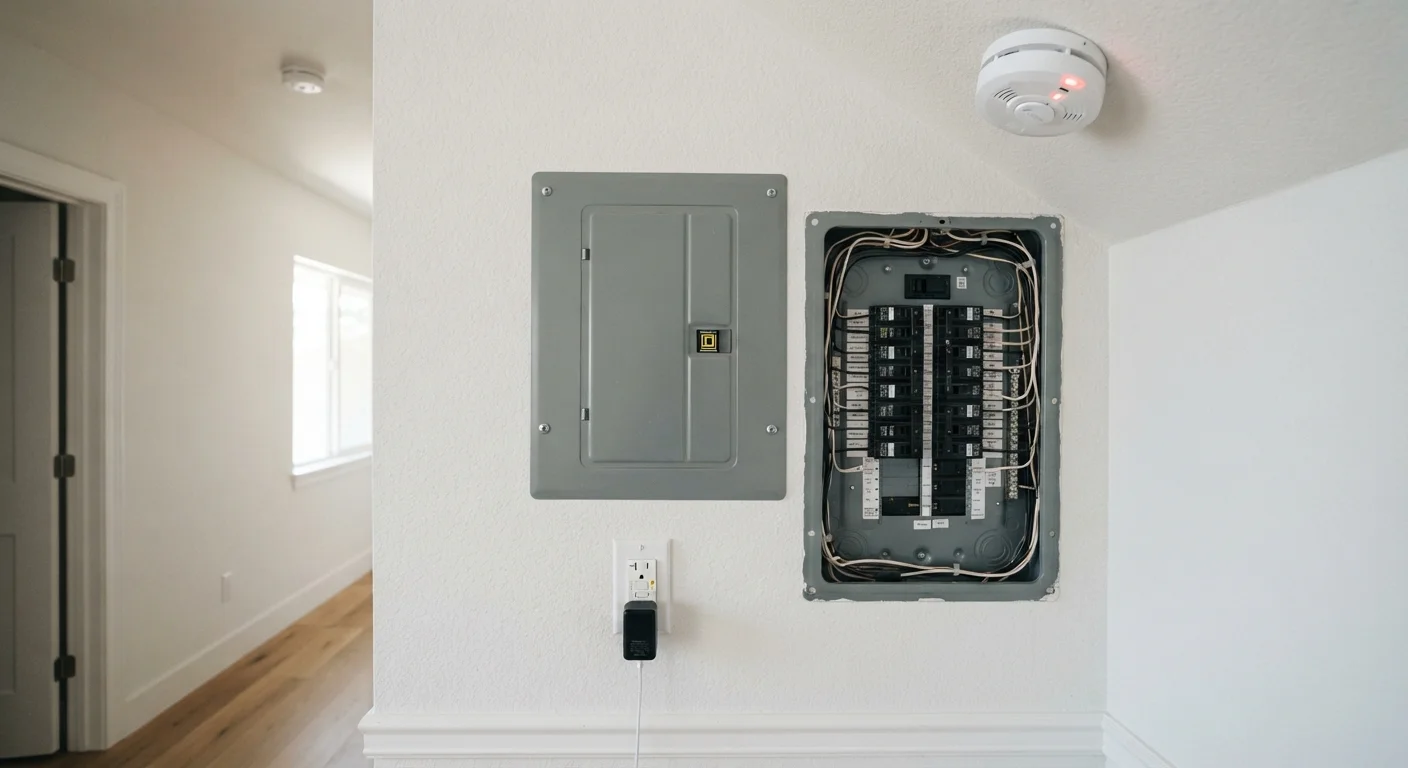
A circuit breaker is an automatic switch that cuts power to a circuit when it detects a current overload or short circuit. Unlike older fuses that burn out and must be replaced, breakers simply trip to the OFF position and can be reset. Every breaker in your main panel is rated for a specific amperage — typically 15A or 20A for household circuits, and 30A–60A for appliances like dryers or HVAC systems.
| Standard household circuit rating | 15A or 20A (National Electrical Code (NEC) general guidance) |
| GFCI trip threshold | 4–6 milliamps (OSHA general electrical safety reference) |
| Recommended smoke detector test frequency | Monthly (U.S. Fire Administration) |
| Smoke detector replacement interval | Every 10 years (National Fire Protection Association (NFPA)) |
| GFCI protection required near kitchen sinks | Within 6 feet (NEC general requirements) |
| Detector placement: bedrooms | Inside every bedroom and outside each sleeping area (U.S. Fire Administration) |
How to Reset a Tripped Breaker
- Locate the tripped breaker — it will be in the center or OFF position, often slightly out of line with the others.
- Unplug or turn off any devices on that circuit to reduce the load.
- Push the breaker firmly to OFF, then switch it back to ON.
- If it trips again immediately, stop and call a licensed electrician. Repeated tripping signals a wiring problem or a circuit that is consistently overloaded — not a task for DIY repair.
Labeling each breaker clearly is one of the most useful yet overlooked home tasks. See Home Maintenance Tasks Every First-Time Owner Overlooks for other easy wins like this one.
GFCI Outlets: Shock Protection in Wet Locations
A GFCI outlet monitors the current flowing through a circuit. If it detects even a small imbalance — as little as 4–6 milliamps — caused by electricity escaping its intended path (often through a person), it cuts power within milliseconds. This protection is critical near water sources where electrocution risk is highest.
Circuit Breaker
An automatic switching device inside your electrical panel that interrupts power to a circuit when it detects a current overload or short circuit. It can be reset manually after the underlying problem is resolved.
GFCI (Ground Fault Circuit Interrupter)
A type of electrical outlet or breaker that monitors current flow and cuts power within milliseconds if it detects electricity leaking outside its intended path, protecting against electric shock.
Amperage (Amps)
A measure of electrical current flowing through a circuit. Each breaker is rated for a maximum amperage; exceeding that limit causes the breaker to trip.
Tripped Breaker
A circuit breaker that has automatically switched to its OFF or middle position in response to an overload or fault. It must be reset before power is restored to that circuit.
Ionization Detector
A type of smoke alarm that uses a small ionization chamber to detect fast-flaming fires quickly. It is commonly found in many U.S. homes.
Photoelectric Detector
A smoke alarm that uses a light beam to detect smoke particles, making it more responsive to slow, smoldering fires that may produce a lot of smoke before flames appear.
Where GFCIs Are Required
U.S. building codes (per the National Electrical Code) generally require GFCI protection in:
- Bathrooms
- Kitchens (countertop outlets within 6 feet of a sink)
- Garages and unfinished basements
- Outdoors and near pools or hot tubs
- Crawl spaces
Older homes may not have GFCI outlets in all required locations. This is worth checking, especially before purchasing a home — it ties directly into the broader question of when to bring in a professional. Our guide on DIY vs. Hiring a Contractor can help you think through that decision.
Testing a GFCI Outlet
Every GFCI outlet has a TEST button and a RESET button. Press TEST — the outlet should lose power immediately. Press RESET to restore it. If pressing TEST does not cut power, the outlet is faulty and should be replaced by a qualified electrician. Test monthly for reliable protection.
Note: One GFCI outlet can protect multiple downstream outlets on the same circuit. If a standard outlet in your bathroom has no power, check for a tripped GFCI outlet nearby — it may be controlling that circuit.
Smoke Detectors: Testing, Placement, and Replacement
Smoke detectors save lives — but only when they are working and correctly placed. The U.S. Fire Administration recommends detectors inside every bedroom, outside each sleeping area, and on every level of the home including the basement.
3 in 5
Home fire deaths occur in homes with no working smoke alarms
According to the National Fire Protection Association's home fire safety research.
10 years
Maximum lifespan of a smoke detector unit
The NFPA recommends replacing the entire detector unit — not just the battery — every decade.
~4 mA
Minimum ground fault current a GFCI detects
GFCI outlets are designed to trip well below the threshold considered dangerous to most people, per electrical safety standards.
Two Technologies to Know
- Ionization detectors
- Respond faster to fast-flaming fires. They contain a tiny amount of radioactive material that ionizes the air inside a chamber; smoke disrupts this current and triggers the alarm.
- Photoelectric detectors
- Respond faster to slow, smoldering fires. A light beam inside the detector is scattered by smoke particles, triggering the alarm.
Many safety organizations suggest dual-sensor or combination detectors to cover both fire types. Check the unit's documentation or housing label to confirm what you have.
Maintenance Schedule
- Monthly: Press the TEST button until the alarm sounds. If it doesn't sound, replace the battery first, then retest.
- Every 6 months: Vacuum gently around the detector vents to clear dust.
- Every 10 years: Replace the entire unit. Sensor components degrade over time regardless of battery condition. The manufacture date is printed inside the unit.
Smoke detector testing fits naturally into a seasonal home check routine. The Annual Home Maintenance Calendar outlines when to schedule tasks like this throughout the year.
This article provides general home safety information. Always consult a licensed electrician for electrical repairs, panel work, or outlet installations, and verify requirements with your local building authority.