

Key Takeaways
- Shutting off and draining exterior faucets is one of the most important freeze-prevention steps you can do.
- Insulating exposed pipes in unheated spaces — like garages and crawl spaces — reduces burst pipe risk significantly.
- Checking weather stripping, sealing gaps, and reversing ceiling fans all improve energy efficiency before winter.
- A functioning heating system should be serviced before cold weather arrives, not during it.
- Gutters clogged with leaves can cause ice dams that damage roofs and interior ceilings.
What you will need
Why Winterizing Before the First Freeze Matters
Most winter home damage doesn't happen because of a single dramatic storm — it accumulates from small vulnerabilities that were never addressed before temperatures dropped. A forgotten garden hose, a gap around a dryer vent, or a furnace filter that hasn't been changed in two seasons can quietly compound into burst pipes, ice dams, or heating system failures.
The goal of winterizing your home is to get ahead of these problems during the calm weeks of late autumn rather than scrambling to react when it's 20°F outside. Most of the tasks involved are genuinely DIY-friendly and require only basic tools and a few hours of focused effort. For a broader look at how these seasonal tasks fit into a year-round plan, see your home's annual maintenance calendar.
This guide walks you through the most important winterization steps, prioritized by the damage they prevent and organized so you can work efficiently from outside in.
What you will need
What You'll Need
Winterization doesn't require specialized contractors for most tasks — the right materials and a methodical approach are sufficient for the majority of homes. Gather these tools and supplies before you begin so you can move efficiently through each step without interruption.
Pipe insulation foam sleeves
Wrap around exposed pipes in unheated areas to slow heat loss and reduce freeze risk.
Exterior-grade caulk and caulk gun
Seal gaps around windows, doors, and where utility lines enter the home to block cold air infiltration.
Weatherstripping
Applied to door frames to close drafty gaps that let heated air escape.
Heat tape (pipe heating cable)
Electrically warms vulnerable pipes in extremely cold or uninsulated areas where foam alone may be insufficient.
Gutter scoop or garden trowel
Remove accumulated leaves and debris from gutters before they trap water and form ice dams.
Ladder
Needed to safely access gutters and inspect the roofline and exterior vents.
Programmable or smart thermostat
Helps maintain consistent indoor temperatures and prevent pipes from freezing when the home is unoccupied.
Work Room by Room for Efficiency
Rather than tackling winterization tasks in random order, move systematically from outside to inside. Start with the exterior — faucets, hose bibs, gutters, and gaps — then work inward through the basement, attic, and living spaces. This approach ensures nothing gets missed and makes the job feel manageable in a single weekend.
Step-by-Step Winterization Process
Work through the following steps over a weekend in early-to-mid autumn, before overnight lows consistently approach the freezing mark. If your region sees an early freeze, prioritize steps 1 through 3 first — those address the highest-risk vulnerabilities.
Burst Pipes Can Cause Serious Damage
A single burst pipe can release hundreds of gallons of water and cause thousands of dollars in structural and property damage. Always shut off exterior water supplies and drain hoses before temperatures drop to freezing. If your home has a history of frozen pipes, consider consulting a licensed plumber about additional insulation or heat tape solutions.
Shut off and drain exterior faucets and hose bibs
Locate the interior shut-off valves that control water to your outdoor spigots — these are typically found in the basement or crawl space near the exterior wall. Turn them off, then go outside and open each hose bib to drain any remaining water from the line. Leave the outdoor valve open slightly so any residual water can fully drain and expand without rupturing the pipe.
Disconnect and store all garden hoses. A hose left attached can trap water in the spigot even after the interior valve is closed, creating freeze risk.
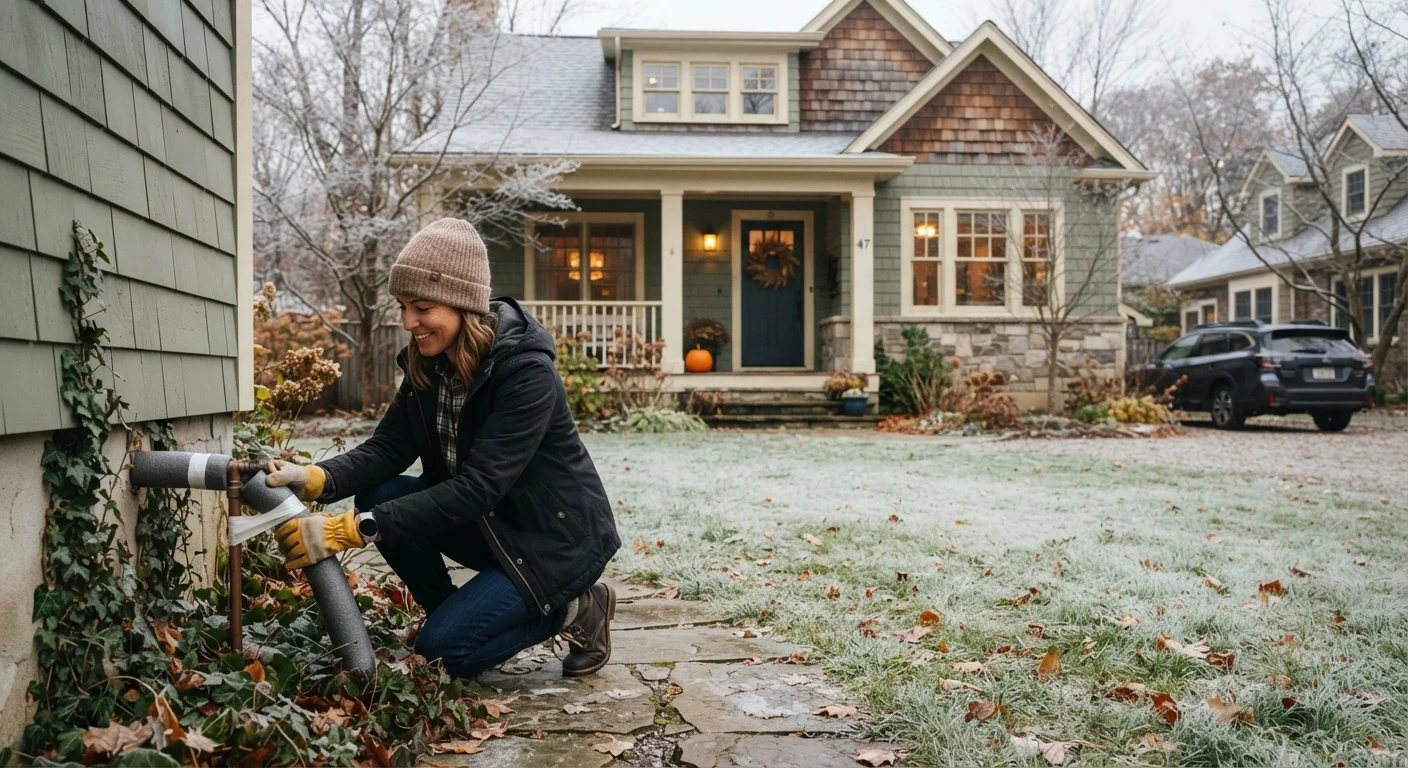
Insulate exposed pipes in unheated spaces
Inspect pipes in your basement, garage, crawl space, and any exterior walls. Pipes that run through areas that aren't heated are the most vulnerable to freezing. Slide foam pipe insulation sleeves over these pipes, cutting to length with a utility knife and securing with duct tape at joints. Pay particular attention to pipes near exterior walls and in corners where cold air can accumulate.
In especially cold climates or for pipes in particularly exposed areas, consider adding heat tape beneath the foam insulation for an extra layer of protection.
Clean gutters and inspect the roofline
Clear all leaves, twigs, and debris from gutters and downspouts before the first freeze. Clogged gutters hold water that can freeze into ice dams — ridges of ice that prevent snowmelt from draining and force water up under roof shingles, causing interior ceiling and wall leaks.
While on the ladder, visually inspect the roofline for damaged or missing shingles, cracked flashing around chimneys or vents, and any areas where gaps have formed. Catching these issues in fall avoids emergency repairs during winter weather.
Seal gaps, cracks, and drafty entry points
Walk the exterior perimeter of your home and look for gaps where cold air can enter — around window frames, door frames, dryer vents, electrical conduits, and where pipes or cables enter through walls. Apply exterior-grade caulk to any cracks in siding or masonry, and re-caulk around window and door frames where the old bead has shrunk or cracked.
Indoors, check the weatherstripping on all exterior doors by closing the door on a piece of paper — if it slides out easily, the seal isn't tight enough. Replace worn weatherstripping to prevent drafts and heat loss.
Have your heating system inspected and serviced
Contact a licensed HVAC technician to service your furnace, boiler, or heat pump before cold weather sets in. A professional tune-up typically includes cleaning burners or heat exchangers, checking for cracks or leaks, testing controls, and replacing the air filter. This not only reduces the chance of a breakdown on a cold night but also helps the system run more efficiently.
Replace your furnace filter yourself if it hasn't been changed recently — a clogged filter restricts airflow and forces the system to work harder. Check your CO detector batteries at the same time.
Reverse ceiling fans and adjust your thermostat strategy
Most ceiling fans have a small switch on the motor housing that changes the blade rotation direction. In winter, set the blades to spin clockwise at low speed — this pushes the warm air that rises to the ceiling back down along the walls, improving comfort without raising the thermostat.
If you use a programmable thermostat, set it so the temperature never drops below 55°F (13°C), even when the home is unoccupied. This protects pipes from freezing while still conserving energy when heating isn't needed at full capacity.
Check attic insulation and ventilation
Adequate attic insulation is a key defense against heat loss and ice dam formation. Look into your attic and confirm there's a consistent, even layer of insulation across the floor — the U.S. Department of Energy provides general guidance on recommended R-values by climate zone, which can help you gauge whether your current insulation is sufficient.
Also confirm that attic vents are clear and unobstructed. Proper attic ventilation keeps the roof surface cold and uniform, which prevents snow from melting and refreezing at the eaves — the primary cause of ice dams.
Common Oversights and Troubleshooting
Even thorough homeowners miss things. A few areas that tend to get overlooked:
- Crawl space vents: Some crawl spaces have vents designed to be closed in winter to prevent cold air from chilling the floor above. Check your home's specifications — not all crawl spaces should be sealed, and practices vary by climate and construction type.
- Irrigation systems: In-ground sprinkler systems need to be blown out with compressed air before the first freeze. This is typically a job for an irrigation professional, as improper blowout can damage zone valves and heads.
- Sump pump discharge line: Make sure the exterior discharge pipe isn't positioned where it will freeze and trap water, potentially burning out your pump motor.
- Drafty electrical outlets: Foam gaskets installed behind outlet and switch covers on exterior walls make a surprisingly large difference in stopping cold air infiltration.
If you're a first-time homeowner, you may find that home maintenance tasks first-time owners often overlook offers helpful context on which routine items deserve attention beyond the seasonal checklist. And while winter prep focuses on the house, don't forget that your vehicle needs seasonal attention too — see our guide on seasonal car care for a parallel checklist.
Don't Skip Your Heating System Check
Furnaces and boilers that haven't been serviced can fail during the coldest nights of the year — exactly when you need them most. Schedule a professional HVAC inspection before the heating season begins, not after. Carbon monoxide risks from poorly maintained heating equipment are a serious safety concern; make sure CO detectors are working and have fresh batteries.