

Key Takeaways
- The 50/30/20 rule splits take-home pay into needs (50%), wants (30%), and savings or debt (20%).
- It works best as a starting point — most households will need to adjust the percentages.
- High-cost areas or lower incomes often require spending more than 50% on needs alone.
- The 20% savings category should cover both emergency funds and debt payoff goals.
- Tracking actual spending is essential before applying any budget framework.
The 50/30/20 Rule
The 50/30/20 rule is a budgeting guideline that divides your monthly after-tax income into three categories: 50% for needs, 30% for wants, and 20% for savings and debt repayment. It gives you a simple starting framework without requiring spreadsheets or financial training. The goal is to make sure every dollar has a purpose before it gets spent.
The framework is often attributed to U.S. Senator Elizabeth Warren and her daughter Amelia Warren Tyagi, who outlined it in their 2005 book 'All Your Worth.' It uses after-tax (take-home) income, not gross income, as the baseline.
How the Three Categories Work
The 50/30/20 rule sorts every dollar of your take-home pay into one of three buckets. Here's what each one covers:
- 50% — Needs: Non-negotiable monthly expenses. Rent or mortgage, utilities, groceries, health insurance, car payments, and minimum loan payments all belong here. If you'd face serious consequences skipping it, it's a need.
- 30% — Wants: Spending that improves your lifestyle but isn't essential. Dining out, entertainment subscriptions, travel, clothing beyond the basics, and hobbies fall here.
- 20% — Savings and Debt Repayment: Building your emergency fund, contributing to retirement accounts, and paying down debt faster than the minimum. This bucket is what sets you up for future financial stability.
The math is straightforward. If your monthly take-home pay is $4,000, you'd target $2,000 for needs, $1,200 for wants, and $800 for savings and debt. Building your first monthly budget from scratch can help you see where your current spending actually falls before applying any framework.
Start With Your After-Tax Income
Always base your 50/30/20 calculations on your take-home pay — not your gross salary. If you earn $60,000 per year but take home $4,200 per month after taxes and deductions, that $4,200 is your starting number. Using gross income will make your budget look more generous than it actually is.
Why It's a Starting Point, Not a Strict Rule
The 50/30/20 guideline works well as an introduction to intentional spending — but reality doesn't always cooperate. Housing costs have climbed sharply in many U.S. cities, and for millions of households, rent alone can consume more than 30% of take-home pay. That makes hitting the 50% needs target nearly impossible without significant lifestyle changes.
Lower-income earners often face an even tighter squeeze: a larger share of income goes to fixed costs like food and utilities, leaving little room for the 30% wants or 20% savings categories. In those cases, adjusting the split — say, 60% needs, 15% wants, 25% savings — may reflect reality more honestly than forcing yourself into a framework that doesn't fit.
30%+
Renters spending over 30% of income on housing
According to the U.S. Census Bureau's American Community Survey, roughly half of all U.S. renters are considered cost-burdened, spending more than 30% of their gross income on housing.
$1,000
Americans unable to cover a $1,000 emergency
A Bankrate survey found that a significant share of U.S. adults would struggle to pay for an unexpected $1,000 expense from savings alone, underlining the importance of the 20% savings target.
The point isn't to hit those exact percentages every month. It's to have a conscious plan for where your money goes. Understanding where the rule has real limits can help you avoid frustration when the numbers don't line up neatly.
Putting It Into Practice
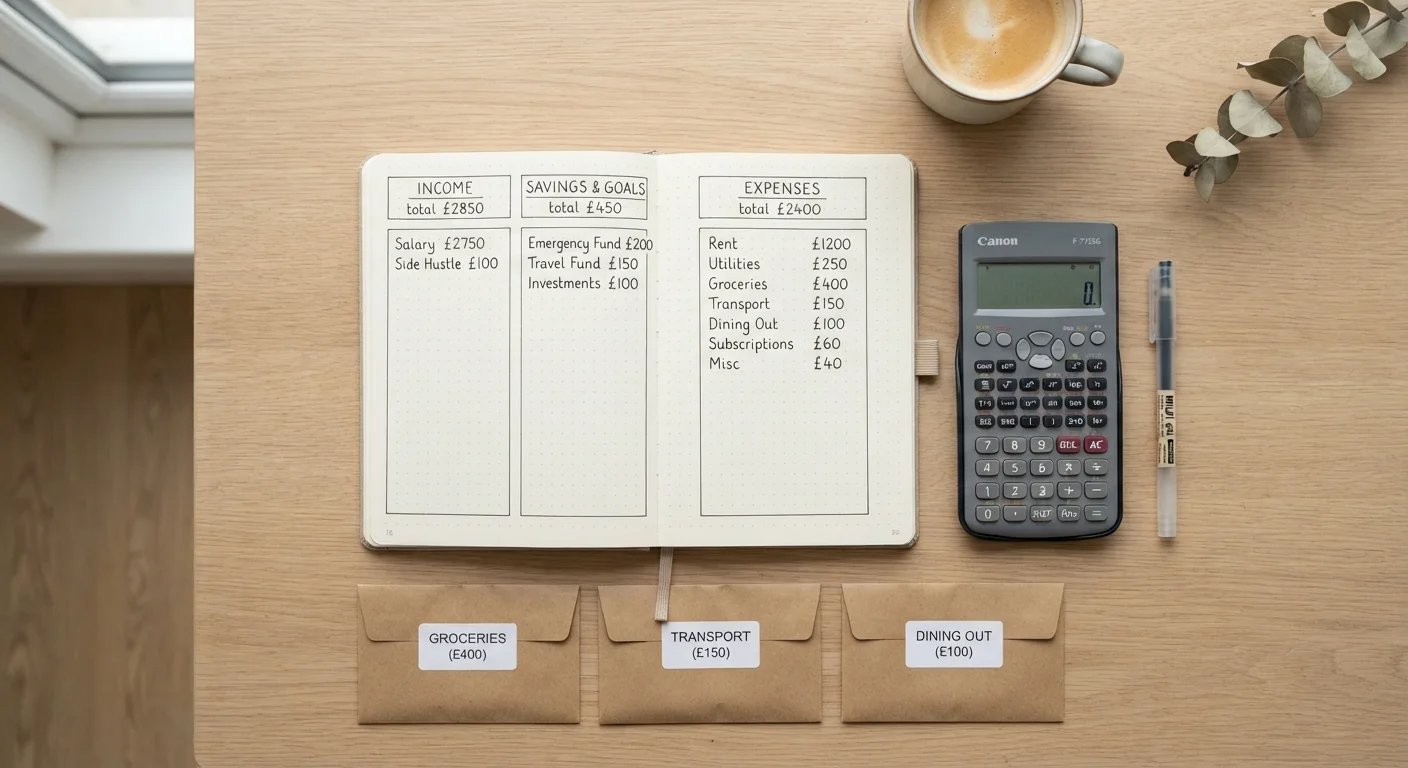
Before adjusting the percentages, you need to know where your money actually goes. Spend one month tracking every expense — bank statements, credit card history, and cash spending. Then sort each transaction into needs, wants, or savings. Most people are surprised by how much ends up in the wants column.
Once you have that baseline, compare it to the 50/30/20 targets. The gaps tell you where to focus. If wants are at 40%, look for subscriptions or habits you can trim. If savings are near zero, even directing an extra $50 per month toward an emergency fund creates momentum.
For a structured monthly review process, a monthly budget checkup walks you through what to examine before each new month begins. And if you're trying to apply this kind of thinking to a specific goal like a vacation, planning a trip around a budget applies a similar allocation mindset to travel spending.
This article provides general financial education and is not personalized financial advice. For guidance specific to your situation, consider consulting a licensed financial professional.