

Key Takeaways
- Summer offers nearly 24 hours of daylight, opening highland roads and long-distance trekking routes.
- Winter is the only reliable season to witness the northern lights from Iceland.
- Summer draws significantly larger crowds and generally higher accommodation costs.
- Many interior highland routes (the F-roads) are only accessible from roughly June through September.
- Both seasons offer distinct wildlife encounters — puffins in summer, reindeer in winter.
- Flight connections from the US are available year-round, though frequency can vary by season.
Option A
Iceland in Summer
The accessible, adventure-packed season of endless daylight.
Best for: Hikers, road-trippers, and first-time visitors who want maximum accessibility and diverse landscapes.
Option B
Iceland in Winter
The dramatic, atmospheric season of aurora chasing and cozy isolation.
Best for: Aurora hunters, hot-spring seekers, and travelers who relish raw, moody landscapes with fewer crowds.
If you want to hike Iceland's iconic interior highlands
Iceland in Summer
F-roads and routes like Landmannalaugar are only open during summer months; attempting them in winter is unsafe and often impossible.
If seeing the northern lights is your primary goal
Iceland in Winter
The aurora borealis requires darkness to be visible — Iceland's summer nights never get dark enough for a sighting.
If you're traveling on a tighter budget
Iceland in Winter
Accommodation and tour pricing tends to ease outside the peak summer window, though shoulder periods around March and October often offer the best value.
If it's your first visit and you want the easiest experience
Iceland in Summer
Long daylight hours, open roads, and a wider range of operating tours and services make summer the most forgiving introduction to Iceland.
If you crave dramatic, otherworldly atmosphere with fewer tourists
Iceland in Winter
Snow-dusted lava fields, frozen waterfalls, and steaming geothermal pools feel genuinely surreal — and visitor numbers drop considerably outside peak season.
Light, Landscape, and What Changes Completely
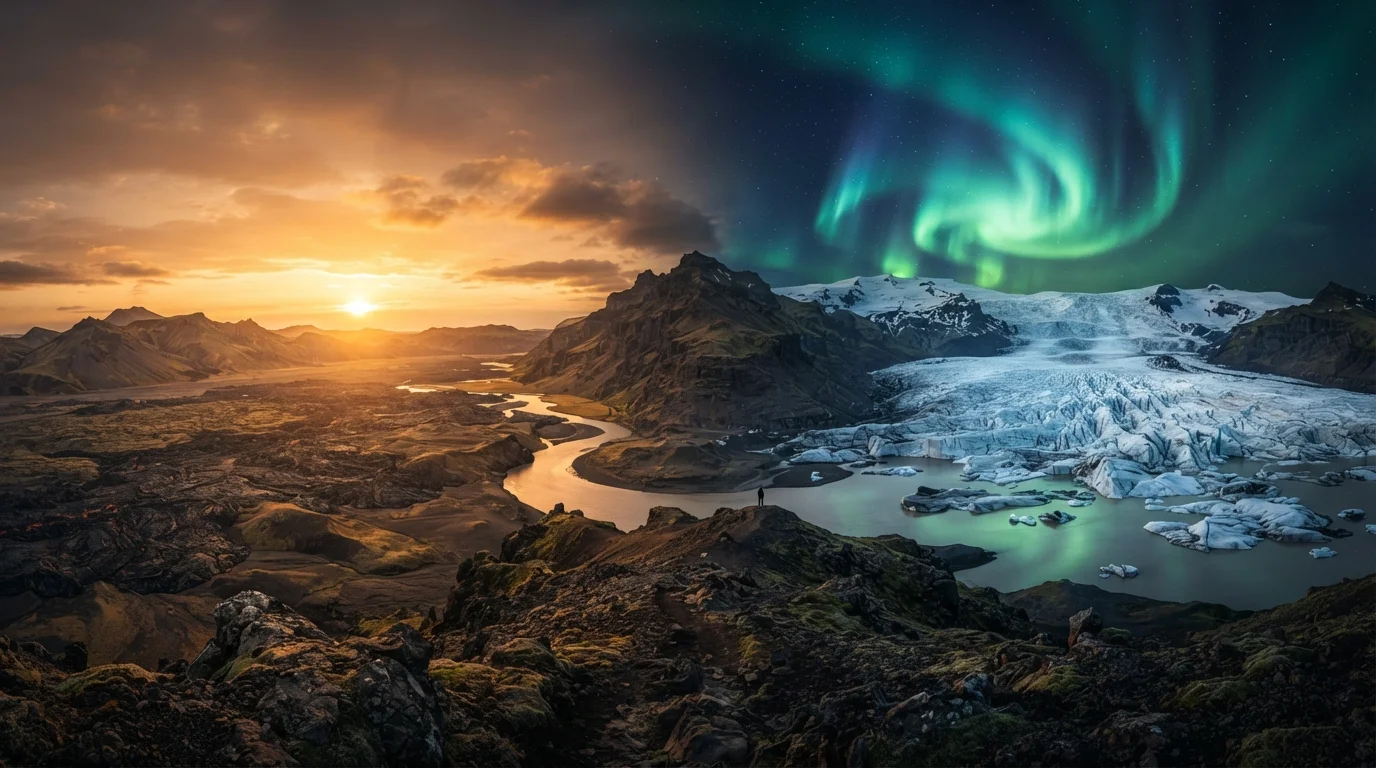
Iceland's seasonal shift isn't subtle — it's a near-total reinvention. In summer (roughly June through August), the midnight sun delivers up to 24 hours of usable daylight near the solstice. Wildflowers carpet lava fields, waterfalls swell with glacial melt, and the Ring Road hums with camper vans. In winter (November through February), darkness dominates — Reykjavík sees only four to five hours of weak daylight — and snow transforms the same landscapes into something hushed and cinematic.
Neither season is objectively superior. They're genuinely different products. The question is which experience matches your travel priorities. And if you're weighing Iceland against other destinations where timing matters dramatically, our look at what "off-season" really means for popular destinations puts Iceland's seasonality into useful broader context.
| Criterion | Summer (June–August) | Winter (Nov–Feb) |
|---|---|---|
| Daylight hours | Up to 24 hours near solstice | 4–6 hours of daylight |
| Northern lights visibility | Not possible (too bright) | Prime season for aurora |
| Highland F-road access | Open (approx. June–Sept) | Closed; impassable |
| Ice cave tours | Unavailable (ice unstable) | Main operating season |
| Crowd levels | Peak season; very busy | Quieter overall |
| Typical accommodation cost | Higher (peak pricing) | Generally lower |
| Wildlife highlights | Puffins, Arctic foxes active | Reindeer, winter seabirds |
| Road conditions | Mostly reliable; check forecasts | Storm closures possible; plan carefully |
Summer: Endless Daylight and Highland Access
Summer's biggest advantage is pure accessibility. Iceland's interior highland roads — designated as F-roads and requiring four-wheel-drive vehicles — are gated closed through most of autumn, winter, and spring. Routes to destinations like the Landmannalaugar lava fields and the Þórsmörk nature reserve only open once snow and ice have receded, typically from late June. For hikers, this window is non-negotiable.
The Midnight Sun also unlocks a different rhythm of travel. Visitors often find themselves hiking at 11 p.m. in full daylight, or watching the sky turn amber at 2 a.m. over the Jökulsárlón glacier lagoon. Puffins arrive on Icelandic coasts from May and remain through August, making summer the time for birdwatching along sea cliffs.
The tradeoffs are real, though. Reykjavík and the Golden Circle corridor get genuinely crowded in July and August. Accommodation books up months in advance, and pricing reflects peak demand. Travelers who value solitude may find popular stops — Skógafoss waterfall, the Blue Lagoon area — busier than expected.
~66 days
Approximate duration of Iceland's midnight sun period
From mid-May to late July, the sun does not fully set below the horizon in northern Iceland, creating continuous twilight or daylight.
2–3×
Typical visitor volume increase in peak summer vs. winter
Iceland's tourism authority has noted a significant concentration of arrivals during June, July, and August compared to the winter low season.
~8,000 km²
Area of Vatnajökull glacier accessible via winter ice cave tours
Vatnajökull is Europe's largest glacier by volume and hosts guided ice cave tours primarily from November through March when conditions are stable.
Winter: Northern Lights and a Quieter Iceland
Iceland in winter is a different kind of reward — one that requires patience and flexibility. The northern lights (aurora borealis) are only visible when skies are dark, which means the summer season is a complete blackout for aurora sightings. Winter's long nights, clear skies permitting, offer regular aurora activity. Iceland sits directly under the auroral oval, making it one of the more accessible aurora destinations for US travelers without crossing into extreme Arctic latitudes.
Beyond the lights, winter has its own sensory pleasures. Geothermal pools — from the famous Blue Lagoon to smaller community pools — feel transformative when the temperature drops and snow falls around you. Ice cave tours inside Vatnajökull glacier operate almost exclusively in winter when the ice is stable and safe enough to enter. Snæfellsnes Peninsula takes on an eerie, Tolkien-esque quality under winter cloud and snow.
Practical challenges are real. Daylight is scarce, coastal roads can close with minimal notice due to storm conditions, and some rural guesthouses and highland-adjacent services reduce hours or close entirely. Checking road conditions through Iceland's official road administration (road.is) is essential practice before any winter drive.
Always Check Road Conditions Before Driving
Iceland's road.is website (run by the Icelandic Road and Coastal Administration) provides real-time road status, closures, and weather alerts across the country. In winter especially, conditions can shift within hours. Checking this resource before any drive — particularly outside Reykjavík — is considered standard practice among both locals and experienced visitors. Never assume a route that was open yesterday is open today.
Planning Your Trip: What to Actually Prepare For
Regardless of season, a few universal truths apply to Iceland travel. Weather is notoriously changeable — locals say you can experience all four seasons in a single afternoon, and that's not much of an exaggeration. Layering systems, waterproof outer shells, and grip-soled footwear matter in both summer and winter.
Shoulder seasons — late April through May and September through October — offer a compelling middle ground. The highlands may still be partly accessible in September, aurora sightings become possible once darkness returns, and visitor numbers haven't peaked. September in particular can deliver both green landscapes and early aurora opportunities in the same trip.
For US travelers, direct transatlantic connections to Reykjavík's Keflavík Airport operate year-round from several East Coast and Midwest hubs, though summer schedules tend to be more frequent. Entry requirements, currency, and travel advisories should always be confirmed with official government sources before departure, as conditions can change.
Whichever season you choose, Iceland rewards travelers who build flexibility into their itinerary — whether that means chasing a break in the clouds for aurora or rerouting a highland drive around a summer storm.