

Travel & Trips

Your Pre-Trip Planning Checklist

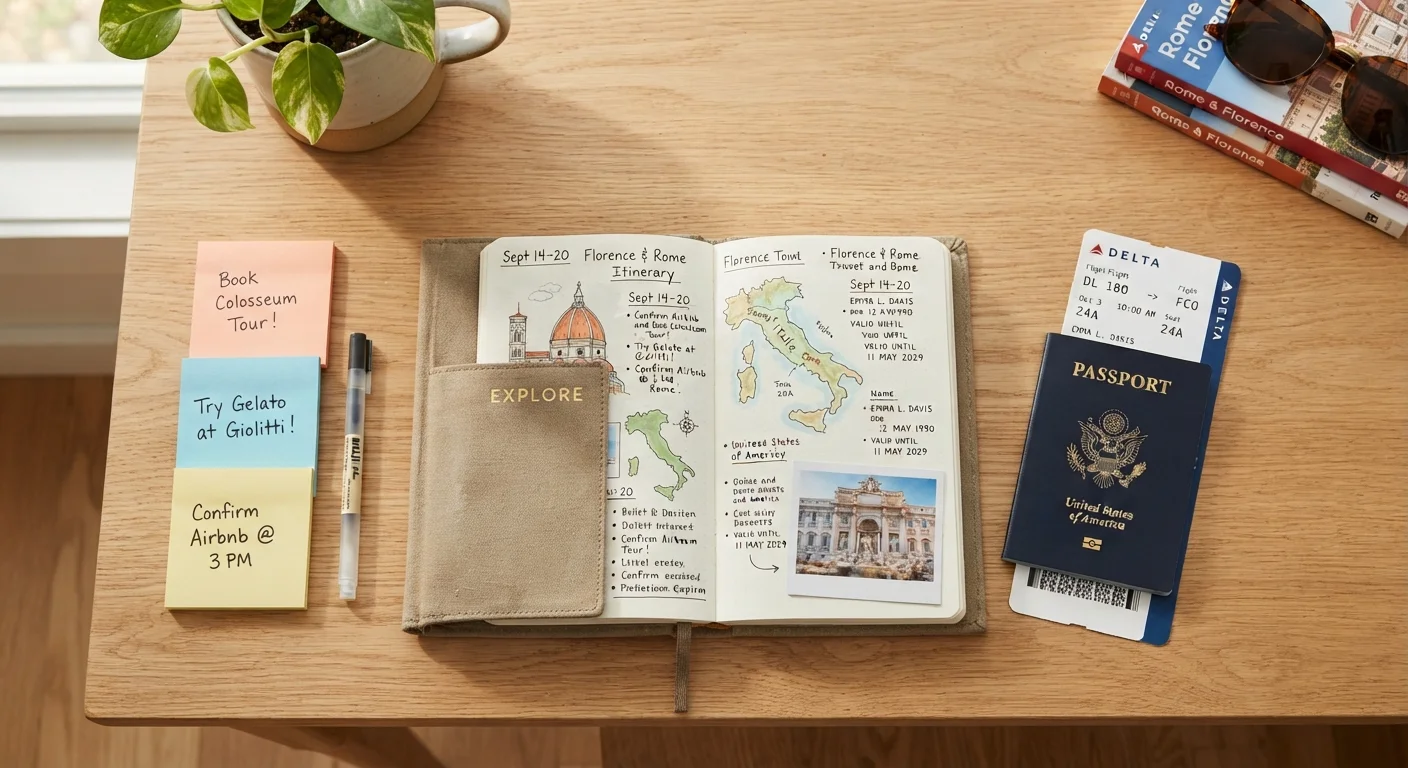
Overhead view of a travel journal, passport, boarding pass, and planning notes on a wooden desk

Key Takeaways

  • Start planning documents and bookings at least six to eight weeks before departure for international trips.
  • Notify your bank and review travel insurance coverage before any flight or long drive.
  • Home security and pet or plant care arrangements are easy to forget — tackle them early.
  • Health prep, including vaccinations and prescriptions, may require lead time of several weeks.
  • A written or digital copy of key documents stored separately from originals can save a trip.
30–60 min

Summary

24 items · 30–60 minutes

Why a Checklist Beats Memory Every Time

Even experienced travelers forget things. Not big things — it's usually the stuff that feels obvious: notifying the bank, arranging mail hold, double-checking the visa requirements for a layover country. A structured checklist removes the guesswork and frees your mental energy for actually enjoying the trip.

This checklist is built for both domestic and international travel. Some items won't apply to every trip — a weekend road trip doesn't need the same prep as two weeks abroad — so treat each category as a menu to filter, not a rigid prescription. For a broader look at how each planning phase fits together, see The Anatomy of a Well-Planned Trip.

Work through this list in order: earlier categories have longer lead times, so starting there protects your options. For booking timing guidance, How Far in Advance Should You Actually Book Things? lays out realistic windows for flights, hotels, and more.

Documents & Identity

Check your passport expiration date — many countries require at least six months of validity beyond your travel dates. Must
Research visa requirements for every country you'll enter or transit through, and apply well ahead of your departure date. Must
Make digital and physical copies of your passport, ID, insurance cards, and itinerary, storing them separately from the originals. Must
Register your international trip with the U.S. State Department's Smart Traveler Enrollment Program (STEP) so embassies can reach you in emergencies. Should

Bookings & Logistics

Confirm all flight, hotel, and ground transportation reservations, and save confirmation numbers in an easily accessible location. Must
Arrange airport transfers or parking and confirm pickup times match your flight schedule with buffer time. Must
Review cancellation and change policies for all bookings so you understand your options if plans shift. Should
Research local transportation options at your destination — transit apps, ride-share availability, or car rental requirements. Should

Health & Safety Prep

Consult a healthcare provider about recommended or required vaccinations for your destination, ideally four to six weeks before departure. Must
Refill any prescription medications with enough supply to cover your entire trip plus a few extra days. Must
Pack a travel health kit: pain relievers, antidiarrheals, adhesive bandages, hand sanitizer, and any personal medical supplies. Should
Review your travel insurance policy to confirm what medical coverage, evacuation, and cancellation scenarios are included. Must

Money & Communication

Notify your bank and credit card companies of your travel dates and destinations to avoid transactions being flagged or blocked. Must
Confirm your phone plan's international coverage, or arrange an international SIM or data-only plan before you leave. Should
Carry a small amount of local currency for destinations where cards aren't universally accepted, particularly for taxis or small vendors. Should
Save emergency contact numbers — your bank's international line, travel insurance hotline, and local embassy — offline on your phone. Must

Home Arrangements

Arrange for mail hold, package holds, or a trusted person to check your mailbox to prevent buildup that signals absence. Should
Set up automatic timers for interior lights and ask a neighbor or friend to check in if you'll be away more than a few days. Nice to have
Arrange pet care, plant watering, and any recurring home tasks that require human attention while you're gone. Must
Unplug non-essential appliances, adjust the thermostat, and turn off or limit water usage where safe to do so. Nice to have

Day-Before Confirm

Check your flight status and re-confirm any ground transportation or hotel check-in procedures the day before departure. Must
Charge all devices — phone, laptop, portable battery pack, e-reader, camera — and pack all chargers and adapters. Must
Run through your packing list one final time to catch anything overlooked, and weigh checked luggage if your airline has strict limits. Should
Set multiple alarms if you have an early departure and share your itinerary with a trusted contact at home. Should

Tools That Make Pre-Trip Planning Easier

You don't need a lot of gear to plan well — but having the right tools in one place saves time and reduces the chance something slips through. Below are the essentials worth having on hand before you sit down with this checklist.

Required

Passport and travel document folder

Keeps originals, copies, and insurance cards together and accessible throughout your trip.

Required

Travel insurance policy document

Required reference for understanding your coverage limits, claim procedures, and emergency contact numbers.

Optional

Offline maps app (downloaded region)

Provides navigation at your destination without relying on a data connection.

Optional

Portable battery pack

Keeps your phone and devices charged during long travel days when outlets aren't available.

Required

Universal power adapter

Essential for international trips where outlet types differ from US standard.

If you're heading somewhere new, browse destination guides to get a feel for entry requirements, climate, and logistics. First-time planners can also find a reassuring walkthrough in Travel Planning for First-Timers.

Don't Rely on Airport Currency Exchange

Airport currency exchange booths typically offer significantly less favorable rates than ATMs or banks. Research currency exchange options at your destination in advance. For some countries, withdrawing local currency from a local ATM on arrival is often more cost-effective, but check whether your bank charges foreign withdrawal fees.

Entry Requirements Can Change Quickly

Visa policies, health documentation requirements, and travel advisories can change with little notice. Always verify entry requirements through official government sources — such as travel.state.gov for US citizens — in the weeks immediately before departure, not just when you first book.

Once your documents and bookings are squared away, shift attention to packing. The Weekend Trip Packing Checklist is a quick reference for shorter getaways, and Packing & Gear covers strategies for every travel style.

Vaccinations and Health Prep Need Lead Time

Some destination-specific vaccines require multiple doses spread over several weeks, and some countries require documented proof of vaccination for entry. Consult a healthcare provider or a travel medicine clinic well ahead of your departure — ideally four to six weeks out. This content is general information, not personal medical advice; your provider can guide decisions based on your health history and specific destination.

Travel & Trips Editorial Team is the collective byline for our editorial team and contributor network. Articles published under this byline or an editorial pen name are researched, written, and reviewed according to our editorial standards for clarity, consistency, and independence before publication.

View all articles by Travel & Trips Editorial Team →
Disclaimer: The content provided on our blog site traverses numerous categories, offering readers valuable and practical information. Readers can use the editorial team’s research and data to gain more insights into their topics of interest. However, they are requested not to treat the articles as conclusive. The website team cannot be held responsible for differences in data or inaccuracies found across other platforms. Please also note that the site might also miss out on various schemes and offers available that the readers may find more beneficial than the ones we cover.