

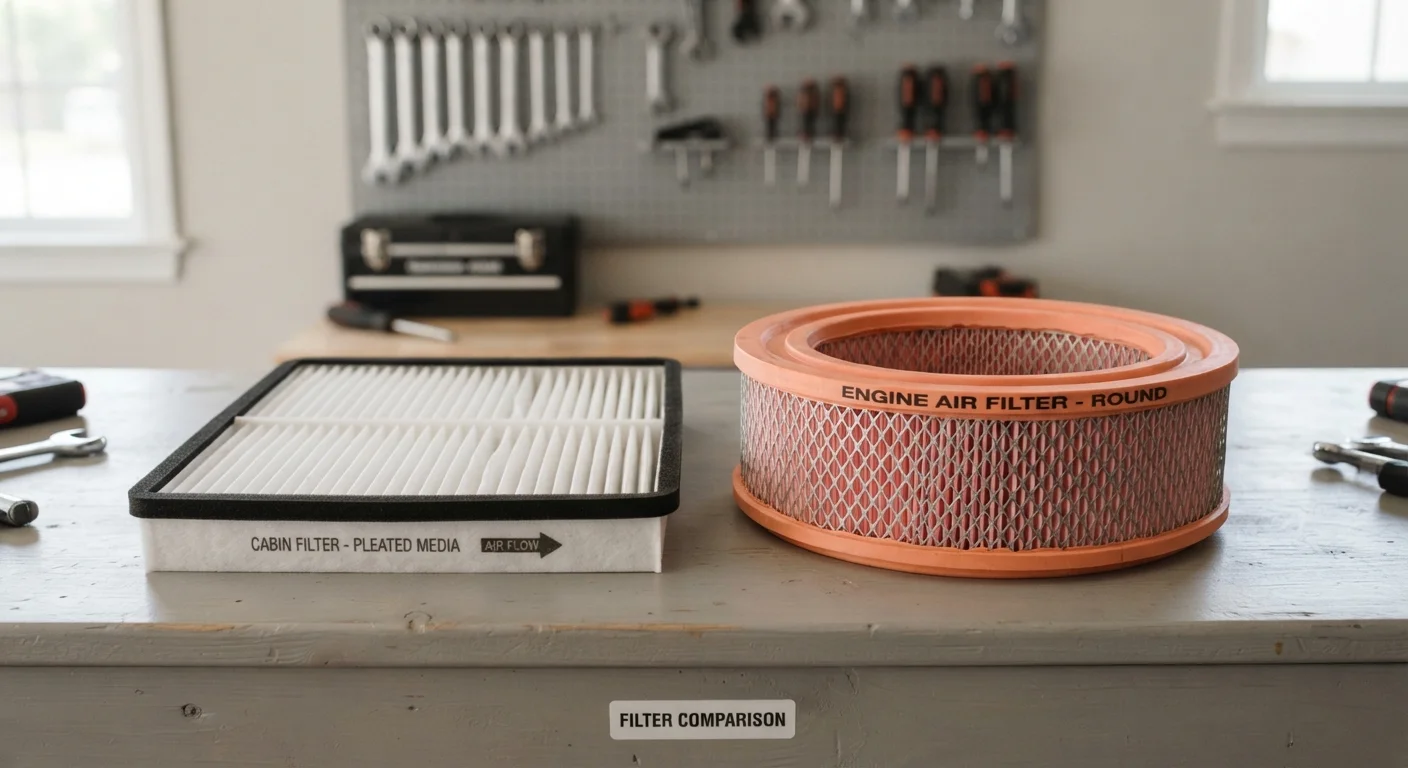
Key Takeaways
- Cabin air filters clean the air you breathe inside the car; engine air filters protect the engine's combustion process.
- These two filters are located in different parts of the vehicle and are replaced on different schedules.
- A clogged cabin filter reduces HVAC airflow; a clogged engine filter can hurt fuel economy and performance.
- Most drivers can replace both filters themselves with basic tools and the owner's manual.
- Replacement intervals vary by vehicle and driving conditions - dusty or urban environments shorten filter life.
Option A
Cabin Air Filter
The air-quality guardian for your passengers.
Best for: Drivers concerned about air quality, allergens, and odors inside the vehicle cabin.
Option B
Engine Air Filter
The engine's first line of defense against debris.
Best for: Keeping the engine running cleanly and efficiently by blocking dust and particles from the intake.
If you or your passengers suffer from allergies or live in a high-pollution area
Cabin Air Filter
Upgrading and replacing the cabin air filter on schedule directly improves the air quality inside the vehicle, reducing pollen, dust, and exhaust particulates passengers breathe.
If your fuel economy has dropped or your engine feels sluggish
Engine Air Filter
A restricted engine air filter reduces the oxygen available for combustion, which can noticeably reduce power output and fuel efficiency over time.
If you drive frequently on dusty roads or in construction zones
Engine Air Filter
High-particulate environments accelerate engine filter clogging; checking it more often than the standard interval protects your engine from abrasive debris.
If your car's HVAC system is blowing weakly or producing musty odors
Cabin Air Filter
Reduced blower output and unpleasant smells are classic signs of a saturated cabin filter that is blocking airflow through the ventilation system.
What Each Filter Actually Does
Despite sharing the word "filter" and sitting inside the same vehicle, the cabin air filter and the engine air filter have no overlap in function. Understanding what each one actually does makes it easy to remember why both matter.
The cabin air filter sits in the ventilation system - typically behind the glove box or under the dashboard - and cleans the air that enters through your car's heating, ventilation, and air conditioning (HVAC) system. It captures pollen, dust, mold spores, and exhaust particles before they reach the cabin. Think of it as the equivalent of your home's HVAC filter. If you're curious how those residential filters compare in concept, our guide on HVAC filters and home ventilation maintenance covers similar principles.
The engine air filter is located in the engine bay, inside the air intake housing. Its job is to prevent airborne contaminants - dirt, sand, insects, and debris - from entering the engine's combustion chamber. Clean air is essential for the air-fuel mixture that powers every piston stroke. A compromised engine filter starves the engine of the air it needs.
| Criterion | Cabin Air Filter | Engine Air Filter |
|---|---|---|
| Primary function | Cleans air entering the cabin | Cleans air entering the engine |
| Location | Behind glove box or under dash | Engine bay air intake housing |
| Typical replacement interval | 15,000-25,000 miles | 15,000-30,000 miles |
| Effect when clogged | Weak HVAC airflow, odors | Reduced power, lower fuel economy |
| Who it protects | Vehicle occupants | Engine internals |
| DIY difficulty | Low - no tools usually needed | Low - basic clips or screws |
Replacement Intervals and Warning Signs
The two filters also wear out on different schedules and show different symptoms when they need attention.
Cabin Air Filter
Most manufacturers recommend replacing the cabin air filter every 15,000 to 25,000 miles, though drivers in cities with heavy traffic or high pollen counts may need to do it more frequently. Warning signs include:
- Weak airflow from vents even at high fan settings
- Persistent musty or unpleasant odors from the HVAC system
- Increased dust accumulation on interior surfaces
- Allergy symptoms worsening inside the car
Engine Air Filter
Engine air filters are typically replaced every 15,000 to 30,000 miles, but this varies significantly by driving environment. Signs it may be time for a new one:
- Noticeable drop in fuel economy
- Reduced acceleration or throttle response
- Engine running rough at idle
- Check engine light illuminating (in some vehicles, a severely restricted filter can trigger this)
Because both filters are easy to overlook, they frequently appear on lists of commonly skipped maintenance items. Our piece on maintenance tasks drivers routinely skip explains what can go wrong when these items fall through the cracks.
Check Your Owner's Manual First
Replacement intervals listed online are general guidelines - your vehicle's owner's manual contains the manufacturer's specific recommendation for your engine and model year. Driving in dusty regions, stop-and-go city traffic, or areas with high pollen counts can meaningfully shorten both filter lifespans. When in doubt, a visual inspection is a reasonable starting point: a heavily gray or visibly clogged filter is ready to be replaced regardless of mileage.
Can You Replace Them Yourself?
Both filters are among the most DIY-friendly maintenance tasks on a modern vehicle. Neither typically requires special tools, and the process for most vehicles takes under 15 minutes each.
For the cabin air filter, the most common access point is behind the glove box. On many vehicles, the glove box can be depressed or unclipped to drop it down, revealing the filter housing. Always consult your owner's manual for your specific vehicle's procedure, as access points differ by make and model.
For the engine air filter, locate the air intake box in the engine bay - it's usually a black plastic housing connected to a large duct. Unclip or unscrew the cover, note the orientation of the old filter, and swap in the new one.
When purchasing a replacement, match the filter to your vehicle's year, make, model, and engine size. The owner's manual or an auto parts store's reference guide will confirm the correct part number. If you're unsure whether a filter replacement is within your comfort level, a qualified mechanic can handle it quickly during a routine service visit.
This article is for general informational purposes only. Always consult your vehicle's owner's manual and, when in doubt, a qualified automotive technician before performing maintenance tasks.