

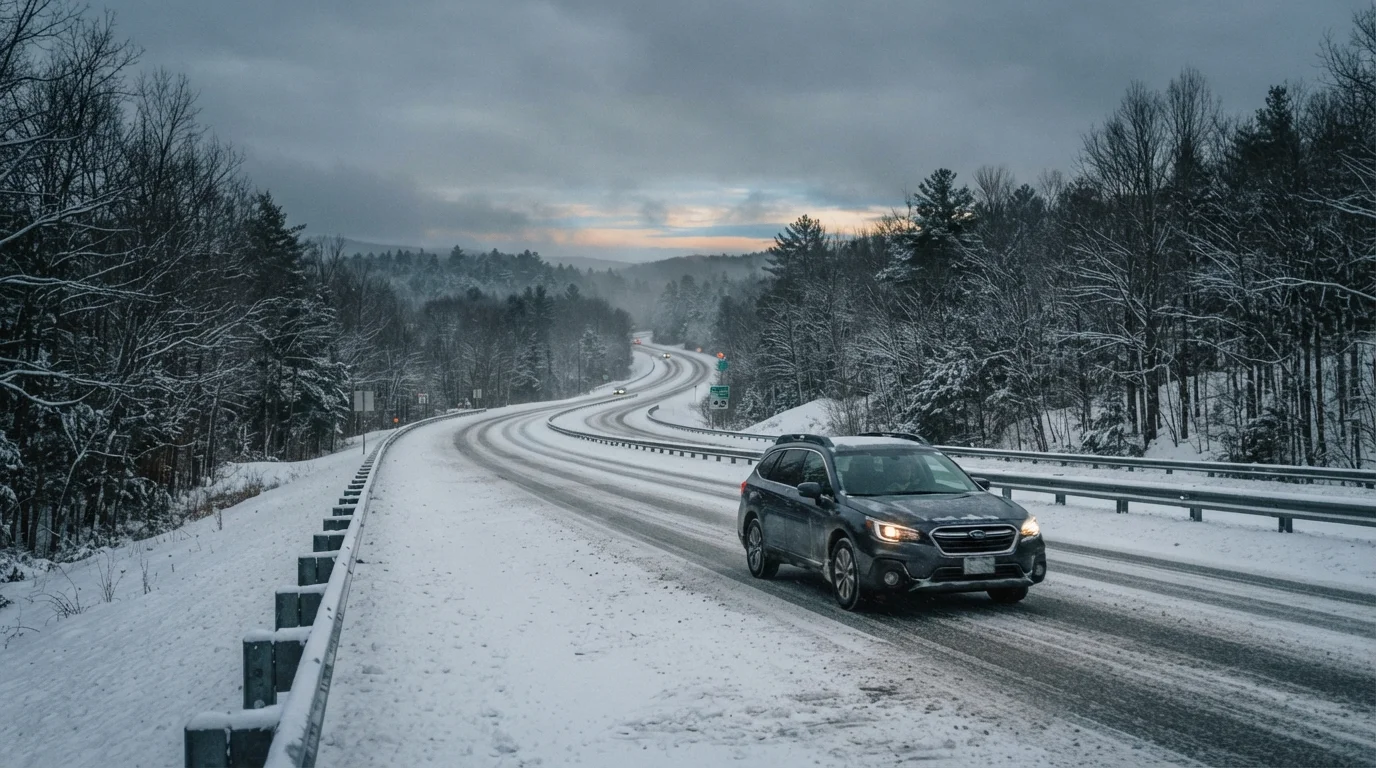
Key Takeaways
- Stopping distances on ice can be up to ten times longer than on dry pavement.
- Gentle, gradual inputs - braking, steering, accelerating - are the foundation of winter control.
- Visibility prep matters as much as mechanical prep; clear all glass before every trip.
- All-season tires lose traction effectiveness below roughly 45°F; winter tires grip significantly better.
- Core defensive driving principles apply year-round, but winter conditions compress your margin for error.
Why Winter Roads Are Fundamentally Different
When temperatures drop and precipitation falls, the road surface changes in ways that affect every control input you make. Snow compresses under tires, ice forms a near-frictionless layer, and black ice - a thin, transparent glaze on pavement - can appear without any visible warning. These aren't just inconveniences; they alter the physics of driving.
On dry pavement, the coefficient of friction between a typical tire and the road sits between 0.7 and 0.8. On packed snow that figure drops to roughly 0.2, and on glaze ice it can fall below 0.1. That means your car's ability to stop, turn, and accelerate is a fraction of what it is in dry conditions. No amount of driver experience eliminates that physics - it only helps you work within it.
Up to 10×
Longer stopping distance on glaze ice vs. dry pavement
Traction research consistently shows that stopping distances on ice can be up to ten times greater than on dry asphalt at equivalent speeds.
17%
Of all U.S. vehicle crashes occur in winter conditions
According to the U.S. Department of Transportation Federal Highway Administration, roughly 17% of vehicle crashes occur in snow, slush, or icy conditions annually.
~45°F
Temperature at which all-season tire grip begins declining
Tire industry guidelines indicate that all-season tire rubber compounds stiffen noticeably below approximately 45°F, reducing cold-weather traction performance.
Unlike rain, where the primary risk is hydroplaning at higher speeds (see our guide on wet roads and hydroplaning), winter conditions create low-grip situations even at crawling speeds. That distinction matters for every decision you make behind the wheel.
Braking: The Biggest Adjustment You'll Make
In winter, the most dangerous mistake most drivers make is braking too hard, too late. On slippery surfaces, sudden brake pressure overwhelms tire traction and causes skidding - the vehicle continues forward with little steering control. Modern ABS (anti-lock braking systems) help by pulsing brake pressure automatically, but ABS does not shorten stopping distances on ice the way many drivers assume.
The core adjustment is threefold: increase your following distance significantly, begin braking earlier than feels necessary, and apply pressure gradually. A commonly referenced guideline is to triple the following distance you'd use on dry roads - moving from a 3-second gap to at least 8-10 seconds in icy conditions. On steep or icy grades, that gap should increase further.
Triple Your Following Distance in Winter
In normal dry conditions, a 3-second following gap is a common guideline. In snow or ice, aim for at least 8-10 seconds. Count from when the car ahead passes a fixed point to when you reach the same point. This buffer gives you the time and space to brake gradually rather than hard.
If your vehicle does go into a skid, the instinct to slam the brakes or steer sharply in the opposite direction often worsens the situation. Instead, ease off the accelerator, steer gently in the direction you want to go, and allow the tires to regain grip. This technique - sometimes called "steering into the skid" - is a foundational element of defensive driving practice.
Steering and Acceleration on Snow and Ice
The same principle that applies to braking - smooth and gradual - governs steering and acceleration in winter. Sharp turns or sudden lane changes on low-grip surfaces transfer weight faster than the tires can compensate, causing the rear to slide out or the front to push wide (understeer).
When accelerating from a stop on snow, apply gas slowly and steadily. Wheel spin doesn't propel the vehicle forward; it melts a thin layer of snow or ice beneath the tire, reducing grip further. If your wheels are spinning, ease off the throttle until traction returns. On manual transmissions, starting in second gear can reduce wheel-spin tendency on particularly slick surfaces.
Look well ahead - at least 10 to 15 seconds down the road - and identify problems early so you can respond with smooth, gradual adjustments rather than emergency reactions.
On slippery roads, early awareness is the substitute for braking performance. The more distance you have, the less you need to ask of your tires.
If you feel traction fading mid-corner, resist the urge to brake sharply. Ease off the gas and hold a steady steering angle until grip returns.
Sudden inputs during a slide often transfer the skid from one end of the car to the other, making recovery harder. Smooth, patient corrections are more effective.
Cornering deserves particular attention: slow down before the turn, not during it. Braking while turning on ice is a recipe for losing control, since both actions compete for the same limited traction budget. Carry steady, gentle speed through the curve and begin accelerating only once you're straightening out.
Visibility Challenges and How to Address Them
Winter degrades visibility in ways that compound risk - falling snow, road spray, fogged windows, and glare from low-angle sun on reflective surfaces all reduce how much time you have to react to hazards. That reaction time matters enormously when stopping distances are already extended.
Before every winter trip, clear all glass - not just a small patch of windshield. Snow on the roof slides onto the rear window when you brake and can fly into traffic behind you; some states have laws requiring drivers to remove it. Defrost front and rear windows fully, and confirm that all mirrors are clear and properly adjusted.
Check Local Laws on Snow Removal
Several U.S. states and municipalities have laws requiring drivers to clear snow and ice from their entire vehicle before driving, not just the windshield. Penalties vary by state, but more importantly, snow ejected from a moving vehicle can cause serious accidents for drivers behind you. Check your state's requirements before assuming clearing the windshield is sufficient.
Keep wiper fluid topped up with a winter-rated formula rated for temperatures in your region. Standard fluid freezes in the reservoir and lines at temperatures well below freezing. Replace wiper blades if they're streaking, and run your defrost long enough that visibility is genuinely clear - not just manageable. This preparation pairs naturally with broader cold-weather readiness covered in our seasonal car care guide.
Vehicle Prep Before the Season Starts
Driving technique only goes so far if your vehicle isn't ready for cold-weather demands. Several systems that perform adequately in warmer months can become liabilities when temperatures fall.
- Tires: All-season tires are rated for light winter use, but their rubber compound stiffens noticeably below about 45°F, reducing grip. Dedicated winter tires use softer compounds and specialized tread patterns designed for cold surfaces. If you drive in regions with regular snow or ice, winter tires make a meaningful safety difference.
- Battery: Cold temperatures reduce battery capacity. A battery that starts fine in summer may struggle or fail at 10°F. Have the battery tested if it's more than three to four years old before the season begins.
- Brakes and fluids: Verify brake pad thickness and confirm that brake fluid hasn't absorbed excessive moisture (which lowers its boiling point). Check coolant concentration to ensure it won't freeze in your climate.
- Lights: With shorter days and frequent overcast skies, functional headlights and taillights are non-negotiable. This connects to broader risk considerations covered in our piece on night versus daytime driving risk.
Keep an emergency kit in the trunk during winter months: a blanket, ice scraper, jumper cables or a jump-start pack, a small shovel, and some traction aid (sand or kitty litter) in case you become stuck.
What Doesn't Change: Core Safe-Driving Principles
Winter conditions amplify consequences, but they don't introduce entirely new rules. The principles of attentive, patient, and anticipatory driving remain the same - they simply become less forgiving of lapses.
Distraction remains just as dangerous in snow as it is on dry roads. Scanning far ahead for changes in road texture, brake lights, or patches of shadow that might signal ice is the same habit that makes drivers safer year-round. Maintaining a calm, predictable path - no sudden maneuvers, no aggressive gap-closing - is the essence of defensive driving applied to any condition.
Speed Limits Assume Dry Pavement
Posted speed limits are set for ideal conditions. Driving at the speed limit on snow-covered or icy roads can be genuinely dangerous, regardless of how confident you feel. In severe winter weather, law enforcement and safety organizations consistently advise slowing significantly below posted limits or postponing non-essential travel entirely.
Speed is the variable most within your control. Posted speed limits reflect safe conditions for dry pavement; in snow or ice, the appropriate speed is whatever allows you to stop safely within the distance you can see. If conditions are severe, the most skilled winter driver is often the one who decides not to drive.
Winter driving is ultimately about understanding that your margin for error has shrunk, and adjusting every decision - speed, following distance, route, departure time - to account for that reality. That mindset, applied consistently, is what separates confident winter commuters from reactive ones.