

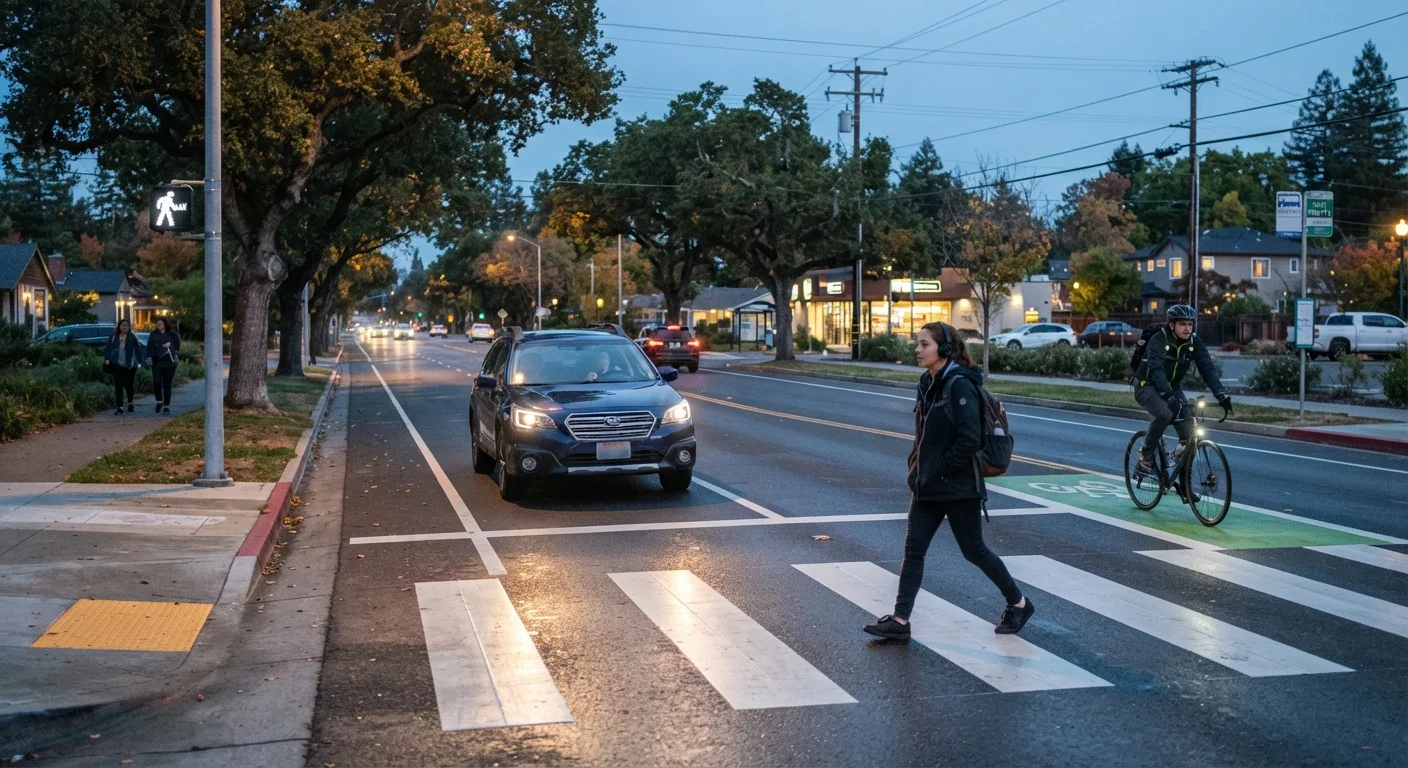
Key Takeaways
- Pedestrians and cyclists move unpredictably - slowing down early gives you time to respond.
- Eye contact with a pedestrian is not a guarantee they will wait - always yield before proceeding.
- Dooring a cyclist is a real legal and safety risk; check mirrors before opening your car door.
- Distraction is the leading factor in vehicle-pedestrian crashes in urban environments.
- Defensive driving near vulnerable road users means expecting the unexpected, not just following rules.
Why Sharing the Road Demands a Different Mindset
Most drivers feel confident navigating vehicle-to-vehicle traffic. But when cyclists, joggers, and pedestrians enter the picture, the dynamics shift dramatically. Unlike other vehicles, people on foot or on bikes have no metal shell, no seatbelt, and almost no margin for error if a collision occurs.
Roads in American cities and suburbs increasingly mix all three. Protected bike lanes remain common in urban cores, but on many streets a cyclist simply rides in the right portion of the travel lane - putting them directly in a driver's path. Understanding how to anticipate this shared environment is a core part of defensive driving. For a broader look at the assumptions that can make even experienced drivers dangerous, see why experienced drivers still make dangerous assumptions.
7,522
Pedestrian fatalities in one recent U.S. year
According to the Governors Highway Safety Association, pedestrian deaths in the U.S. have been rising over the past decade, with estimates exceeding 7,500 in recent years.
~73 ft
Distance traveled in 2 seconds at 25 mph
A two-second distraction at 25 mph means a driver covers roughly 73 feet - more than enough to pass an entire crosswalk without looking at the road.
Best Practices for Driving Near Pedestrians and Cyclists
The following practices address the most common failure points drivers encounter when sharing the road with vulnerable road users. Each one can be adopted immediately - no special equipment required.
Slow down proactively when approaching crosswalks, even unmarked ones.
Pedestrians have the legal right of way at crosswalks in most U.S. states, and many drivers only stop once they see someone already in the street. By the time a pedestrian steps off the curb, a driver traveling 30 mph may have less than two seconds to stop. Proactive deceleration creates the buffer that reaction time alone cannot.
Give cyclists at least three feet of clearance when passing - more if possible.
Many states have enacted minimum passing distance laws (commonly three feet) for overtaking cyclists. Even where laws vary, a narrow pass creates turbulence and psychological pressure that can cause a rider to swerve. Gravel, potholes, and car doors also push cyclists laterally without warning.
Check mirrors and surroundings before opening your car door on any street.
"Dooring" - hitting a cyclist with an opening car door - is a serious hazard and in most states is the driver's legal fault. Cyclists in bike lanes travel at 10-20 mph and may not be able to swerve in time once a door opens.
Never assume eye contact means a pedestrian will wait.
Drivers often interpret a glance from a pedestrian as acknowledgment that the person will hold their position. But pedestrians - especially children and older adults - can misread vehicle speed or intention and step out anyway. Yield fully before proceeding.
Eliminate in-cabin distractions in high-pedestrian zones.
Distracted driving is consistently identified as a leading factor in vehicle-pedestrian crashes. Glancing at a phone for two seconds at 25 mph means traveling roughly 73 feet without looking at the road - more than enough to miss a cyclist entering your lane or a child at a crosswalk.
Watch for cyclists in your blind spots before turning right.
Right-hook crashes - where a driver turns right and cuts off a cyclist traveling straight - are among the most common cyclist-vehicle collision types. Cyclists in a bike lane are often invisible in standard mirror checks. A physical shoulder check before any right turn closes this gap. For a deeper look at mirror limitations, see blind spot awareness.
Quick Actions You Can Take Starting Today
Awareness improves with habit. The adjustments below require no additional time or cost - only deliberate attention during drives you already make.
It's also worth noting that right-of-way rules around pedestrian crossings are among the most commonly misunderstood in American traffic law. Brushing up on the details can prevent legal liability as much as crashes. See what drivers get wrong about right-of-way for a thorough breakdown.
Scan Ahead, Not Just Immediately Ahead
Train yourself to look 15-20 seconds down the road rather than just at the car in front of you. This wider scan gives you early warning of cyclists emerging from driveways, pedestrians at upcoming corners, or a jogger about to re-enter the shoulder after stepping around an obstacle. It's a habit that takes deliberate practice but quickly becomes second nature.
The Role of Speed and Following Distance
Speed is the single most consequential variable in pedestrian and cyclist crashes. Research by transportation safety organizations consistently shows that the likelihood of a fatal outcome for a pedestrian struck at 40 mph is dramatically higher than at 20 mph. Reducing speed by even 5-10 mph in high-foot-traffic areas meaningfully changes stopping distances and reaction time.
Following distance matters in this context too. If you're tailgating the car ahead, you lose the sight lines needed to spot a cyclist pulling out from a parking lane or a child stepping from between parked cars. Maintain at least a three-second following gap - more in crowded urban areas. For guidance on scanning hazards before you even leave your driveway, consider making a pre-trip safety check part of your routine.
Bike Lane Rules Vary by State and City
Not all jurisdictions treat bike lanes the same way. In some cities, drivers may legally enter a bike lane briefly to turn right; in others, it is prohibited until the final few feet before an intersection. Local ordinances can differ even within a state. When in doubt, check your state's driver handbook or the traffic code for your municipality - and err on the side of caution when cyclists are present.