

Key Takeaways
- Up to 20% of your daily water intake can come from food, not just drinks.
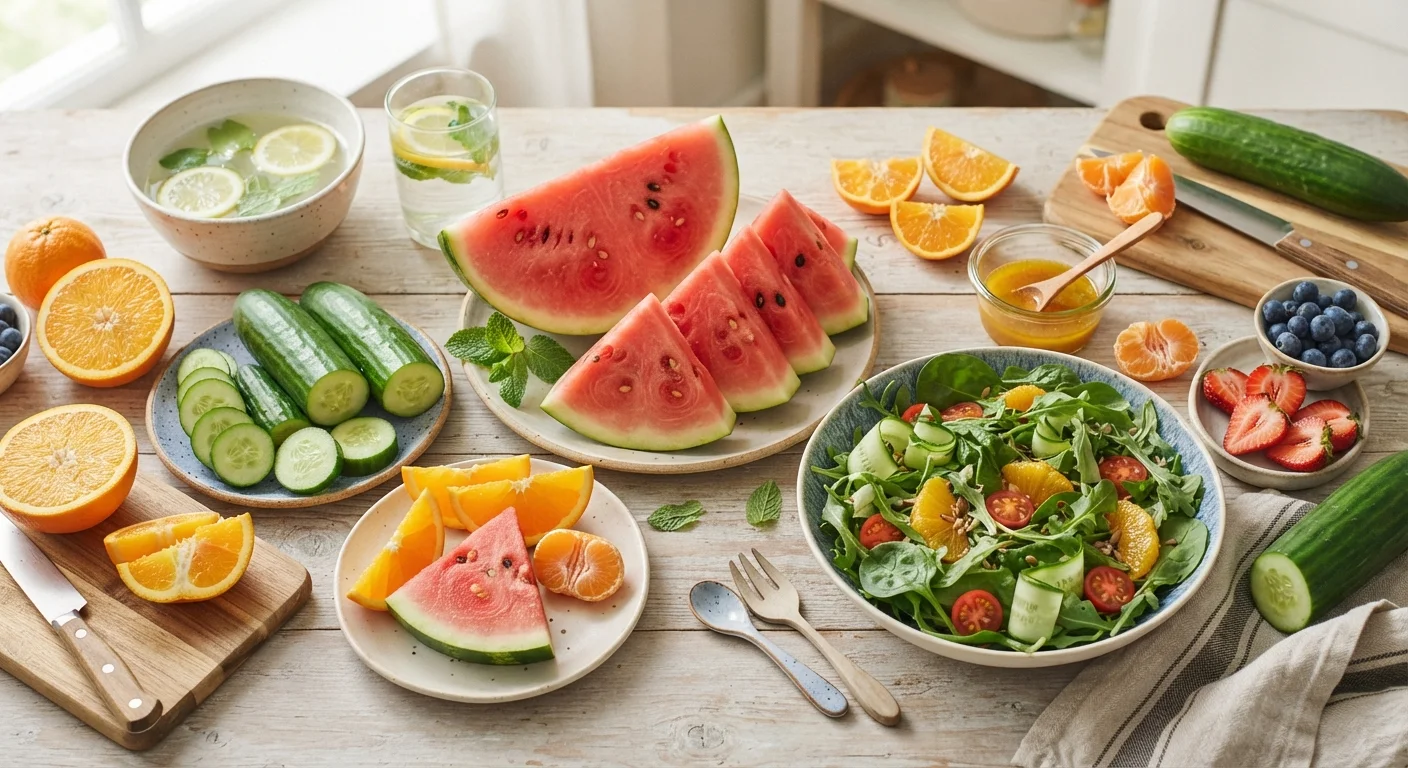
- Fruits and vegetables with high water content — like cucumber and watermelon — are among the most hydrating foods.
- High-sodium and ultra-processed foods can increase your body's water needs.
- Dietary hydration works alongside — not instead of — drinking enough fluids.
- Cooking methods can affect how much water a food retains before you eat it.
Dietary Hydration
Dietary hydration refers to the water your body absorbs through the foods you eat, not just the beverages you drink. Many fruits, vegetables, soups, and other foods contain substantial amounts of water that count toward your body's daily fluid needs. Staying hydrated is therefore about more than just how much you drink — it also reflects the kinds of foods on your plate.
The National Academies of Sciences estimates that roughly 20% of daily water intake in the U.S. comes from food sources, with the remainder from beverages.
More Than a Glass of Water
Most hydration advice focuses almost entirely on how much water you drink. While beverages are the dominant source of daily fluid, a meaningful portion of the water your body needs arrives through food. Understanding this relationship can shift how you think about both your diet and your hydration habits — without requiring you to overhaul either.
This isn't a minor footnote. According to estimates from the National Academies of Sciences, roughly one in five units of water the average American consumes each day comes from food. That's a contribution worth understanding, especially for people who struggle to drink enough throughout the day.
For a broader look at how individual food choices fit into an overall healthy pattern, see what balanced eating actually looks like in practice.
~20%
Daily water intake from food sources
The National Academies of Sciences estimates that approximately 20% of Americans' daily water intake comes from food rather than beverages.
90%+
Water content in cucumbers and lettuce
Many common salad vegetables — including cucumber, celery, and iceberg lettuce — consist of more than 90% water by weight.
Which Foods Contribute the Most Water?
Water-rich foods tend to share one obvious trait: they feel fresh and light. Fruits and vegetables lead the category. Cucumbers, iceberg lettuce, celery, radishes, and tomatoes all contain upward of 90% water by weight. Among fruits, strawberries, cantaloupe, peaches, and watermelon sit near the top. These foods aren't just nutritious — they actively contribute to your fluid balance as your body digests and absorbs them.
Beyond raw produce, soups and broths are among the most hydrating foods in any diet. A bowl of vegetable or chicken soup delivers substantial fluid alongside its other nutrients. Yogurt, oatmeal cooked with water or milk, and smoothies also add to your daily total.
On the other end of the spectrum, dry and processed foods — crackers, chips, dried meat, packaged snack foods — add very little water to your intake. Some, due to high sodium content, can actually increase the amount of water your body needs to maintain balance.
How Food Can Work Against Hydration
Not every food helps your hydration. Sodium is the most well-documented dietary factor that increases fluid needs. When sodium intake is high, the kidneys require more water to filter and excrete the excess, drawing on your body's fluid reserves. This is why a salty meal often triggers a noticeable thirst response.
Ultra-processed foods — items that tend to be both high in sodium and low in water content — create a double disadvantage. They add little fluid while simultaneously raising your body's demand for it. This doesn't mean these foods are off-limits, but understanding their effect on hydration puts them in useful context.
Alcohol and high-caffeine beverages deserve mention too, though their dehydrating effects are often overstated. Moderate coffee consumption, for example, does not appear to significantly dehydrate most people. For a fuller breakdown of what's fact versus myth in this area, see common hydration myths explained.
Hydration Needs Vary by Individual
Fluid needs differ based on body size, activity level, climate, and health status. The commonly cited "eight glasses a day" is a rough guideline, not a universal prescription. People with certain medical conditions — including kidney disease or heart conditions — may have specific fluid restrictions or requirements. Always follow the guidance of a qualified healthcare provider if you have an underlying health concern.
Putting It Into Everyday Practice
You don't need to track the water content of every food you eat. But a few practical habits can make a real difference in how well-hydrated you feel throughout the day.
- Prioritize fresh produce: Building meals and snacks around fruits and vegetables naturally increases your dietary water intake without any additional effort.
- Choose broth-based dishes: Soups, stews, and grain dishes cooked in water or broth can quietly boost hydration alongside their nutritional value.
- Notice how salt affects thirst: If you eat a meal heavy in sodium and feel unusually thirsty afterward, that's your body communicating a genuine need for more fluid.
- Don't overlook cooking method: Steaming vegetables preserves more of their natural moisture than roasting or sautéing at high heat.
Dietary hydration is one layer of a larger picture. It works best when paired with consistent fluid intake — not as a workaround for drinking less. If you have a specific health condition or concern about fluid balance, consult a qualified healthcare provider for guidance tailored to your situation.
This article is for general informational and educational purposes only and is not a substitute for professional medical advice. Always consult a qualified healthcare provider with questions about your health or nutrition.