

Key Takeaways
- Animal proteins are generally complete proteins, containing all essential amino acids in adequate proportions.
- Most plant proteins are incomplete but can cover all amino acids when paired or eaten across a varied diet.
- Digestibility differs between sources; animal proteins are typically absorbed more efficiently than most plant proteins.
- Both animal and plant protein sources can fit a healthy diet — variety and overall eating patterns matter most.
- Consulting a registered dietitian is worthwhile when making significant dietary shifts.
Our Verdict
Neither animal nor plant protein is universally superior — each brings distinct strengths and trade-offs. Animal sources offer complete amino acid profiles and high digestibility, while plant sources add fiber, phytonutrients, and environmental benefits. A diet drawing on both categories, or a thoughtfully planned plant-forward diet, can meet protein needs for most healthy adults.
| Best for | Recommended |
|---|---|
| Those prioritizing complete amino acids with minimal meal planning | Animal protein sources (eggs, poultry, dairy, fish) |
| Those seeking protein with added fiber and plant compounds | Plant protein sources (legumes, tofu, tempeh, edamame) |
| Those managing both nutrition and environmental considerations | A mixed approach combining both animal and plant proteins |
| Those following a fully plant-based diet | Complementary plant proteins with attention to B12 and iron |
What Makes a Protein Source 'Complete'?
Proteins are made of amino acids — the body can synthesize some on its own, but nine are considered essential, meaning they must come from food. A protein source is called complete when it provides all nine essential amino acids in sufficient quantities.
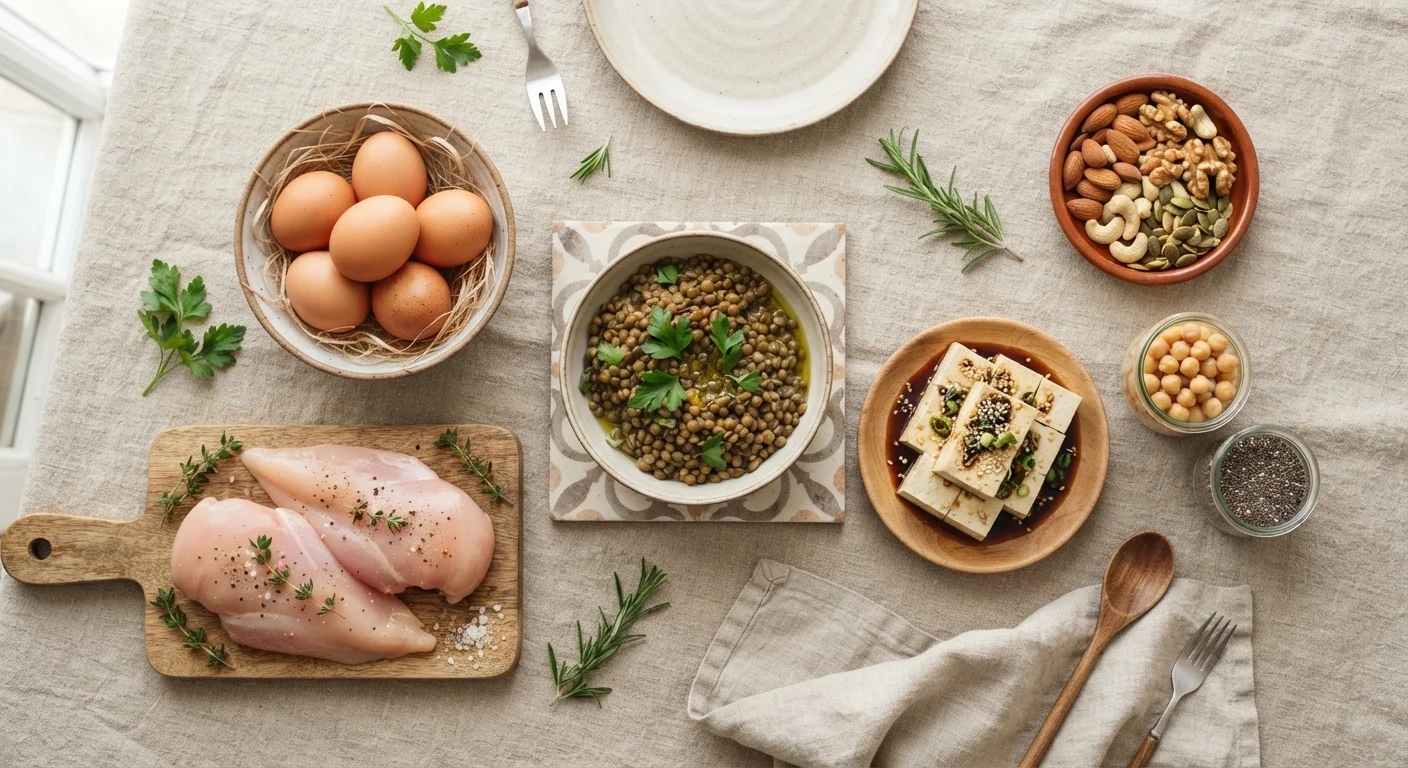
Animal-based foods — eggs, meat, poultry, fish, and dairy — are nearly all complete proteins. This is one reason they've historically been considered a reliable protein foundation. Plant sources tell a more varied story: most individual plant foods are low in at least one essential amino acid, making them incomplete on their own. However, this doesn't mean plant eaters are at a disadvantage. Eating a variety of plant foods throughout the day — rice and beans, hummus and pita, for example — naturally covers the full amino acid spectrum without requiring precise meal pairing. For a broader look at how individual foods fit into the bigger picture, see why eating patterns matter more than individual foods.
Digestibility: How Much Protein Actually Gets Absorbed?
A food's protein content on a nutrition label doesn't tell the full story. Digestibility — how efficiently the body breaks down and absorbs that protein — varies considerably between sources.
Animal proteins generally score high on digestibility scales. Eggs, for instance, are often cited by researchers as having among the highest protein digestibility of any whole food. Dairy and lean meats follow closely. Plant proteins are typically absorbed somewhat less efficiently, partly because plant cell walls and natural compounds like phytates can reduce absorption. That said, processing and cooking improve digestibility significantly — cooked lentils and tofu are far more digestible than raw legumes or whole soybeans.
~90–95%
Digestibility of egg and meat protein
Research using the DIAAS (Digestible Indispensable Amino Acid Score) framework consistently places animal proteins among the most efficiently absorbed dietary proteins.
~70–80%
Digestibility of most cooked legume protein
Cooked legumes show meaningfully improved digestibility compared to raw forms, according to nutritional science literature, though still below most animal sources.
Fermented plant foods like tempeh show notably better digestibility than their unfermented counterparts, making them a practical choice for those relying heavily on plant protein.
Side-by-Side: How Common Sources Stack Up
The table below compares widely eaten animal and plant protein sources across practical criteria. Protein amounts are approximate per standard serving and can vary by preparation method.
| Eggs | Chicken Breast | Canned Tuna | Lentils (cooked) | Tofu (firm) | Tempeh | |
|---|---|---|---|---|---|---|
| Protein per serving (approx.) | 6g per egg | 26g per 3 oz | 20g per 3 oz | 18g per cup | 10g per 3 oz | 16g per 3 oz |
| Complete protein? | Yes | Yes | Yes | No (close) | No | No |
| Digestibility | Very high | High | High | Moderate | Moderate–high | High |
| Contains fiber? | No | No | No | Yes (16g/cup) | Small amount | Yes |
| Relative cost | Low–moderate | Moderate | Low–moderate | Very low | Low–moderate | Moderate |
| Prep ease | Very easy | Easy–moderate | Very easy | Moderate | Easy | Easy |
As the comparison shows, each source brings trade-offs. Chicken breast delivers high protein with minimal fat and no fiber, while lentils offer substantial protein alongside fiber and important micronutrients. For a deeper look at how plant-focused eating shifts overall nutrition, explore what changes when you reduce meat.
Practical Considerations Beyond the Numbers
Nutritional metrics are only part of the equation. Several real-world factors shape which protein sources work for any given person or household.
- Cost: Dried legumes (lentils, chickpeas, black beans) are among the most affordable protein sources available. Eggs are a budget-friendly animal option. Fresh fish and organic meats typically sit at the higher end.
- Preparation time: Canned beans and eggs require little effort. Dried legumes need soaking and longer cooking. Tofu and tempeh are ready to cook quickly once purchased.
- Accompanying nutrients: Animal proteins often come with saturated fat (red meat, full-fat dairy) or beneficial omega-3 fatty acids (fatty fish). Plant proteins come packaged with fiber, folate, and phytonutrients often absent from animal foods.
- Dietary restrictions: Lactose intolerance, fish allergies, religious dietary laws, and ethical preferences all legitimately shape protein choices.
Variety Is a Practical Strategy
Rather than seeking a single 'best' protein source, rotating across several options — animal, legume, soy-based, and nut or seed-based — naturally broadens your amino acid and micronutrient coverage. Even small additions, like stirring lentils into a meat-based dish, shift the nutritional balance in a useful direction without requiring a complete dietary overhaul.
It's also worth noting that how protein-rich foods are processed matters. Understanding the difference between whole and processed foods can help clarify why a whole chicken breast and a processed deli product — both animal proteins — carry very different nutritional profiles.
This article is for general informational and educational purposes only and is not a substitute for personalized nutrition or medical advice. Consult a registered dietitian or qualified healthcare professional before making significant changes to your diet.