

Key Takeaways
- Paint cannot seal or cure moisture problems — it will peel or blister if the source isn't fixed first.
- Skipping surface preparation is the single most common reason paint jobs fail prematurely.
- Primer is not optional when switching colors, covering stains, or painting porous or repaired surfaces.
- Dark-to-light color changes often require more coats than the can's label suggests.
- Paint can refresh a space cosmetically but will not structurally repair cracks, rot, or damage.
Why Paint Seems Like the Answer to Everything
Of all the home improvement tasks available to a DIYer, painting is the most tempting shortcut. It's affordable, fast, and the results are immediately visible. That combination leads many homeowners to reach for a brush when what the wall actually needs is a plumber, a moisture assessment, or a repair technician.
Understanding what paint genuinely does — and doesn't do — protects your time, your walls, and your budget. The myth-busting below addresses the most persistent misconceptions we hear from homeowners, and what the smarter approach looks like in each case.
For a broader picture of the costs that catch renovators off guard, see our guide to overlooked renovation expenses.
Common Painting Myths — Set Straight
These are the misconceptions that lead to failed paint jobs, recurring problems, and wasted weekends. Work through each one before you open a single can.
Myth
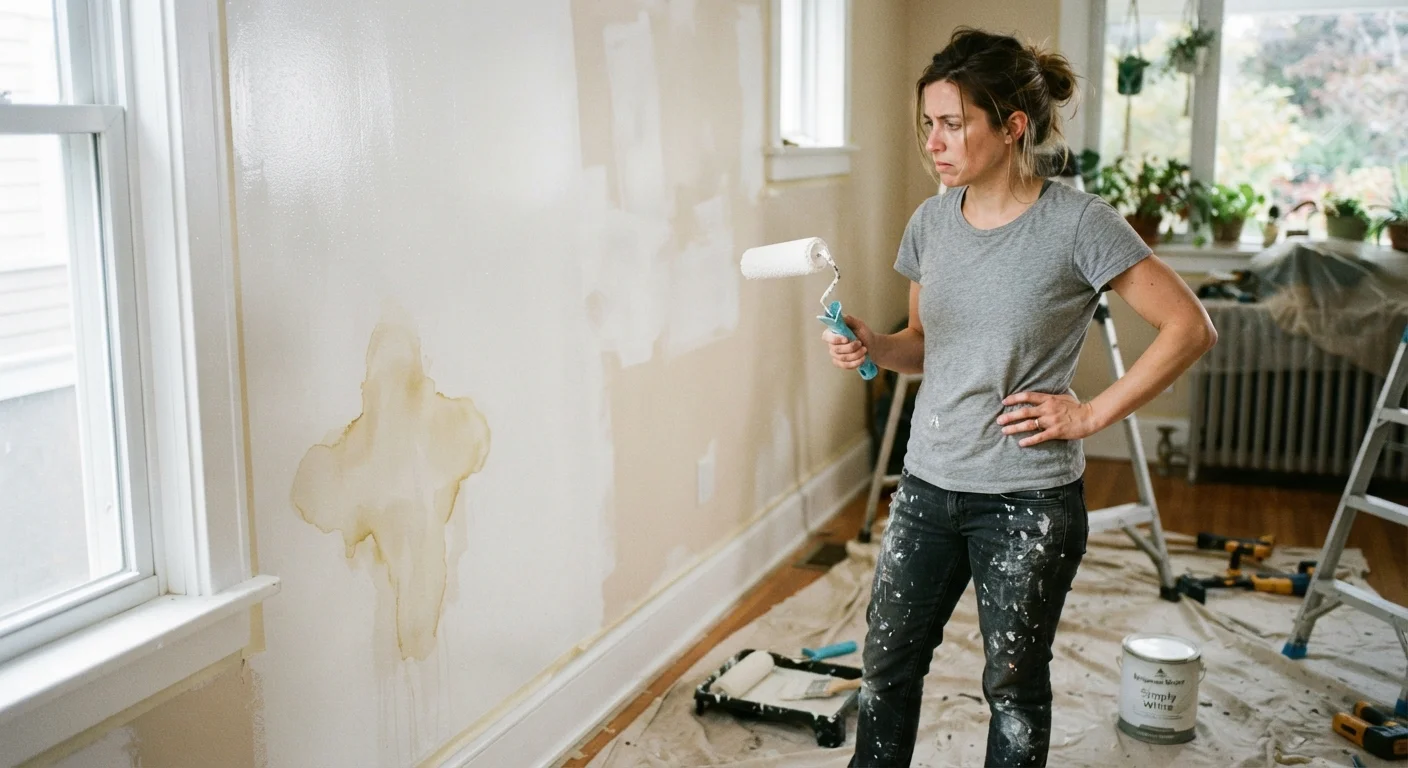
A fresh coat of paint will cover water stains for good.
Fact
Paint applied over an active or unrepaired moisture source will blister, peel, or stain again — often within weeks.
Water stains bleed through standard paint because the minerals and oils left by moisture are not water-soluble. Even if the wall looks dry, painting over an unresolved leak or humidity problem traps the issue beneath the surface. The correct approach is to identify and fix the moisture source first, allow the area to dry completely, then apply a stain-blocking primer before any topcoat. Skipping those steps means repainting the same spot repeatedly without ever solving the problem.
Myth
Prep work is optional if you're using a high-quality paint.
Fact
No paint formulation compensates for poor surface preparation — adhesion depends on the substrate, not the brand.
Paint adheres to the surface it's applied to, not through it. Dust, grease, loose paint, glossy finishes, and unrepaired holes all compromise adhesion regardless of paint quality. Proper prep includes cleaning the surface, sanding glossy areas, filling cracks and holes with appropriate filler, and allowing everything to cure before applying primer. Homeowners who invest in preparation routinely get paint jobs that last significantly longer than those who rely on an expensive can to do the heavy lifting.
Myth
Primer is only necessary if you're painting bare drywall.
Fact
Primer is needed any time you change colors dramatically, paint over stains, or apply paint to repaired or porous surfaces.
Primer serves multiple functions beyond sealing raw drywall. It creates a uniform surface that helps topcoats bond evenly, it blocks tannins and stains from bleeding through, and it reduces the number of finish coats needed when switching from a dark to a light color. Skipping primer when covering a deep red wall with soft gray, for example, often results in four or five coats instead of two — a false economy that costs more in time and paint than the primer would have.
Myth
One coat is enough if the paint is labeled 'one-coat coverage.'
Fact
One-coat claims apply under ideal conditions — similar color, properly primed surface, and correct application technique.
Coverage ratings on paint cans assume you're painting a properly primed surface in a similar color family with consistent roller technique. Switching from a dark to a light color, painting over a porous surface, or applying paint too thinly all reduce actual coverage significantly. Two coats, with adequate drying time between them, remain the industry-standard recommendation for most interior painting projects. Rushing to a single coat typically results in streaks, uneven sheen, and color that looks different in varying light conditions.
Myth
Paint can seal hairline cracks in walls and prevent them from returning.
Fact
Paint films are too thin and rigid to bridge active cracks — they will crack again as the underlying material moves.
Hairline cracks in plaster or drywall are caused by settling, temperature cycling, or structural movement. Painting over them without filling them with an appropriate flexible filler or joint compound means the crack will telegraph back through the topcoat, sometimes within a single season. Cracks wider than about 1/8 inch, or those that reopen after repair, may indicate movement that warrants professional evaluation before any cosmetic fix is applied. See our guide on what wall cracks are telling you for guidance on when a crack is a cosmetic concern versus a structural signal.
When Paint Signals a Bigger Problem
Peeling, bubbling, or persistent staining on painted surfaces are rarely just cosmetic issues. They are often the visible symptom of something happening behind the wall — moisture intrusion, inadequate ventilation, or foundation movement.
Don't Paint Over Active Moisture
If you notice paint bubbling, peeling in sheets, or recurring dark stains, stop and investigate the moisture source before applying any new paint. Painting over active moisture accelerates wall damage and can contribute to mold growth inside the wall cavity. Address the source — whether a plumbing leak, exterior water intrusion, or inadequate bathroom ventilation — and allow surfaces to dry fully before proceeding.
Your home communicates through these signals constantly. Learning to read them before you paint over them is one of the most valuable skills a homeowner can develop. Our article on decoding what cracks, stains, and sounds mean walks through exactly how to interpret those warning signs.
If you're weighing whether a painting or surface-prep project is right for DIY or needs a professional, our breakdown on when to hire a contractor versus doing it yourself offers a practical framework.