

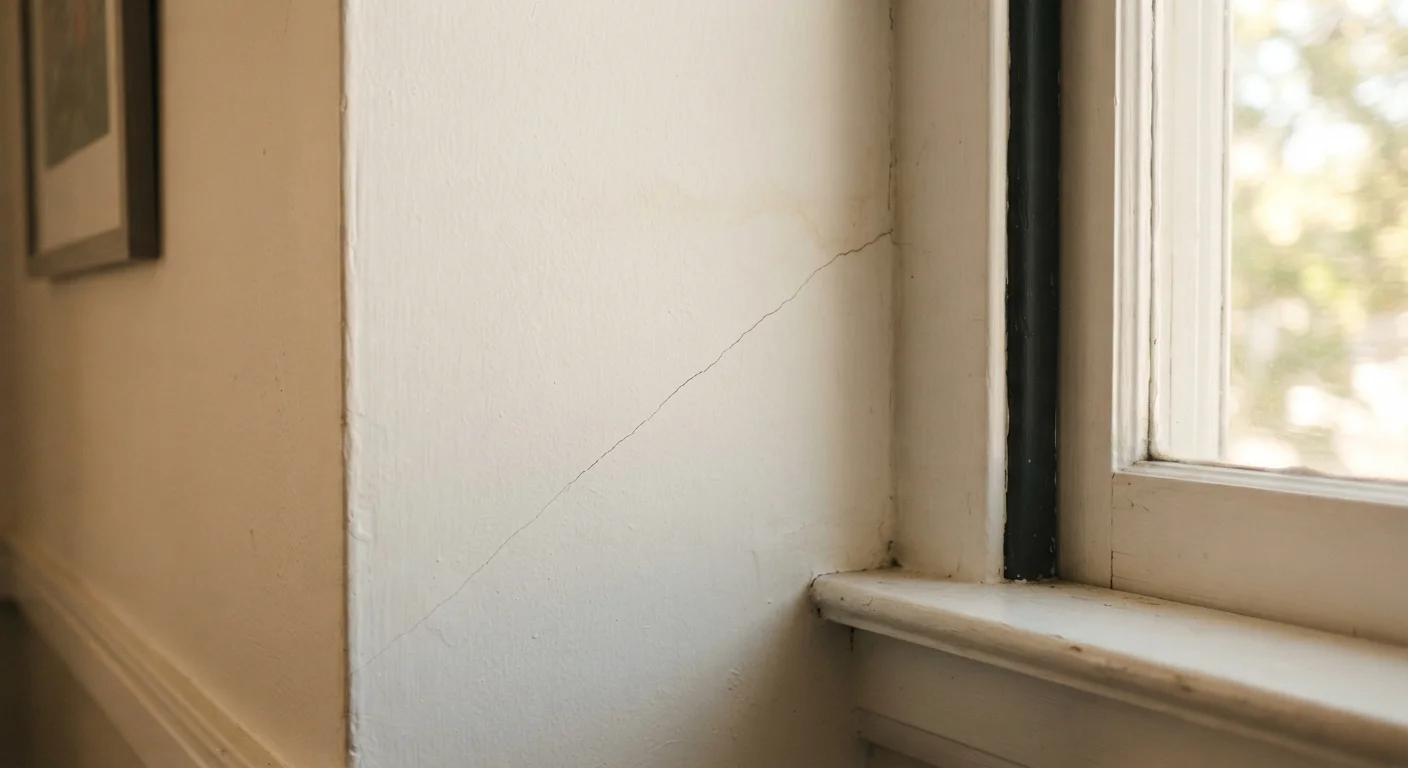
| Most common crack type | Hairline drywall cracks near door/window corners (General industry observation) |
| Crack width to watch closely | ⅛ inch or wider (Common structural inspection threshold) |
| Water stain source distance | Often several feet from visible mark (Due to travel along joists or rafters) |
| Water hammer cause | Abrupt stoppage of water flow in pipes |
| Most urgent sound signal | Hissing near gas appliances with sulfur odor (Requires immediate evacuation and utility contact) |
| Crack monitoring method | Mark ends with pencil and date; check monthly |
Why Your House Is Always Talking
Homes shift, settle, expand, and contract with every season. Most of the signals they produce — a thin crack near a door frame, a faint ring on the ceiling, a rattling pipe — are easy to ignore until they aren't. Learning to read these signs accurately helps you separate normal wear from problems that genuinely need attention.
This guide covers the most common visual and audible signals, what they likely indicate, and when to call a licensed professional rather than reaching for caulk. For a broader checklist of tasks many owners miss entirely, see Home Maintenance Tasks Every First-Time Owner Overlooks.
| Most common crack type | Hairline drywall cracks near door/window corners (General industry observation) |
| Crack width to watch closely | ⅛ inch or wider (Common structural inspection threshold) |
| Water stain source distance | Often several feet from visible mark (Due to travel along joists or rafters) |
| Water hammer cause | Abrupt stoppage of water flow in pipes |
| Most urgent sound signal | Hissing near gas appliances with sulfur odor (Requires immediate evacuation and utility contact) |
| Crack monitoring method | Mark ends with pencil and date; check monthly |
Decoding Cracks: Location and Shape Matter
Not all cracks are equal. The two factors that matter most are location and pattern.
- Hairline cracks in drywall or plaster — typically a result of seasonal humidity changes or normal settling. Common near door and window corners. Monitor over time; if they stay static, they're generally cosmetic.
- Stair-step cracks in brick or block — follow mortar joints diagonally. Can indicate differential foundation settlement. Widen over months? Have a structural engineer evaluate.
- Horizontal cracks in a basement or foundation wall — these are the most serious category. They can indicate lateral soil or water pressure against the wall. Do not delay — consult a licensed structural or foundation specialist.
- Vertical cracks in poured concrete foundations — often caused by concrete curing or minor settling. Thin, stable cracks (under ⅛ inch) may only need sealing to prevent water intrusion.
A simple way to monitor any crack: use a pencil to mark each end with the date. Check monthly. Growth in length or width signals an active problem. Keeping a home maintenance log is an effective way to track this kind of progression over time.
Water Stains: Tracing the Source Upstream
A brown or yellowish ring on a ceiling rarely originates at the ring itself. Water travels along rafters, joists, and pipes before pooling and staining — so the actual source is often several feet away from the visible mark.
Differential settlement
When different parts of a foundation sink or shift at uneven rates, often causing diagonal cracks in walls or ceilings. It can result from soil conditions, moisture changes, or construction variations.
Water hammer
A banging or thumping sound in pipes caused by a sudden stop in water flow, which sends a pressure shockwave through the plumbing system. It can loosen pipe joints over time if left unaddressed.
Flashing
Thin metal strips installed around roof penetrations, chimneys, skylights, and where the roof meets a wall. Flashing directs water away from joints; when it cracks or separates, leaks follow.
Efflorescence
White, chalky deposits that appear on concrete or masonry surfaces when water moves through the material and leaves behind dissolved salts. It indicates moisture is moving through the wall.
Lateral pressure
Horizontal force exerted against a foundation wall by surrounding soil, especially when saturated with water. It is one of the key causes of horizontal foundation cracks.
- Ceiling stain directly below a bathroom — suspect a wax ring seal, supply line, or drain connection. Run water in the fixture above and watch the stain for fresh wetness.
- Ceiling stain in the center of a room, away from plumbing — roof leak is the most common cause. Small roof issues can escalate quickly — inspect attic insulation and decking for dark staining or soft spots.
- Wall stains near windows or exterior doors — typically point to failed caulk, weatherstripping, or flashing. See what caulk and weatherstripping actually do before repainting.
Painting over a water stain without fixing the source is a temporary cosmetic fix at best. Fresh paint rarely fixes underlying moisture issues — address the water entry point first.
Always Fix the Source, Not Just the Surface
Stain-blocking primer and fresh paint can hide a water mark, but they do nothing to stop ongoing moisture entry. If you repaint before confirming the leak is resolved, you may be masking active damage — including mold growth inside the wall cavity. Always confirm the source is dry and repaired before any cosmetic work.
Sounds: A Field Guide to What You're Hearing
Unfamiliar sounds are often the earliest warning a home gives — before any visible damage appears.
~90%
Of roof leaks traced to flashing failures or penetrations
Industry roofing inspectors commonly attribute the majority of residential leaks to flashing and penetration issues rather than field shingles.
1 in 5
Homes with evidence of past water intrusion at sale
Home inspection industry data suggests water damage signs are among the most frequently noted issues during pre-sale inspections.
- Banging pipes ("water hammer") — occurs when water flow stops abruptly, sending a pressure wave through the line. Usually fixable by securing loose pipe straps or installing a water hammer arrestor. A plumber can confirm whether pressure regulation is needed.
- Ticking or popping from walls or ceilings — most often thermal expansion in framing or ductwork. More pronounced in extreme temperatures. Generally harmless, but persistent creaking in floor joists under load may warrant inspection.
- Hissing near the water heater or gas appliances — treat as a potential gas or pressure issue until confirmed otherwise. Evacuate and contact your utility provider if you also smell sulfur.
- Humming from electrical panels — a slight hum from a breaker panel is common. Loud buzzing or sizzling is not. Refer to what homeowners should know about circuit breakers and electrical safety and call a licensed electrician.
- Scratching inside walls or ceilings — typically indicates a pest presence (mice, squirrels, insects). Sounds concentrated near rooflines or in attics are common entry points.
When in doubt about any sound related to gas lines, structural members, or electrical systems, contact a qualified professional. These are not areas suited to improvised fixes.