

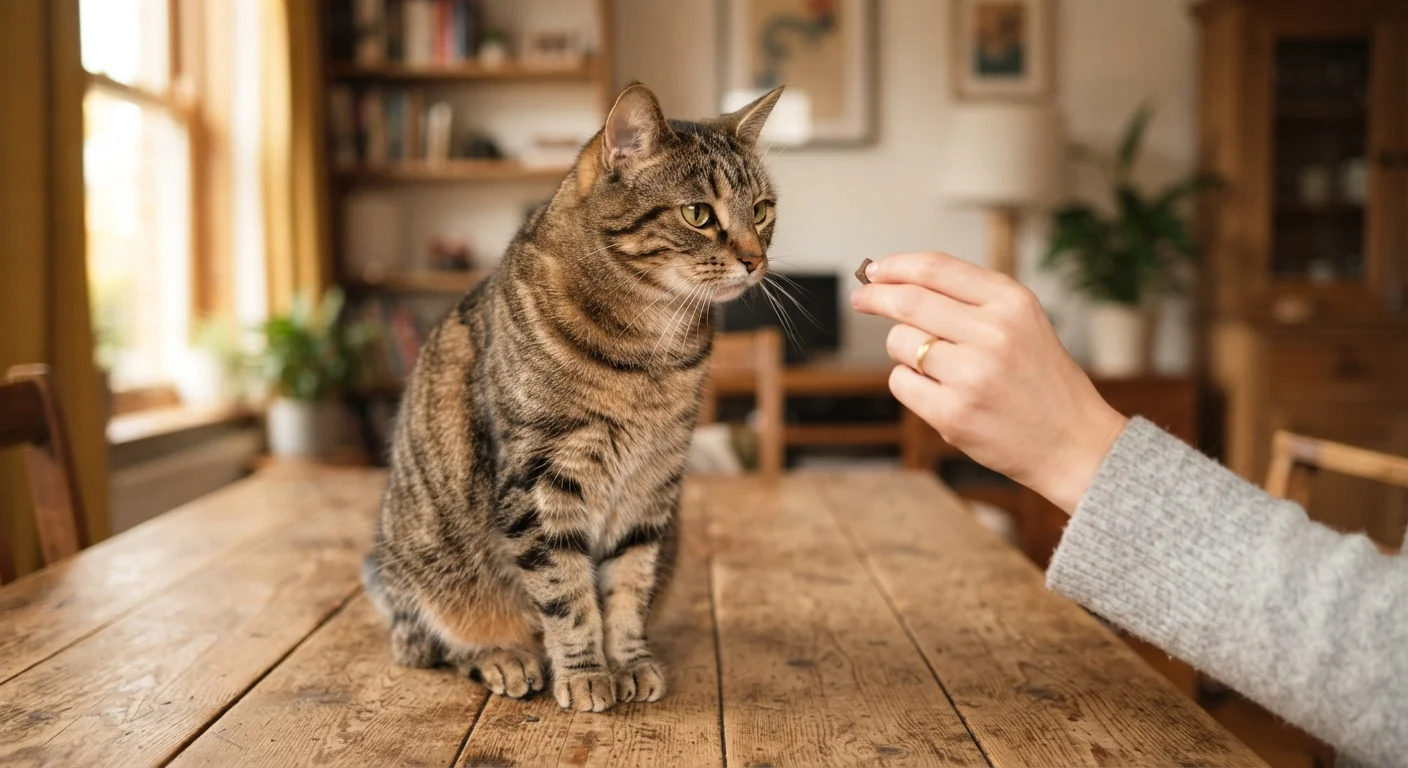
Key Takeaways
- Cats are fully capable of learning behaviors through consistent, reward-based training methods.
- Punishment-based approaches are ineffective and can damage the trust between cats and their owners.
- Short, frequent training sessions work far better than long, infrequent ones for feline learners.
- Age is not a barrier — both kittens and adult cats can acquire new behaviors and skills.
- Understanding feline motivation, especially food and play rewards, is central to training success.
Why Cat Training Myths Persist
Cats have a reputation for being aloof, stubborn, and fundamentally untrainable. That reputation is largely undeserved — and it costs owners real opportunities to improve their cat's wellbeing and their relationship with their pet. The myths around cat training tend to persist because feline behavior is genuinely less intuitive to humans than dog behavior. Cats evolved as solitary hunters, not pack animals, so their responses to social cues differ significantly. When owners try dog-style training on cats and fail, the takeaway is often "cats can't be trained" rather than "I need a different approach."
The good news is that behavioral science has advanced considerably, and what we now understand about feline learning challenges many of these long-held assumptions. Just as persistent myths about pet nutrition have been overturned by veterinary research, misconceptions about cat training deserve the same scrutiny.
Myth
Cats are too independent to be trained — they simply don't want to please their owners.
Fact
Cats can and do learn behaviors through positive reinforcement; their motivation differs from dogs, but it exists.
The idea that cats lack motivation to engage with training stems from comparing them to dogs, who are selectively bred for cooperative behavior with humans. Cats weren't bred for that same compliance, but they are capable learners. Research in animal behavior confirms that cats respond well to operant conditioning — they learn that a specific behavior produces a desirable outcome. The key is identifying what each individual cat values: food, play, or social interaction. Owners who apply consistent reward-based methods report genuine success teaching sit, come, and even complex behaviors.
Myth
You can't teach an old cat new tricks — training only works on kittens.
Fact
Adult and senior cats are fully capable of learning new behaviors; age alone is not a limiting factor.
While kittens may be faster to absorb new information due to a developmental sensitive period, adult cats continue to learn throughout their lives. Neuroplasticity — the brain's ability to form new associations — persists well into adulthood in cats. Many shelter cats adopted as adults are successfully trained after rehoming. The approach may require more patience and shorter sessions, but age should not discourage owners from starting a training program. If an older cat suddenly seems unable to learn or shows behavioral changes, a veterinary checkup is warranted to rule out health issues rather than attributing it to age alone.
Myth
Punishing a cat for bad behavior is an effective way to stop it.
Fact
Punishment is largely ineffective in cats and frequently causes fear, stress, and avoidance of the owner.
Cats do not process punishment the way owners intend. Because cats cannot reliably connect a delayed punishment to a prior behavior, they are more likely to associate the negative experience with the person delivering it than with the action itself. This can erode trust and create anxiety without reducing the unwanted behavior. Veterinary behaviorists and certified animal trainers consistently recommend redirecting behavior and reinforcing alternatives instead. For example, if a cat scratches furniture, providing a preferred scratching post and rewarding its use is measurably more effective than any punitive response.
Myth
Cats are solitary and don't care about interacting with humans, so training is pointless.
Fact
Most domestic cats form genuine social bonds with their owners and can find interaction rewarding.
Domestic cats (Felis catus) have coexisted with humans for thousands of years and show attachment behaviors that differ from their wild ancestors. Studies using the secure base test — adapted from human infant attachment research — have found that many cats display signs of secure attachment to their owners, seeking proximity and comfort from them. This social bond can be leveraged in training. Cats that receive regular positive interactions with their owners tend to be more engaged and responsive during training sessions. Dismissing cats as wholly indifferent misses a meaningful dimension of the human-feline relationship.
Myth
Spraying water at a cat is a humane, harmless correction that teaches boundaries.
Fact
Spray bottle corrections are stressful, teach avoidance of the owner, and do not address the underlying behavior.
Spray bottles are a common household tool that many owners reach for instinctively, but they function as a mild punishment — and carry the same pitfalls. Cats may learn to stop the behavior only when the bottle is visible, or they learn to perform it when the owner is absent. More importantly, repeated aversive experiences can increase a cat's baseline stress level, which is associated with health problems including feline idiopathic cystitis. Redirecting and reinforcing incompatible behaviors remains the evidence-based recommendation from veterinary behavior specialists.
What Actually Works in Feline Training
Effective cat training centers on a few core principles: positive reinforcement, precise timing, and realistic expectations. Cats are highly motivated by high-value food rewards — small pieces of cooked chicken, fish, or commercially prepared treats — delivered within one to two seconds of the desired behavior. Clicker training (pairing a click sound with a reward) is widely used because it bridges the gap between the behavior and the treat with consistency.
2–5 min
Ideal cat training session length
Veterinary behaviorists generally recommend multiple brief sessions daily rather than longer, infrequent training blocks for cats.
1–2 sec
Reward delivery window after behavior
Behavioral science indicates rewards must follow the desired behavior within one to two seconds to form a clear association in the cat's mind.
Session length matters enormously. Unlike dogs, cats tend to disengage quickly. Veterinary behaviorists generally suggest keeping training sessions to two to five minutes, repeated several times a day, rather than one long session. Ending on a success — asking for a behavior the cat already knows before closing a session — helps maintain positive associations with training.
If you share your home with multiple animals, the training dynamic gets more complex. See our guide to training in multi-pet households for practical strategies when dogs and cats share a space.
Sudden Behavior Changes Need Veterinary Attention
If a previously well-behaved cat suddenly develops new problem behaviors — inappropriate elimination, aggression, or withdrawal — consult a veterinarian before beginning any training program. Behavioral changes are often the primary sign of an underlying medical condition, including pain, thyroid disease, or urinary tract issues. Treating the medical cause is always the first step.
This article provides general educational information about cat behavior and training. It is not a substitute for guidance from a qualified veterinary behaviorist or certified animal trainer.