

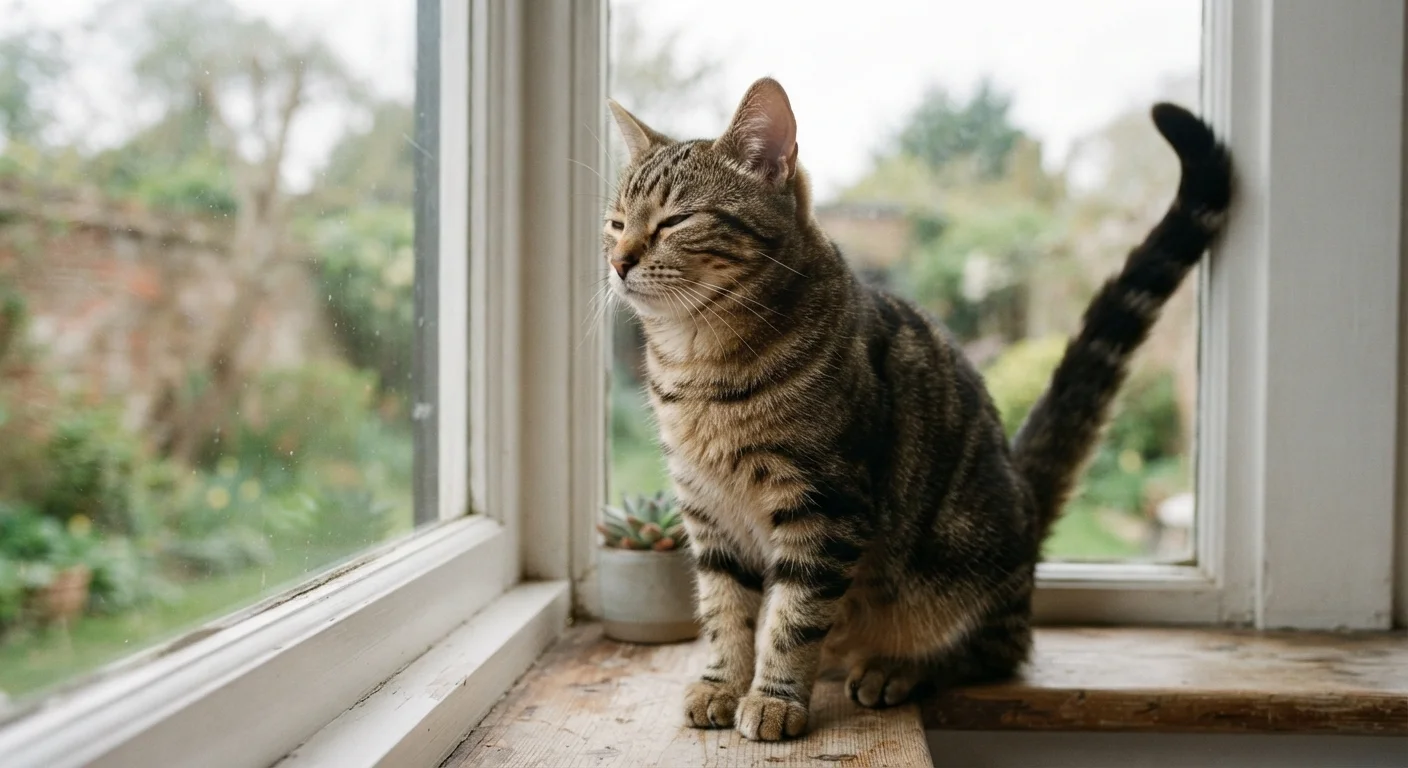
| Tail held high | Confidence, friendly greeting |
| Flattened ears | Fear, defensiveness, or aggression warning |
| Slow blink | Relaxation and trust signal (Supported by animal behavior research) |
| Puffed tail | Fear or agitation response |
| Belly exposure | Trust display — not always a touch invitation |
| Lashing tail | Overstimulation or irritation warning |
Why Body Language Is Your Cat's Primary Language
Cats are not silent creatures — they are constantly communicating. The difference is that most of their signals are physical rather than vocal. Tail position, ear angle, pupil size, and posture form a layered system that conveys comfort, curiosity, fear, and aggression with remarkable precision.
Understanding this system matters for practical reasons. Misreading a cat's signals is one of the most common causes of scratches, bites, and strained relationships between cats and their owners. More importantly, recognizing early stress signals lets you intervene before a cat reaches its threshold — the point at which it feels it has no choice but to react physically.
For a broader look at how body language applies across species and situations, see our guide on reading pet body language across different situations. This field guide focuses specifically on cats, breaking their signals into the body parts that matter most.
| Tail held high | Confidence, friendly greeting |
| Flattened ears | Fear, defensiveness, or aggression warning |
| Slow blink | Relaxation and trust signal (Supported by animal behavior research) |
| Puffed tail | Fear or agitation response |
| Belly exposure | Trust display — not always a touch invitation |
| Lashing tail | Overstimulation or irritation warning |
Decoding the Key Body Signals
Tail
The tail is often the clearest single indicator of a cat's emotional state. A tail held high — straight up or with a slight curl at the tip — indicates confidence and friendliness. A puffed tail signals fear or agitation; the cat is attempting to appear larger. A low or tucked tail reflects anxiety or submission. Rapid, lashing side-to-side movement (not a gentle sway) is a reliable warning that the cat is overstimulated or irritated.
Ears
Forward-facing ears indicate alertness and engagement. Ears rotated sideways or flattened against the skull — sometimes called "airplane ears" — signal fear, defensiveness, or impending aggression. A single ear rotating toward a sound is simple curiosity; both ears pivoting rapidly often means the cat is scanning for a perceived threat.
Eyes and Pupils
Slow blinking is widely recognized by animal behaviorists as a sign of relaxation and trust. Returning a slow blink to your cat is a low-risk, evidence-supported way to reinforce positive association. Dilated pupils in normal lighting can indicate excitement, fear, or arousal — context matters. Constricted pupils in a tense cat often precede aggression. A hard, direct stare is a dominance or threat display; soft, relaxed eyes indicate comfort.
Body Posture and Position
A cat exposing its belly is not automatically an invitation to touch it — in many cats, a belly roll is a greeting or trust display, not a request for a belly rub. Approach it as a compliment, not a cue. A crouched, tucked posture with weight shifted back suggests fear or conflict avoidance. An arched back with piloerection (raised fur along the spine) is a classic defensive threat display.
Piloerection
The involuntary raising of fur along the spine and tail, caused by muscle contractions. In cats, it typically signals fear, threat, or high arousal and is designed to make the animal appear larger.
Overstimulation threshold
The point at which a cat's tolerance for physical contact or interaction is exceeded, triggering an abrupt defensive or aggressive response. Recognizing early warning signals helps owners avoid reaching this point.
Slow blink
A deliberate, unhurried closing and reopening of the eyes used by cats to signal comfort and non-threat. Animal behaviorists consider it a trust-building communication between cats, and between cats and familiar humans.
Displacement behavior
An apparently irrelevant action — such as sudden grooming mid-interaction — that a cat performs when in conflict between two motivations, like approach and avoidance. It signals internal stress rather than relaxation.
Affiliative signal
Any behavior that promotes social bonding or communicates friendly intent. In cats, examples include slow blinking, tail-up greetings, head bunting, and allorubbing.
Putting It Together: Reading the Whole Cat
Individual signals rarely tell the full story. A cat with dilated pupils and flattened ears and a low, lashing tail is communicating something very different from a cat with dilated pupils that is crouched in a play-ready pounce position with an upright, quivering tail tip. Always read the whole animal in context.
Two situations deserve special attention. First, the overstimulation threshold: cats being petted can shift from relaxed to irritated with little warning if owners miss early signals — a twitching tail, skin rippling, or ears beginning to rotate. Stop petting before these signals escalate. Second, fear versus aggression: these two states look similar but require opposite responses. A fearful cat needs space and an escape route; approaching it worsens the situation. An offensively aggressive cat (upright posture, forward-leaning, direct stare) is a different challenge entirely.
Investing time in reading your cat also pays dividends for health monitoring. Subtle changes in posture, gait, or grooming behavior can be early indicators of discomfort or illness — another reason to understand your cat's baseline. For more on keeping your cat healthy day-to-day, visit our Pet Health & Care hub.
Body Language Changes Can Signal Health Issues
A cat that suddenly adopts a hunched posture, stops grooming, or avoids interaction may be in pain or experiencing illness — not simply changing personality. If your cat's body language shifts noticeably without an obvious environmental cause, a veterinary consultation is advisable. This article provides general behavioral information and is not a substitute for professional veterinary assessment.