

Key Takeaways
- Chronic stress in pets suppresses immune function and can lead to measurable behavioral and physical changes.
- Common household factors — noise, inconsistent routines, and overcrowding — are frequent but overlooked stressors.
- Recognizing subtle stress signals early allows owners to make targeted adjustments before health problems develop.
- Veterinary guidance is essential when stress-related symptoms persist or worsen despite environmental changes.
Why Household Stress Is a Serious Pet Health Issue
Most pet owners recognize obvious threats to their animals' health — poor nutrition, inadequate exercise, or lack of veterinary care. What's harder to spot are the low-grade, persistent stressors hiding in plain sight inside the home. These chronic pressures can be just as damaging over time as any single acute event.
When a pet experiences ongoing stress, the body responds by sustaining elevated levels of cortisol and other stress hormones. Prolonged hormonal imbalance can suppress immune function, disrupt digestion, alter sleep patterns, and contribute to behavioral problems. Understanding how chronic stress differs from acute stress helps frame why these hidden household pressures deserve serious attention.
Learning to read your pet's body language is one of the most effective ways to catch stress signals early. Below are the most common household stressors that veterinary and behavioral experts identify — and what you can realistically do about them.
Unpredictable Daily Routines
Pets — particularly dogs and cats — are highly attuned to time and pattern. Irregular feeding schedules, inconsistent walk times, and varying sleep arrangements can keep an animal in a low-level state of alertness. This vigilance, sustained over weeks or months, taxes the nervous system in ways that accumulate quietly.
Establishing predictable rhythms for meals, exercise, and rest is one of the most cost-free interventions available. Even modest consistency — feeding within the same 30-minute window daily — signals safety and reduces anticipatory anxiety.
Predictable routines signal safety to pets and reduce background anxiety that accumulates over time.
Chronic Noise Exposure
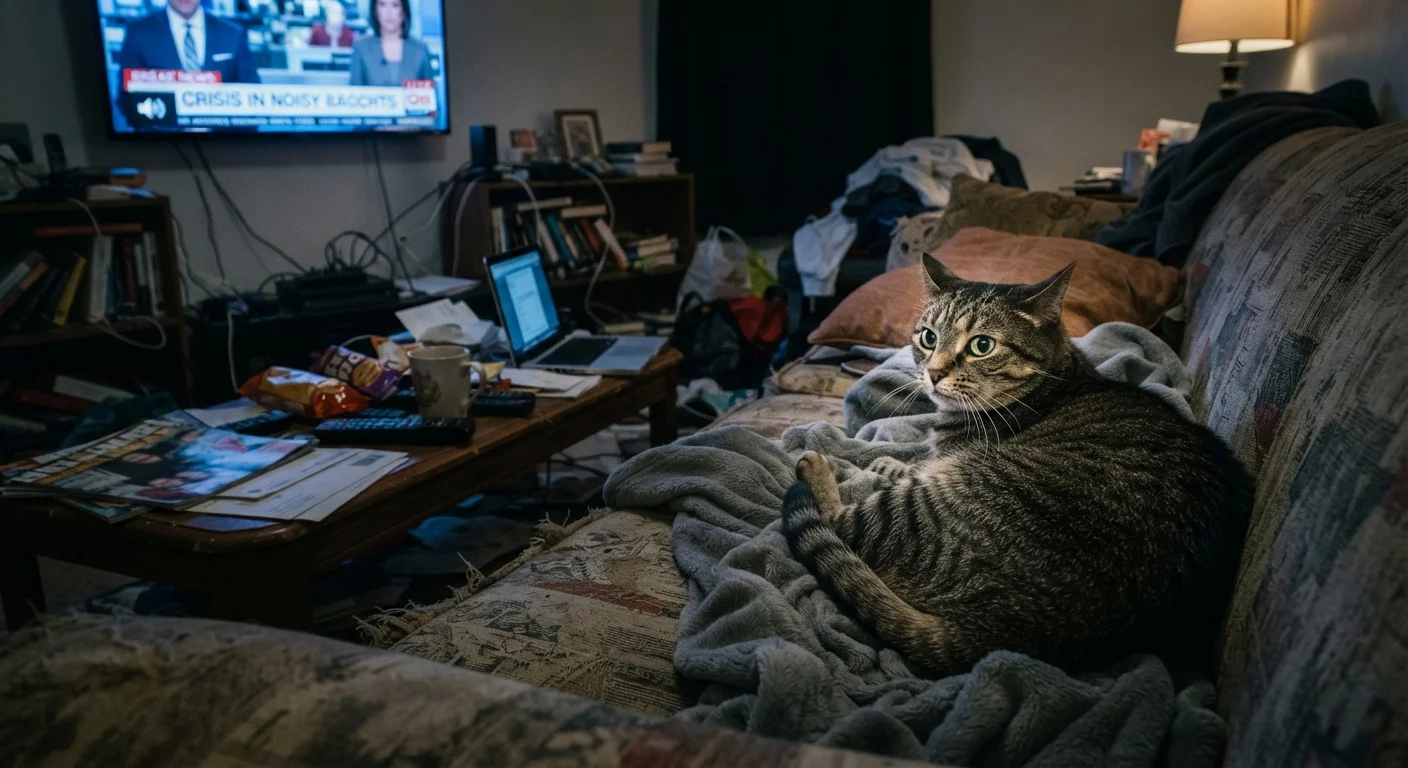
Household noise extends well beyond obvious triggers like thunderstorms. Televisions running at high volume for hours, frequent arguments, construction sounds, or even the consistent hum of appliances can elevate a pet's stress load. Dogs and cats hear frequencies humans cannot, making their noise environment considerably more intense than our own experience of the same space.
Providing a quiet retreat — a room or crate location where ambient noise is reduced — gives pets a place to decompress. White noise machines can help buffer unpredictable sound spikes that trigger startle responses.
Pets hear frequencies beyond human range, making noise-heavy homes far more stimulating than owners realize.
Insufficient Personal Space and Territory
Multi-pet households are particularly prone to territorial stress. When cats share litter boxes, food stations, or resting areas without adequate spacing, subtle resource competition creates ongoing tension — even when no overt fighting occurs. Dogs also benefit from clearly defined resting zones they can retreat to without intrusion.
The general veterinary recommendation for cats is one litter box per cat plus one extra, distributed across different areas of the home. Elevated resting spots for cats and defined sleeping areas for dogs help reduce territorial friction that might otherwise go unnoticed by owners.
Resource competition in multi-pet homes generates stress even without visible conflict between animals.
Environmental Monotony and Understimulation
Boredom is a genuine stressor. Pets left alone for extended periods without adequate mental engagement often develop repetitive behaviors, destructive habits, or heightened reactivity — all signs that the nervous system is seeking stimulation it isn't receiving. This is particularly well-documented in intelligent breeds and highly social species.
Enrichment doesn't require expensive tools. Puzzle feeders, rotating toys, window access with outdoor views, and short but frequent training interactions provide cognitive engagement that buffers stress. Connecting enrichment to behavior and training principles helps owners make smarter choices about what actually engages their specific animal.
Boredom generates measurable stress — enrichment is as much a health intervention as physical exercise.
Scent-Based Chemical Irritants
Many common household products — cleaning sprays, air fresheners, scented candles, and certain essential oils — contain volatile compounds that irritate a pet's highly sensitive olfactory system. Because pets investigate their world primarily through scent, exposure to strong or unfamiliar chemical odors can produce sustained stress responses even when no behavioral change is immediately obvious.
Switching to fragrance-free cleaning products in pet areas, ensuring adequate ventilation after cleaning, and avoiding essential oil diffusers in confined spaces where pets rest are practical steps. When in doubt about a specific product's safety, a veterinarian can offer guidance tailored to your pet's species and health status.
Strong household scents that seem neutral to humans can be genuinely overwhelming to a pet's nose.
Inconsistent or Harsh Interaction Styles
How household members interact with a pet matters as much as the physical environment. Inconsistent discipline — where the same behavior is sometimes tolerated and sometimes punished — creates confusion that operates as a chronic stressor. Harsh correction methods, even when infrequent, can erode a pet's baseline sense of security over time.
Positive reinforcement-based approaches, where desired behaviors are rewarded clearly and undesired behaviors are managed through redirection rather than punishment, are broadly supported by behavioral research. Consistency across all people in the household is particularly important; mixed signals undermine even well-structured training programs.
Inconsistent discipline creates ongoing confusion that erodes a pet's sense of safety at home.
Taking Action and Knowing When to Seek Help
Addressing hidden stressors is rarely about a single dramatic change — it's about consistently narrowing the gap between your pet's needs and their actual environment. Small, deliberate adjustments often produce meaningful improvements in mood, energy, and physical health over weeks rather than days.
Start with a stress audit of your home
Walk through your home from your pet's physical level and perspective. Note noise sources, scent concentrations, crowding points, and available retreat spaces. Identifying even two or three friction points and addressing them systematically is more effective than trying to overhaul the entire environment at once. Small, consistent changes compound meaningfully over time.
If your pet's stress-related symptoms — such as persistent hiding, appetite loss, excessive vocalization, or compulsive behaviors — do not improve with environmental changes, consult a veterinarian. Some signs that look behavioral are rooted in underlying medical conditions. Older animals in particular may respond differently to household stress; the comfort needs of senior pets often require more tailored adjustments than younger animals.
This article is for general informational purposes only and does not constitute veterinary advice. Always consult a licensed veterinarian for guidance specific to your pet's health and circumstances.