

Key Takeaways
- Brake pads typically need replacement every 25,000-70,000 miles depending on driving habits and pad material.
- Squealing, grinding, and a spongy brake pedal are warning signs that require prompt attention.
- Brake fluid absorbs moisture over time and should be checked and flushed according to your owner's manual.
- Rotors can often be resurfaced rather than replaced, but only if they meet minimum thickness specs.
- City driving and frequent heavy braking accelerate brake wear significantly compared to highway driving.
Why Brake Maintenance Matters More Than Most Drivers Realize
Brakes are your vehicle's single most critical safety system, yet they degrade gradually - making it easy to overlook early warning signs until a more serious (and more expensive) problem develops. Brake pads wear down friction material with every stop; rotors develop grooves and heat stress over thousands of miles; and brake fluid, a hydraulic fluid that transfers pedal force to the calipers, quietly absorbs moisture from the air, lowering its boiling point and reducing performance.
The good news: brake maintenance is one of the more predictable and manageable aspects of car ownership. Understanding what to look for and when to act puts you firmly in control of both your safety and your repair budget. For a broader look at how skipping routine upkeep escalates costs, see our guide to routine maintenance tasks that prevent expensive repairs.
“Brakes are not a maintenance item drivers should wait to fail. By the time you hear grinding, the rotor is already taking damage that could have been avoided with a simple pad replacement weeks earlier.”
— ASE-Certified Master Technician, Automotive Service Excellence (ASE) credentialed mechanic with over 20 years of brake system experience
Best Practices for Keeping Your Brakes in Peak Condition
The following practices reflect widely accepted automotive maintenance guidance. Always consult your vehicle's owner's manual for manufacturer-specific intervals, and have a qualified mechanic perform any inspection or repair you're not comfortable completing yourself.
Inspect brake pads visually at every tire rotation
Most vehicles allow a view of the brake pad through the wheel spokes. Catching wear early means you choose when to replace pads, not the road. Pads worn below roughly 3mm of friction material - about an eighth of an inch - should be replaced promptly.
Follow your owner's manual for brake fluid flush intervals
Brake fluid is hygroscopic, meaning it absorbs moisture from the surrounding air over time. As moisture content rises, the fluid's boiling point drops, which can cause brake fade - reduced stopping power - during prolonged heavy braking. Many manufacturers recommend a flush every two to three years.
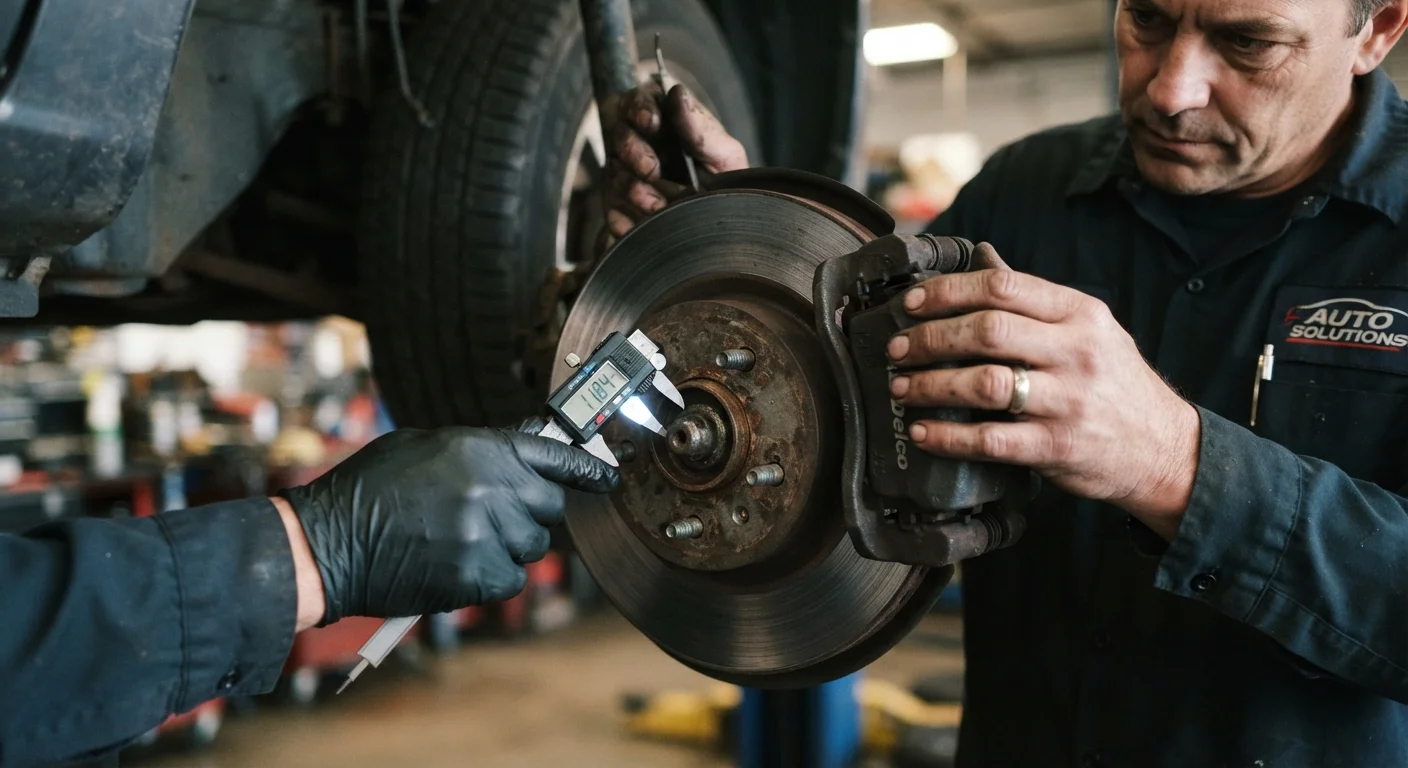
Have rotors measured for thickness before assuming they need replacement
Rotors have a minimum thickness specification stamped or engraved on them. If a rotor is above minimum thickness and shows only light scoring, it can often be resurfaced (machined smooth) rather than replaced, which costs significantly less. Replacing rotors that still meet spec wastes money.
Adjust your driving habits to reduce brake wear
Aggressive braking from high speeds generates far more heat and wears pads faster than gradual, anticipatory slowing. Coasting to a stop whenever traffic allows distributes braking demand over a longer distance, reducing thermal stress on pads and rotors.
Never ignore the parking brake during regular use
The parking brake (also called the emergency or handbrake) uses a separate cable or electronic system from the main hydraulic brakes. Leaving it unused for extended periods can cause cables to seize or rear brake components to stick, making it unavailable in an emergency.
Reading the Warning Signs Before They Become Emergencies
Your vehicle gives clear signals when brakes need attention. A high-pitched squeal during normal braking usually indicates the wear indicators - small metal tabs built into the pad - are contacting the rotor. That's a deliberate alert, not a defect. Grinding, by contrast, typically means the pad material is fully depleted and metal is contacting metal, which damages rotors rapidly.
A soft or spongy brake pedal that sinks closer to the floor than usual points to air or moisture in the brake lines - a hydraulic issue that warrants immediate professional inspection. Pulling to one side under braking often signals uneven pad wear or a stuck caliper. Vibration through the pedal usually indicates warped rotors caused by repeated heavy braking that overheats the metal.
25,000-70,000 mi
Typical brake pad lifespan range
The wide range reflects differences in driving style, pad compound, and vehicle weight - city drivers often fall at the lower end.
~$150-$300
Average cost of a front brake pad replacement (per axle)
Costs vary by vehicle type, region, and labor rates; rotors, calipers, or fluid work add to the total if needed.
If you notice any of these symptoms, don't delay. Continuing to drive on compromised brakes increases repair costs and, more importantly, reduces your ability to stop safely. Check our safe driving tips hub for broader habits that complement good vehicle maintenance.
When to Go Straight to a Mechanic
If your brake pedal feels soft, spongy, or sinks unusually close to the floor, do not delay seeking professional inspection - this can indicate a hydraulic leak or air in the brake lines, both of which require immediate attention. Similarly, if you notice brake fluid pooling under your parked vehicle, have it towed rather than driven to the shop. These are not situations to monitor over several days.
Quick Actions You Can Take Right Now
You don't need a shop visit to start taking better care of your brakes today. Several practical steps require nothing more than observation and a few minutes of your time.
For a thorough pre-drive routine that covers brakes alongside tires, fluids, and lighting, see our pre-trip vehicle safety check. And if you want to understand how brake fluid fits into your car's broader fluid ecosystem, our fluid checks guide walks you through every reservoir under the hood.
Brake Maintenance Is Part of a Bigger Picture
Brakes don't operate in isolation. Your vehicle's manufacturer maintenance schedule often includes brake inspections at specific mileage intervals alongside other services. Staying current on that schedule helps ensure brake components are evaluated by a professional on a regular cadence, not just when a warning sign appears. Also note that some vehicles - especially those with drum brakes on the rear - have slightly different service requirements than disc brake setups, so always reference your specific vehicle's documentation.