

Key Takeaways
- Routine tasks like air filter swaps and wiper replacements are genuinely manageable for most drivers with basic tools.
- Brake system work, suspension repairs, and anything involving airbags carry real safety risks and typically warrant professional attention.
- DIY can save $50-$150 on a basic oil change service, but a mistake on a complex job can cost far more to fix.
- Your warranty terms and vehicle complexity (hybrid, EV, newer electronics) should factor into every DIY decision.
- Keeping a service log matters whether you do the work yourself or pay a shop.
Our Verdict
DIY maintenance makes strong practical sense for straightforward, well-documented tasks where the tools are affordable and the risk of error is low. Professional service becomes the safer and often smarter choice when safety systems, specialized equipment, or complex diagnostics are involved. The two approaches work best as complements rather than rivals.
| Best for | Recommended |
|---|---|
| Drivers comfortable with basic tools and routine upkeep | DIY |
| Safety-critical repairs involving brakes, suspension, or airbags | Professional Shop |
| Owners of hybrids, EVs, or vehicles with complex electronics | Professional Shop |
| Those wanting to save on simple, low-risk services | DIY |
What You're Actually Comparing
The DIY vs. shop debate isn't really about trust - it's about matching the job to the skill, tools, and safety stakes involved. Both paths have real advantages; neither is universally superior. The goal is knowing where each one makes sense for your situation, your vehicle, and your comfort level.
It also helps to think in categories. Some maintenance tasks are designed to be owner-serviceable - manufacturers publish the steps in your owner's manual. Others require specialized equipment, calibration tools, or safety knowledge that most home garages simply can't replicate.
Routine maintenance habits are the foundation of long-term vehicle reliability regardless of who performs them - so the first step is making sure the work gets done at all.
Tasks That Are Reasonable to DIY
Several common maintenance items are accessible to anyone willing to follow instructions carefully and invest in a basic tool kit:
- Engine air filter replacement: Typically a clip-or-screw housing, no special tools needed, and filters cost $15-$30 at most auto parts retailers.
- Cabin air filter swap: Usually located behind the glove box; the job takes under 15 minutes. Don't overlook it - cabin filters are among the most commonly skipped items.
- Wiper blade replacement: Manufacturers vary on attachment style, but most blades include instructions and require no tools.
- Battery terminal cleaning and battery replacement: Straightforward on most vehicles, though modern cars with battery management systems may need a memory saver device during the swap. See our car battery basics guide for what to expect.
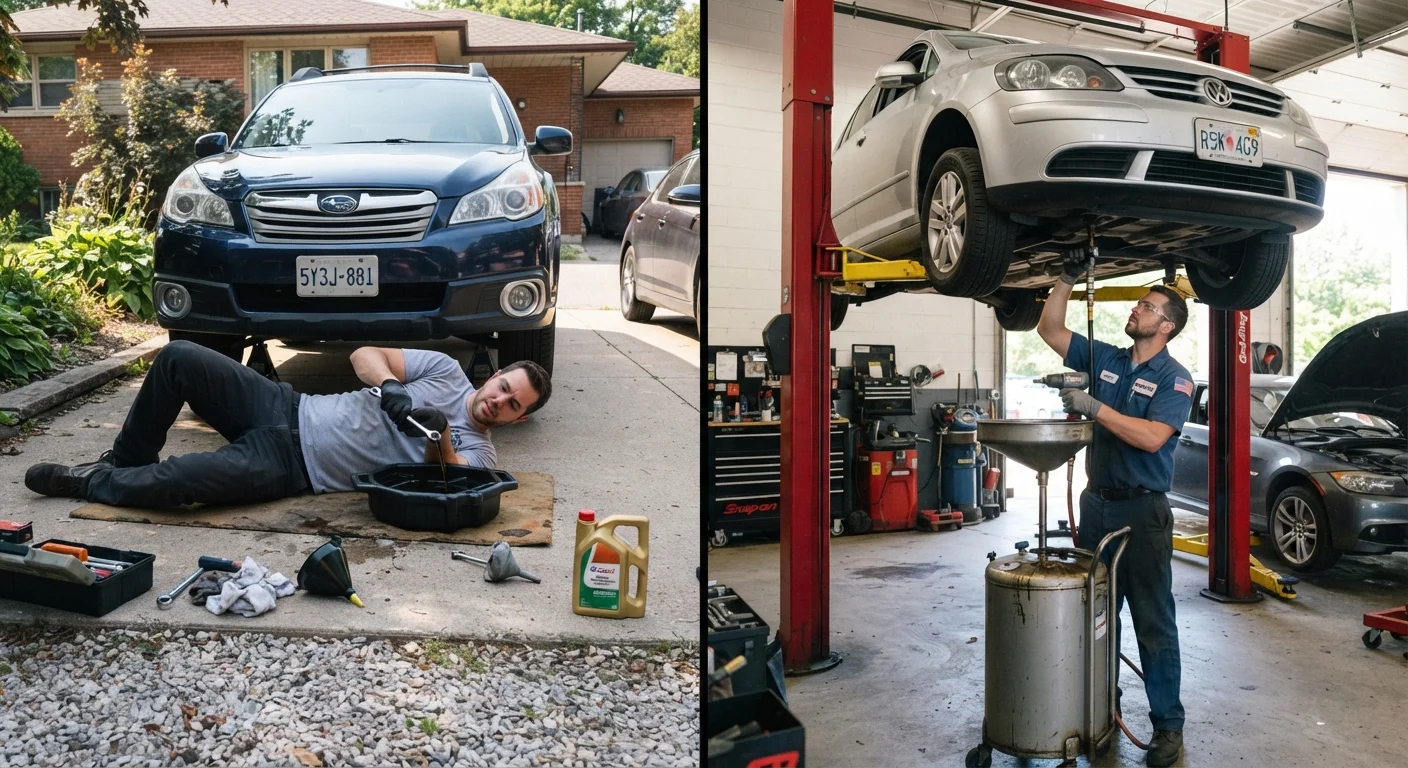
- Oil and filter changes: Manageable with a floor jack, jack stands, a drain pan, and the correct filter wrench. Savings can reach $50-$100 per service compared to a quick-lube shop, though used oil must be disposed of properly at a recycling center.
- Tire pressure checks and rotations: Pressure checks require only a gauge. Rotations are DIY-possible with jack stands, though many drivers find the shop cost ($20-$30) easier than the setup.
Start With Your Owner's Manual
Before attempting any DIY maintenance, check your vehicle's owner's manual for the manufacturer's specified procedure, fluid types, and torque values. This single step prevents the most common DIY errors and confirms whether a task is genuinely owner-serviceable for your specific model. Many manuals are also available as free PDFs from the manufacturer's website.
Jobs That Belong at a Professional Shop
Other tasks introduce enough risk - to you, to other drivers, or to your vehicle - that professional service is the more responsible choice:
- Brake system work: Pad replacement alone is often manageable for experienced DIYers, but caliper rebuilds, brake line repairs, and ABS diagnostics require pressure-bleeding equipment, torque specs, and a thorough understanding of hydraulic systems. An error here has direct safety consequences.
- Suspension and steering components: Ball joints, tie rods, and wheel bearings affect vehicle control. Improper installation can cause loss of steering and must be followed by a professional alignment.
- Transmission service (beyond fluid checks): Internal repairs involve specialized tools and precise tolerances. Even fluid flushes on some modern transmissions require dealer-level equipment to avoid damage.
- Airbag and supplemental restraint systems (SRS): Federal regulations prohibit tampering with airbag systems without proper certification, and for good reason - accidental deployment can cause serious injury.
- Hybrid and EV high-voltage systems: The high-voltage battery packs and associated components in hybrid and electric vehicles require certified technicians with specialized training and personal protective equipment.
- Engine and transmission replacement or rebuilds: These jobs demand hoists, specialty tools, and deep system knowledge; mistakes can render a vehicle undriveable or unsafe.
Safety-Critical Systems Require a Professional
Brake systems, steering components, and airbag-related parts directly affect your safety and that of other road users. If a repair involves these systems and you are not trained and properly equipped, have a qualified mechanic perform the work. No cost savings justify a compromised safety system.
How to Compare Costs Realistically
| DIY | Professional Shop | |
|---|---|---|
| Upfront cost | Lower (parts only, after tool investment) | Higher (parts + labor) |
| Tool requirements | Basic hand tools for simple jobs | Specialized equipment available on-site |
| Safety-critical repairs | High risk if done incorrectly | Performed by trained technicians |
| Warranty compatibility | Varies - check contract terms | Generally covered if shop is qualified |
| EV/hybrid systems | Not recommended - high voltage risk | Requires certified technician |
| Time investment | Higher - research, sourcing, labor | Lower for the owner |
Cost comparisons should account for tool investment, not just parts. A torque wrench, floor jack, and jack stands together can run $150-$300 upfront. That investment pays off over many years of DIY work, but it shifts the break-even point on any single job.
Also factor in the cost of mistakes. A stripped oil drain plug or a brake bleed done incorrectly can cost far more than the shop service would have. For complex jobs, the shop labor rate - commonly $80-$150 per hour in most US markets - often reflects real expertise and liability coverage that protects you if something goes wrong.
The same logic applies to home projects: our DIY vs. hiring a contractor framework walks through a similar decision process for home repairs.
Other Factors Worth Weighing
Warranty considerations: If your vehicle is still under a manufacturer warranty or an extended service contract, review the terms before performing your own maintenance. Some contracts require documented service at qualified facilities; others accept owner-performed work if you keep receipts and records.
Vehicle age and complexity: Older vehicles with simpler mechanical systems are generally more DIY-friendly. Modern vehicles - especially those with advanced driver-assistance systems (ADAS), turbocharged engines, or complex electronic architectures - often require scan tools and calibration equipment that most home shops don't have.
Documentation habits: Whether you do the work yourself or pay a shop, keeping a maintenance log protects your vehicle's resale value and helps you track service intervals reliably. Safe, well-maintained vehicles start with knowing what's been done and when.
This article is for general informational purposes only. Always consult your owner's manual and, for safety-critical repairs, a qualified mechanic before attempting vehicle maintenance.