

Key Takeaways
- Most car batteries last three to five years under normal driving conditions.
- Extreme temperatures, short trips, and parasitic drains are the leading causes of early battery failure.
- A slow engine crank, dim headlights, and a swollen battery case are reliable warning signs.
- A load test by a mechanic or auto parts store gives a more accurate picture than voltage alone.
- Replacing a battery is one of the more DIY-friendly tasks - but safety steps matter.
Start here
How a Car Battery Actually Works
Next
How Long Should a Battery Last?
Then
What Drains a Car Battery
Watch for
Warning Signs Your Battery Is Failing
Take action
Testing, Replacing, and Staying Prepared
How a Car Battery Actually Works
Your car battery is a lead-acid battery - a sealed box containing lead plates submerged in a sulfuric acid solution. A chemical reaction between these materials produces the electrical current your car needs to start the engine and power electronics when the engine is off.
Once the engine is running, the alternator takes over: it generates electricity to run the car's systems and simultaneously recharges the battery. Think of the battery as a short-burst power source, and the alternator as the continuous supplier. The battery's job is essentially to fire the starter motor; after that, the alternator does the heavy lifting.
Lead-acid battery
The standard type of car battery, which uses lead plates and sulfuric acid to store and release electrical energy.
Alternator
A generator driven by the engine that produces electricity to run the vehicle's systems and recharge the battery while driving.
Parasitic drain
An unintended, continuous draw on battery power from a faulty or improperly installed electrical component, even when the car is off.
Load test
A battery diagnostic that measures how well the battery delivers power under real-world starting conditions, more accurate than a simple voltage reading.
Cold cranking amps (CCA)
A rating that indicates how much starting power a battery can deliver in cold temperatures - a key spec when selecting a replacement battery for your climate.
Understanding this two-part system helps explain why both battery and alternator health matter. A failing alternator can deplete even a new battery, so it's worth diagnosing the full charging system when problems arise.
How Long Should a Battery Last?
Under typical driving conditions in the US, most car batteries last three to five years. Several factors compress or extend that window:
- Climate: Heat is the number-one battery killer. High temperatures accelerate the internal corrosion of lead plates and evaporate electrolyte fluid. Drivers in consistently hot regions may see battery life closer to two to three years.
- Driving frequency: Vehicles driven daily tend to maintain charge better than those sitting unused for long periods.
- Vehicle electrical load: Lots of powered accessories - heated seats, upgraded audio, phone chargers - place additional demand on the charging system over time.
As part of a broader approach to vehicle care, the scheduled maintenance plan your manufacturer provides typically includes battery inspection intervals - worth checking if you're unsure when yours was last evaluated.
What Drains a Car Battery
Several everyday habits and vehicle conditions accelerate battery drain:
- Short trips: Each engine start draws a significant burst of power. If your daily drives are under 10 minutes, the alternator may not fully replenish what was used, leading to gradual under-charging.
- Leaving accessories on: Headlights, interior lights, or a phone charger left plugged in with the engine off will draw down the battery - sometimes overnight.
- Parasitic drain: This is a slow, unintended power draw from a faulty relay, a malfunctioning module, or an improperly wired accessory. It can deplete a battery in a few days even without any obvious cause.
- Extreme temperatures: Cold weather temporarily reduces a battery's capacity to deliver current, which is why starting on a frigid morning feels harder. Heat causes longer-term structural damage.
Extend Battery Life With One Simple Habit
If you frequently make short trips, consider taking a longer drive - 20 to 30 minutes - once a week. This gives the alternator adequate time to fully recharge the battery. It's a low-effort habit that can noticeably extend battery life, particularly in colder months.
Understanding what strains your battery connects directly to broader routine maintenance habits that prevent larger repair bills down the road.
Warning Signs Your Battery Is Failing
Batteries rarely fail without warning. Watch for these signals:
- Slow or labored cranking: If the engine takes longer than usual to turn over, the battery may lack the power to spin the starter motor efficiently.
- Dimming lights: Headlights or dashboard lights that appear dimmer than normal - especially at idle - suggest the battery or charging system is struggling.
- Battery warning light: This dashboard indicator points to a problem in the charging system, which may be the battery, alternator, or related wiring.
- Swollen battery case: A bloated or misshapen battery housing is a sign of heat damage or overcharging. This battery should be replaced promptly, as it poses a safety concern.
- Frequent need to jump-start: Needing jumps repeatedly is a clear indicator the battery is no longer holding a proper charge.
Don't Ignore a Swollen Battery Case
A visibly swollen or bloated battery case indicates internal damage, often from excessive heat or overcharging. This condition can lead to leaking battery acid, which is corrosive and hazardous. Do not attempt to charge or jump-start a swollen battery - have it inspected and replaced by a qualified mechanic as soon as possible.
Testing, Replacing, and Staying Prepared
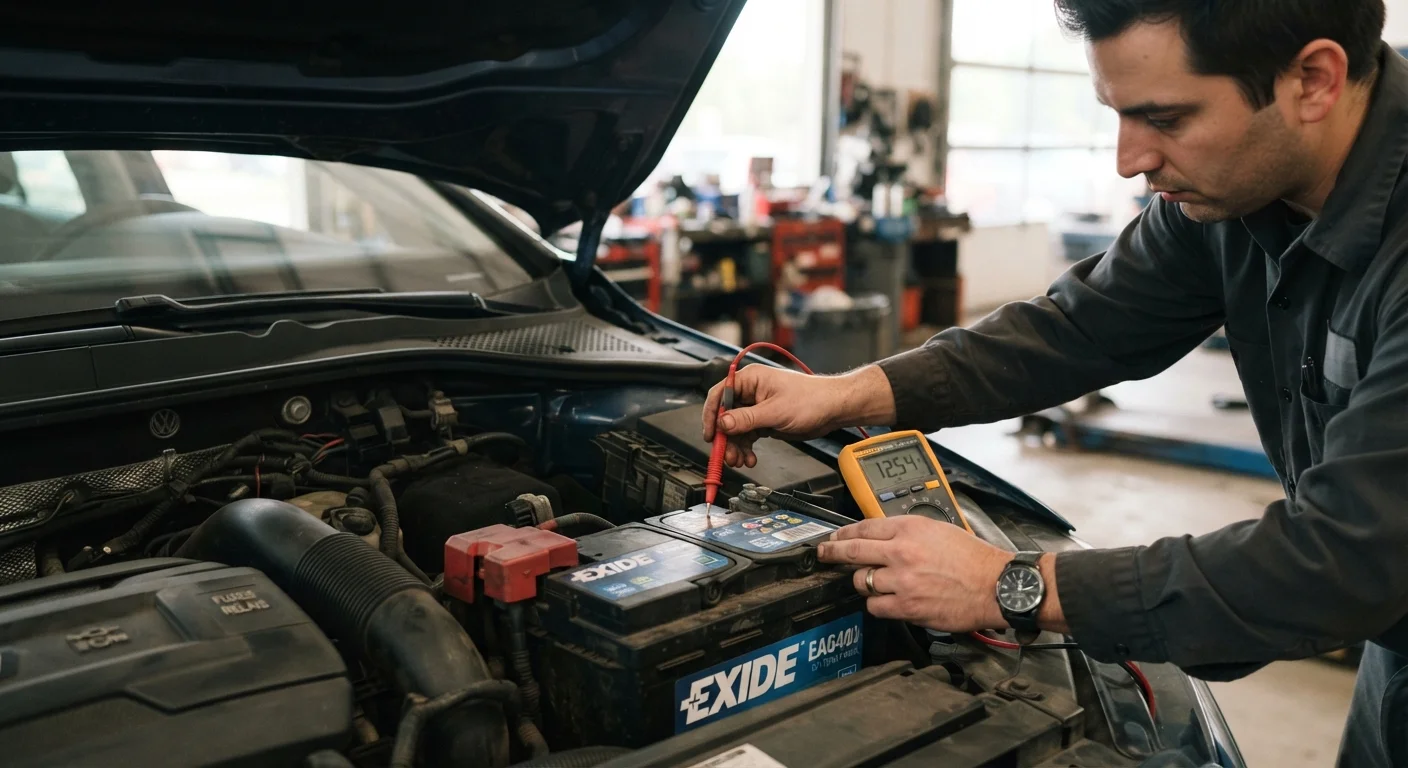
The most reliable way to evaluate a battery is a load test, which measures how the battery performs under the actual electrical demand of starting. A simple voltage reading (12.6V or above is a fully charged battery at rest) gives baseline information, but a load test reveals whether the battery can sustain that output. Many auto parts stores offer free testing, as do most mechanics.
When replacement is needed, battery prices in the US generally range from around $100 to $250 depending on vehicle requirements, though labor is often minimal if you or a shop handle it. Replacing a battery is one of the tasks covered in our guide to DIY car maintenance vs. shop visits - it's frequently manageable at home with basic precautions.
To stay prepared, keep a quality set of jumper cables or a compact battery jump starter in your trunk. Check the battery terminals periodically for corrosion - a white or bluish crust around the terminals - which can interfere with conductivity. Cleaning terminals with a baking soda solution and a wire brush is a simple task that extends battery performance. These small habits fit naturally into a broader understanding of car ownership costs and help you avoid unexpected expenses.
This article is for general informational purposes. For vehicle-specific guidance, consult a qualified mechanic or your owner's manual.