

Key Takeaways
- Coolant regulates engine temperature year-round, not just in freezing conditions.
- The cooling system includes the radiator, water pump, thermostat, hoses, and reservoir.
- Coolant should typically be flushed every 30,000-50,000 miles, depending on the vehicle.
- Warning signs include overheating, sweet smells, visible leaks, or a milky appearance under the oil cap.
- Always let the engine cool completely before opening the radiator cap or reservoir.
Engine Coolant
Engine coolant-also called antifreeze-is a liquid mixture that circulates through your engine to absorb excess heat and carry it away to the radiator. It also prevents the fluid in your cooling system from freezing in cold weather and boiling over in summer heat. Most modern coolants are a blend of water and ethylene glycol, plus additives that prevent corrosion and rust.
Coolant is formulated to maintain a consistent boiling point (around 225-265°F under pressure) and freezing point (as low as -34°F), which plain water cannot achieve on its own.
How the Cooling System Works
Your engine generates enormous heat-combustion temperatures inside cylinders can exceed 4,500°F. Left unmanaged, that heat would destroy internal components within minutes. The cooling system exists to pull heat away continuously while the engine is running.
Here's the basic circuit: The water pump pushes coolant through passages cast into the engine block and cylinder head. The coolant absorbs heat as it flows. It then travels to the radiator-a grid of thin tubes at the front of the vehicle-where outside air (or a cooling fan) draws heat out of the fluid. The cooled liquid loops back to the engine and repeats the cycle.
A thermostat acts as a gatekeeper. When the engine is cold, it stays closed so the engine warms up quickly to its optimal operating temperature (typically 195-220°F). Once that temperature is reached, the thermostat opens and allows full coolant flow. Rubber hoses connect the major components, and a pressurized overflow reservoir captures expanding fluid so none is lost.
Coolant Color Doesn't Indicate Quality
Coolant comes in green, orange, yellow, pink, and blue depending on the formula type-not its age or condition. Mixing different formula types can compromise their protective additives. Always use the coolant type specified in your owner's manual, and consult a mechanic if you're unsure what's currently in your system.
Warning Signs That Demand Attention
Cooling system problems rarely appear without warning. Learning to recognize early symptoms can prevent a minor issue from becoming a major engine repair.
- Temperature gauge climbing toward red: This is the most urgent signal. Pull over safely, turn off the engine, and allow it to cool before inspecting anything. Never open the radiator cap on a hot engine-scalding coolant can spray out under pressure.
- Sweet or syrupy smell: Ethylene glycol has a distinctive sweetish odor. If you smell it inside or outside the car, a coolant leak is likely.
- Visible puddles under the vehicle: Bright green, orange, or pink fluid pooling under the front of the car points to a coolant leak from a hose, the radiator, or a gasket.
- White exhaust smoke: A persistent white plume from the tailpipe-especially when the engine is warm-can indicate coolant burning inside the engine, a symptom of a blown head gasket that requires immediate professional attention.
- Milky residue under the oil cap: Coolant mixing with engine oil creates a frothy, tan-colored residue. This is a serious sign of internal engine damage and warrants an immediate mechanic visit.
See our guide to commonly skipped maintenance tasks for a broader look at how overlooked services lead to costly repairs.
Always Work on a Cold Engine
Before checking coolant levels or inspecting hoses, make sure the engine has been off for at least 30-60 minutes. Coolant in a recently run engine is under high pressure and extremely hot. Opening the radiator cap prematurely can cause serious burns. When in doubt, wait longer.
Routine Coolant Maintenance You Can Do
Staying ahead of coolant issues doesn't require advanced mechanical skills. A few simple habits protect your system between professional services.
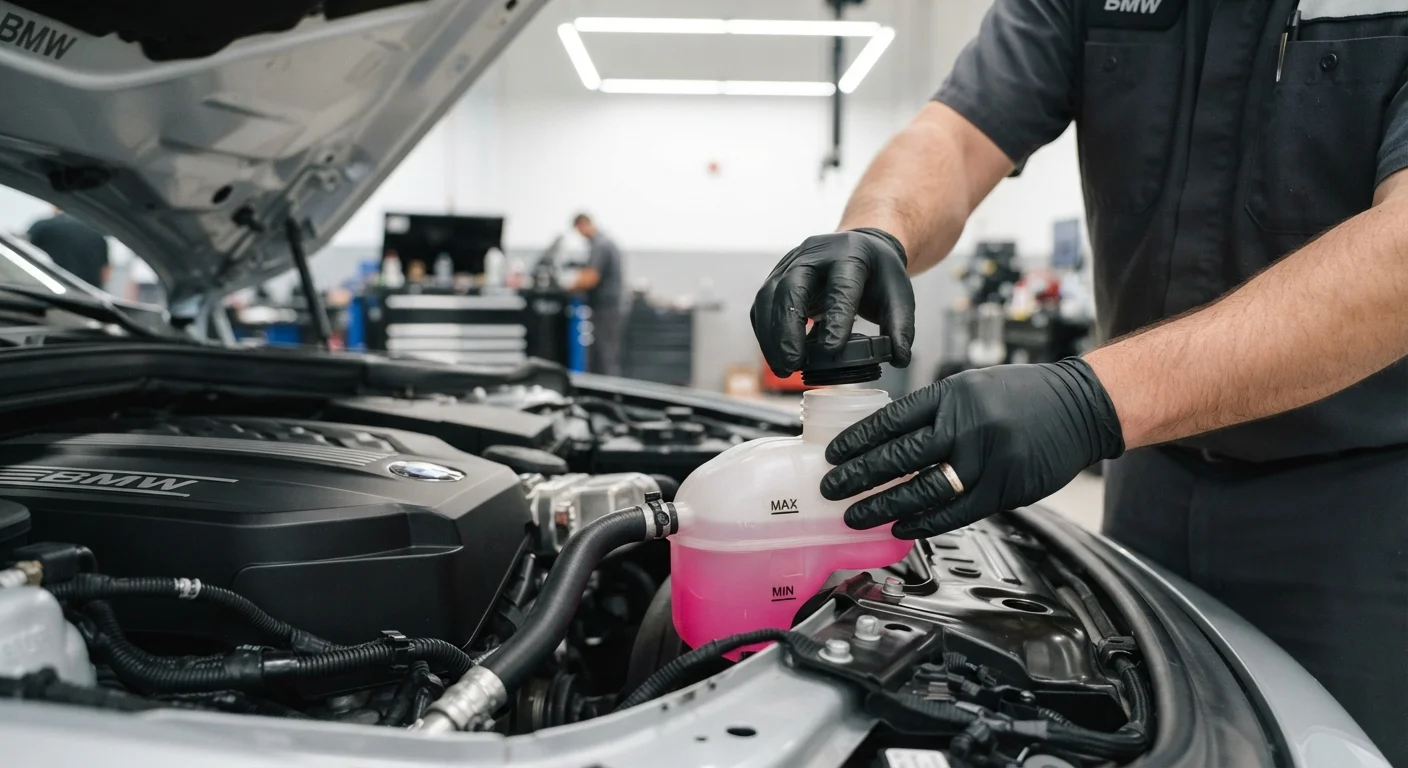
Check the reservoir level regularly. Most vehicles have a translucent plastic overflow tank near the radiator with MIN and MAX markings. With a cold engine, confirm the level falls between those marks. If it's consistently low, that points to a slow leak worth investigating. Our fluid check guide walks through how to locate and read each reservoir safely.
Inspect hoses visually. Squeeze the large radiator hoses when the engine is cold. They should feel firm but slightly pliable-not rock-hard, cracked, or mushy. Cracks and soft spots indicate a hose nearing failure.
Schedule a coolant flush on time. Coolant breaks down chemically over time. Degraded fluid becomes acidic and corrodes metal components from the inside. Flushing and refilling the system on schedule-per your owner's manual-is one of the more cost-effective routine maintenance habits a driver can maintain.
Coolant demands also shift with the seasons. For a full seasonal checklist, see our seasonal car care guide.
$1,500-$4,000
Average head gasket repair cost
Industry repair estimates suggest a blown head gasket-often caused by chronic overheating-can cost between $1,500 and $4,000 depending on engine type and labor rates.
~$100-$150
Typical coolant flush service cost
A professional coolant flush generally runs between $100 and $150 at most independent shops, making it one of the more affordable preventive services available.
30,000-50,000 mi
Common coolant flush interval
Many manufacturer maintenance schedules recommend a coolant flush within this mileage range, though long-life coolant types may extend that interval significantly.