

| OBD System Standard | OBD-II required on all US cars sold after 1996 (U.S. Environmental Protection Agency) |
| Check Engine Light Frequency | Triggered in roughly 1 in 10 vehicles annually (General industry estimate) |
| Typical OBD-II Reader Cost | $20-$100 for a consumer-grade device (General retail range) |
| TPMS Mandate | Required on all new US passenger vehicles since 2008 (NHTSA regulation) |
| Oil Pressure Risk Window | Engine damage can begin within minutes at dangerously low pressure (Automotive engineering consensus) |
Why Warning Lights Exist and What They Actually Do
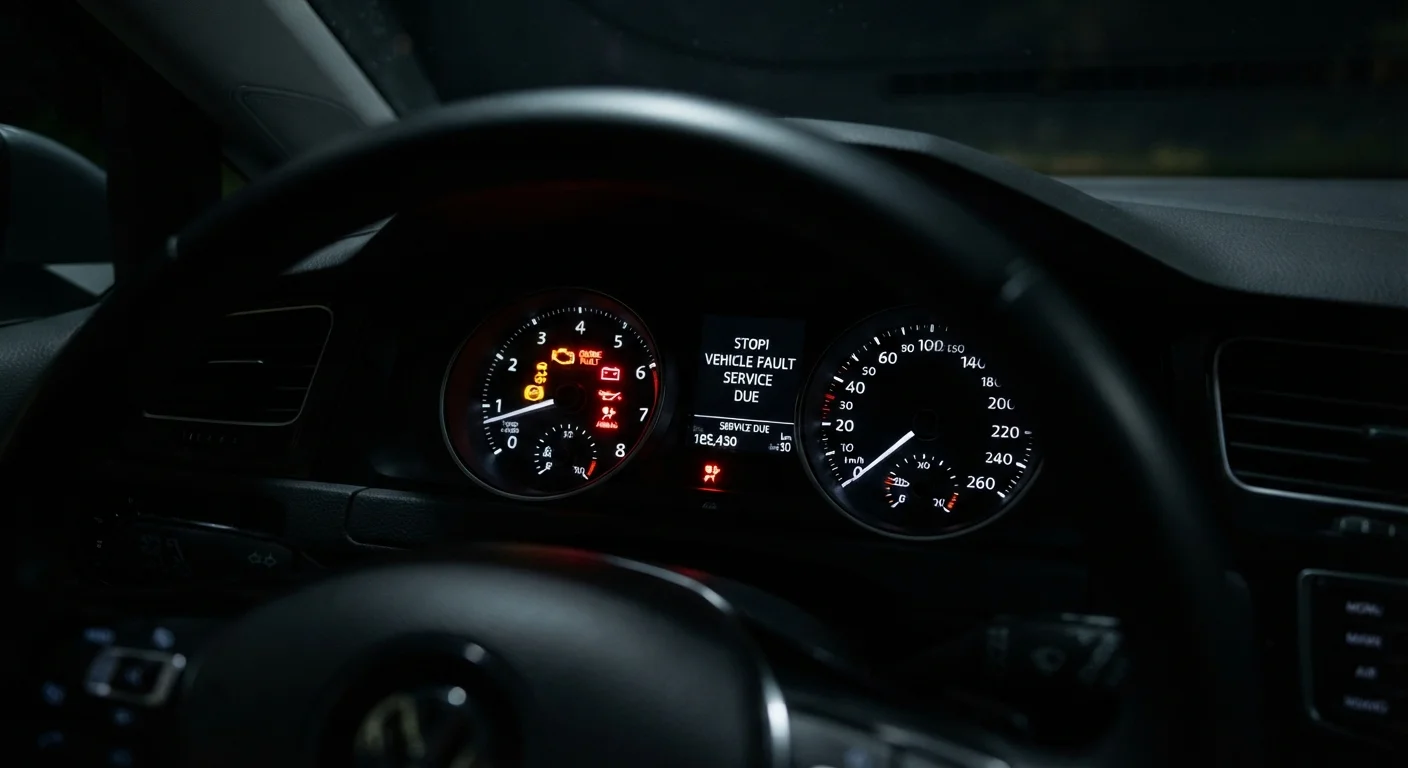
Modern vehicles are equipped with an OBD system - a network of sensors that continuously monitor engine performance, emissions, fluid levels, and safety systems. When something falls outside an acceptable range, that system triggers a dashboard warning light. Think of it as your car filing a trouble report.
Not all lights carry equal urgency. Automakers use a consistent color-coding convention across most vehicles:
- Red: Requires immediate attention. Stop driving or act right away.
- Amber/Yellow: Caution. Schedule service soon, but not necessarily an emergency.
- Blue/Green: Informational. A system is active (e.g., high beams, turn signal).
Your owner's manual remains the definitive reference for your specific vehicle's symbols. Before a road trip, review our pre-trip vehicle safety check to catch issues before they show up as warning lights mid-drive.
| OBD System Standard | OBD-II required on all US cars sold after 1996 (U.S. Environmental Protection Agency) |
| Check Engine Light Frequency | Triggered in roughly 1 in 10 vehicles annually (General industry estimate) |
| Typical OBD-II Reader Cost | $20-$100 for a consumer-grade device (General retail range) |
| TPMS Mandate | Required on all new US passenger vehicles since 2008 (NHTSA regulation) |
| Oil Pressure Risk Window | Engine damage can begin within minutes at dangerously low pressure (Automotive engineering consensus) |
The Most Common Warning Lights Decoded
Here is a practical breakdown of the lights most drivers encounter, what triggers them, and how urgently to respond:
OBD-II
Onboard Diagnostics, second generation. A standardized system built into all US vehicles sold after 1996 that monitors engine and emissions performance and stores fault codes readable by a scan tool.
TPMS
Tire Pressure Monitoring System. A sensor-based system that alerts the driver when one or more tires fall significantly below the recommended inflation pressure.
Fault Code (DTC)
Diagnostic Trouble Code. An alphanumeric code stored by the OBD-II system when a sensor reading falls outside acceptable parameters. Codes help mechanics identify the specific system or component at fault.
Charging System
The combination of the alternator and battery that keeps a vehicle's electrical systems powered while the engine is running. A failure here means the battery drains rapidly.
Red Lights - Act Now
- Oil Pressure Warning (oil can icon): Oil pressure has dropped dangerously low. Pull over safely and shut off the engine. Driving with low oil pressure can cause severe engine damage within minutes. Check your oil level; if it's adequate, have the vehicle towed to a mechanic.
- Engine Temperature (thermometer in liquid): The engine is overheating. Pull over, turn off the engine, and wait for it to cool before opening the hood. Do not remove the radiator cap while hot.
- Battery (battery icon): The charging system isn't working properly. Your car is running on battery reserve only. Limit electrical use and get to a shop promptly.
Amber Lights - Schedule Service Soon
- Check Engine (engine outline): One of the most misunderstood lights. It can indicate anything from a loose gas cap to a misfiring cylinder. A mechanic can plug in a code reader to identify the specific fault. Don't ignore it - a steady light means get it checked within a few days; a flashing light means pull over and call for service.
- Tire Pressure (TPMS - exclamation point in tire): One or more tires are significantly under-inflated. Inflate tires to the recommended PSI found on the sticker inside your driver's door jamb. Proper tire pressure also affects alignment; see our guide on signs your car needs a wheel alignment.
- Traction Control / Stability Control (car with squiggly lines): The system is actively working to keep the car stable, or it has been disabled. Persistent illumination may signal a sensor fault.
- Low Fuel (gas pump): You have a small reserve remaining - typically 30-50 miles depending on the vehicle. Refuel soon.
Staying on top of these alerts ties directly into your vehicle's scheduled maintenance. Our article on understanding your vehicle's scheduled maintenance plan explains how manufacturer intervals relate to preventing many of these faults in the first place.
A Flashing Check Engine Light Is Different
A steady check engine light typically signals a non-emergency fault to address within days. A flashing or blinking check engine light, however, usually indicates active engine misfiring, which can rapidly damage the catalytic converter - an expensive component. If the light is flashing, reduce speed, avoid heavy acceleration, and have the vehicle inspected as soon as possible.
What to Do When a Light Comes On
The right response depends on color and context. Follow this framework:
- Note the color immediately. Red lights demand a different response than amber ones.
- Check for secondary symptoms. Unusual sounds, smells (burning, sulfur), or changes in handling make a light more urgent.
- Consult your owner's manual. Every vehicle has a dedicated section illustrating each symbol. Many public libraries keep reference manuals, and manufacturers often publish them free online.
- Use an OBD-II reader for check engine lights. Inexpensive code readers plug into the diagnostic port (usually beneath the steering column) and display fault codes you can look up. This gives you context before visiting a mechanic.
- Don't clear codes without addressing the cause. Resetting a light without fixing the underlying issue only delays diagnosis.
When in doubt, have a qualified mechanic inspect your vehicle. Attempting repairs on systems like airbags, ABS, or the fuel system without proper training and equipment carries real safety risks. For a broader approach to staying safe before you drive, visit our pre-trip safety routine for practical habits to build before every drive.
~77%
Drivers who ignore a warning light at least once
According to CarMD's Vehicle Health Index, a significant majority of drivers have driven with an active check engine light for extended periods.
$0-$500+
Repair cost range triggered by check engine light
Causes range from a loose gas cap (no cost) to a failed catalytic converter (several hundred dollars or more), illustrating why diagnosis matters.