

Key Takeaways
- Pulling to one side, uneven tire wear, and a crooked steering wheel are the most common alignment warning signs.
- Ignoring alignment problems accelerates tire wear, reducing tread life significantly and costing more long-term.
- Most alignment checks cost between $75 and $150-far less than replacing a set of prematurely worn tires.
- Hitting potholes, curbs, or road debris are leading causes of wheels going out of alignment.
- Alignment should typically be checked every 12,000-15,000 miles or whenever you notice handling changes.
Why Wheel Alignment Matters for Everyday Driving
Wheel alignment refers to the precise angles at which your tires contact the road. When those angles are correct, your car tracks straight, handles predictably, and wears its tires evenly. When they're off-even slightly-the effects multiply across thousands of miles of driving.
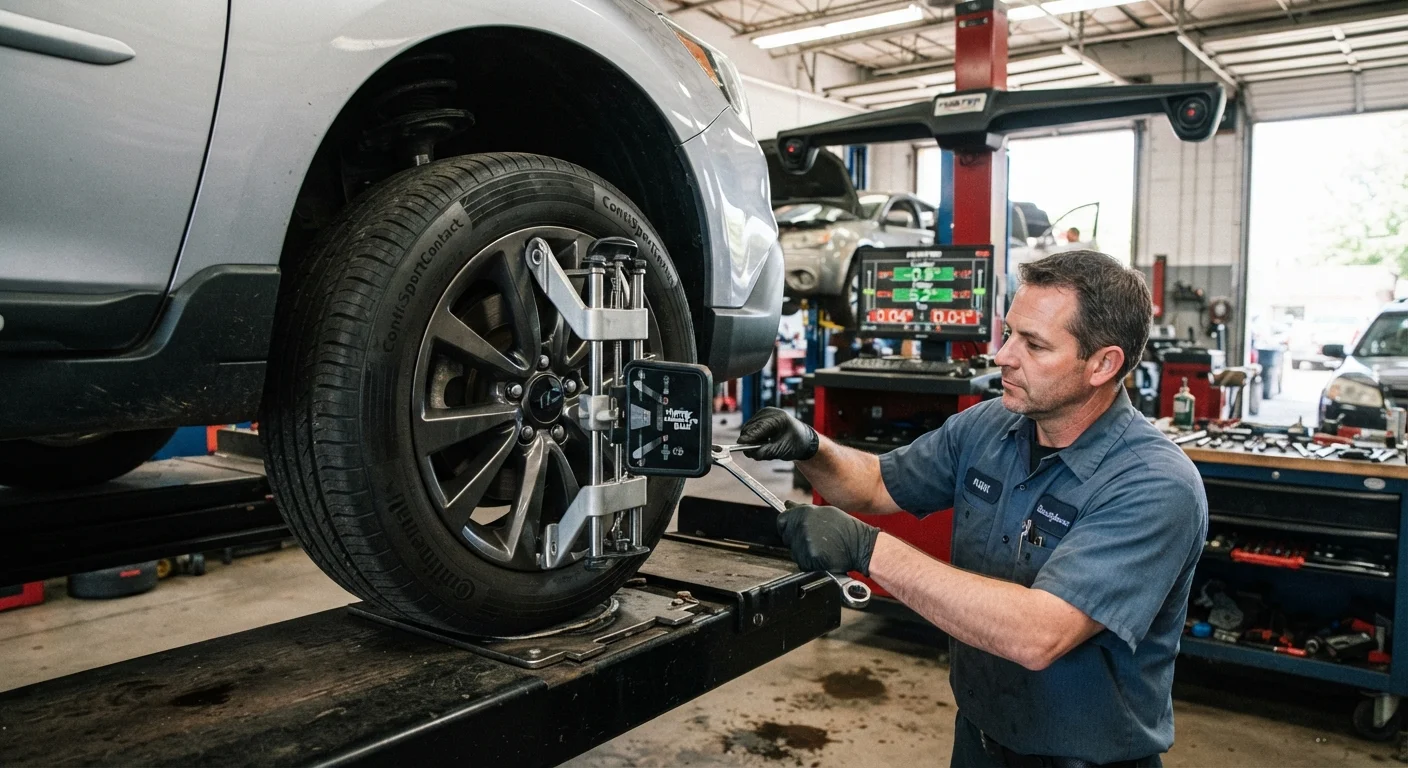
Alignment is measured in three main angles: camber (tilt of the tire inward or outward), toe (whether tires point slightly inward or outward), and caster (the angle of the steering axis). A qualified alignment technician uses computerized equipment to measure all three and adjust them to manufacturer specifications. This isn't a DIY task-it requires calibrated machinery and professional training.
The good news: alignment checks are affordable. A standard four-wheel alignment generally runs between $75 and $150 at most service shops. Compare that to the cost of a full set of replacement tires-often $400 to $800 or more-and the value of staying on top of alignment becomes clear. See how alignment fits into your broader vehicle's scheduled maintenance plan.
$75-$150
Typical cost of a four-wheel alignment
According to data from major US automotive service chains, a standard alignment costs far less than the tire replacement it prevents.
Up to 10%
Potential fuel economy loss from misalignment
Tire industry sources indicate that significant misalignment increases rolling resistance, reducing fuel efficiency in measurable cases.
Every 12,000-15,000 mi
Recommended alignment check frequency
Many mechanics recommend checking alignment at least once a year or with each tire rotation, whichever comes first.
Common Mistakes Drivers Make About Wheel Alignment
Most alignment-related problems don't develop overnight. They build gradually through everyday driving events-potholes, worn suspension components, or simply accumulated mileage. The mistakes below reflect how drivers typically respond (or fail to respond) to early warning signs.
Waiting until the car pulls severely before getting an alignment check.
Why it happens: Drivers often assume minor drifting is normal or caused by road camber, so they delay acting until the problem becomes obvious.
Ignoring uneven tire wear as a standalone tire problem rather than an alignment symptom.
Why it happens: Uneven wear is often blamed on inflation issues alone, leading drivers to simply add air and move on without investigating further.
Skipping an alignment check after hitting a significant pothole or curb.
Why it happens: Impact damage isn't always visible, and drivers assume that if nothing feels obviously wrong, nothing is wrong.
Replacing tires without correcting underlying alignment problems first.
Why it happens: Drivers invest in new tires hoping that will resolve handling issues, without realizing bad alignment will destroy the new tires just as quickly.
Dismissing a crooked or off-center steering wheel as a minor quirk.
Why it happens: An off-center wheel doesn't always feel dangerous, so drivers adapt their grip rather than investigating the root cause.
Understanding these missteps helps you catch alignment problems before they cascade into expensive repairs. As noted in our guide to routine maintenance tasks that prevent expensive repairs, small services like alignment checks consistently save money over the life of a vehicle.
After Any Major Road Impact, Inspect Promptly
Hitting a deep pothole or striking a curb hard enough to jolt your steering wheel should trigger an alignment check-even if nothing feels immediately wrong. Alignment angles can shift from a single impact, and the damage may only become apparent after additional miles of uneven tire wear have accumulated. Don't wait for the next scheduled service if you've experienced a significant road impact.
What Happens When You Ignore Alignment Problems
Misalignment doesn't just wear tires unevenly-it creates a chain of secondary problems. When tires scrub against the road at a wrong angle, rolling resistance increases, which reduces fuel efficiency. Studies from tire industry organizations suggest misalignment can decrease fuel economy by up to 10% in significant cases, though real-world impact varies by severity and vehicle type.
Beyond fuel costs, misaligned wheels place irregular stress on suspension components-tie rods, ball joints, and wheel bearings-accelerating wear on parts that are expensive to replace. A tie rod replacement, for example, can cost $150 to $400 per side depending on the vehicle. Steering and handling become less precise, which also has safety implications on highway speeds or in emergency maneuvers.
Tire pressure and alignment work together to protect tread life. Ignoring either shortens your tires' lifespan significantly. Most passenger tires are rated for 40,000 to 70,000 miles under proper conditions-severe misalignment can cut that to a fraction. If you notice any dashboard warnings alongside handling changes, check our overview of what warning lights are actually telling you to rule out related issues.
This article is for general informational purposes only. Always consult a qualified automotive professional for diagnosis and repair decisions specific to your vehicle.