

Key Takeaways
- Depreciation is typically the largest cost of car ownership, often exceeding fuel, insurance, and maintenance combined.
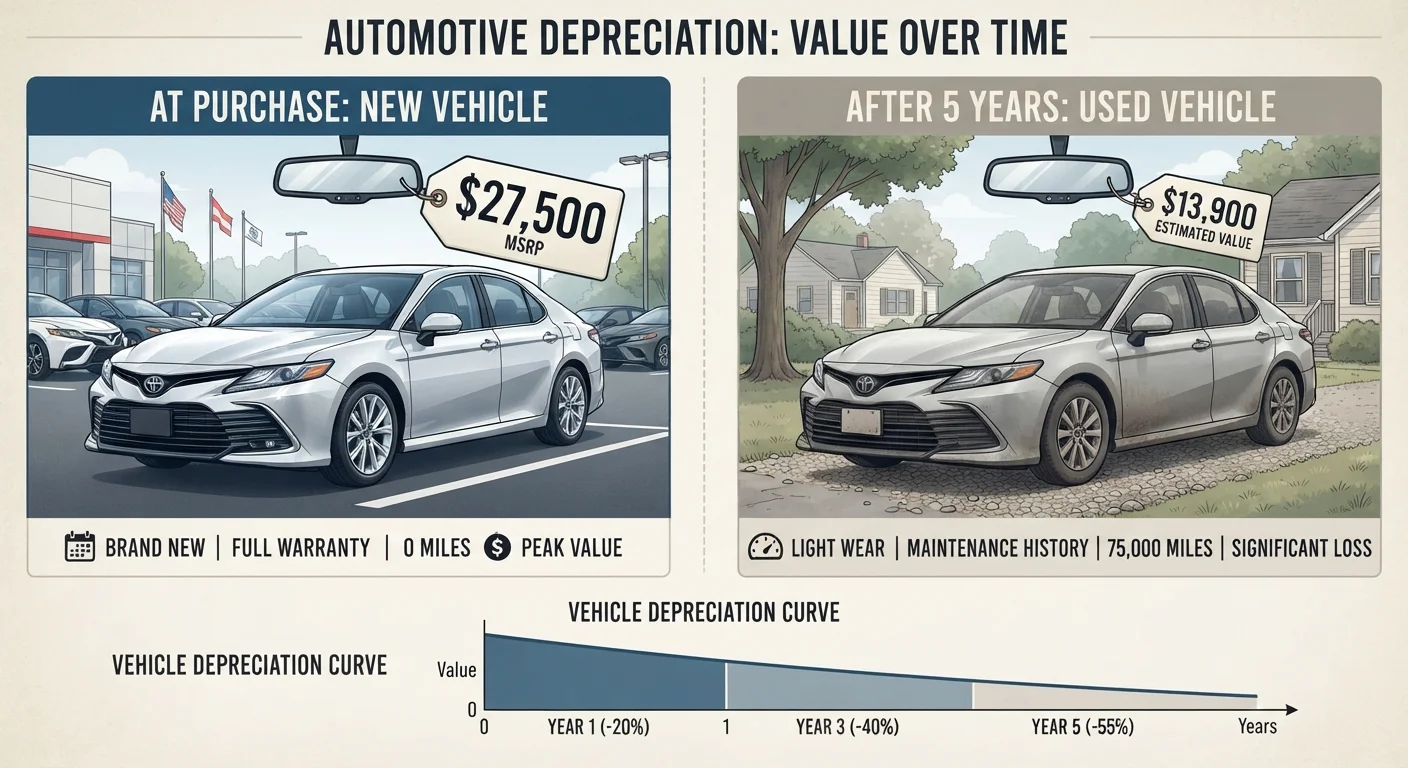
- A new vehicle can lose 15-25% of its value in the first year alone.
- Used cars depreciate more slowly, making them a potentially stronger value for budget-conscious buyers.
- Certain vehicle types, trim levels, and mileage patterns can meaningfully slow depreciation.
- Understanding depreciation helps you make smarter decisions about when to buy, sell, or trade in a vehicle.
Vehicle Depreciation
Depreciation is the decline in a vehicle's market value over time. Every car loses worth from the moment it's purchased, and this loss - though you never receive a bill for it - is often the single largest cost of owning a vehicle. It represents real money: the gap between what you paid and what you could sell the car for today.
In accounting, depreciation is recognized as a non-cash expense. For personal vehicles, it's not tax-deductible for most private owners, but it directly affects total cost of ownership and resale equity.
Why Depreciation Is the Expense You Never See
When most drivers think about car costs, they think about gas, insurance premiums, or that unexpected repair bill. What rarely comes to mind is depreciation - yet for the average vehicle owner, it dwarfs all other expenses. The reason it goes unnoticed is simple: no invoice arrives. Depreciation is a silent, continuous loss of value happening in the background every day you own the car.
To put it concretely: if you purchase a vehicle for $35,000 and sell it five years later for $17,000, that $18,000 difference didn't go toward fuel or repairs - it simply evaporated as depreciation. Spread over five years, that's $3,600 per year, or roughly $300 per month, just to hold the vehicle. For a full picture of what ownership actually costs, see The True Cost of Owning a Car in America.
~20%
Average new car value lost in year one
Industry estimates consistently place first-year depreciation between 15% and 25% for most mainstream new vehicles in the US market.
40-60%
Typical value lost after five years
Many standard new vehicles retain only 40-60% of their original purchase price after five years of average use, according to widely cited automotive valuation data.
$3,000+
Estimated annual depreciation cost
AAA's annual driving cost studies have placed depreciation among the highest per-mile expenses for new vehicle owners, often exceeding $3,000 per year for average drivers.
How Depreciation Works - and Why the First Year Hits Hardest
Depreciation is not linear. It doesn't fall at the same rate every year like a predictable monthly bill. Instead, it follows a steep curve: the sharpest drop happens almost immediately. The moment a new vehicle leaves the dealership lot, it transitions from "new" to "used" in the eyes of the market - and the price adjusts accordingly.
In the first year, a typical new car may lose 15-25% of its sticker price. By year three, cumulative depreciation often reaches 35-45%. By year five, many vehicles have shed 40-60% of their original value. After that point, the annual rate of loss slows considerably - which is why older vehicles can sometimes be surprisingly economical to own.
Factors that influence the speed of depreciation include:
- Mileage: Higher annual mileage accelerates value loss, since buyers associate miles with wear.
- Condition: Dents, stains, or deferred maintenance signal higher risk to future buyers.
- Vehicle type: Trucks and SUVs with strong utility demand have historically held value better than some sedans in the US market.
- Market demand: Economic conditions and fuel prices can shift which vehicle types retain value.
Choose Colors and Trims With Broad Appeal
Neutral colors - whites, grays, silvers, and blacks - tend to attract more buyers at resale time, which can support a higher sale price. Unusual colors or highly specific trim packages may appeal to a narrower audience and sell for less. This small decision at purchase time can influence depreciation years later.
New vs. Used: How Depreciation Changes the Math
One of the most practical implications of understanding depreciation is what it reveals about the new-versus-used decision. When you buy a new vehicle, you absorb that first-year value cliff yourself. When you buy a two- or three-year-old vehicle, the original owner has already absorbed it - and you step in at a more stable point on the depreciation curve.
This doesn't automatically make used cars "better" - reliability history, warranty coverage, financing rates, and your own priorities all matter. But from a pure depreciation standpoint, a used vehicle typically offers better value retention per dollar spent. For a detailed side-by-side analysis, see New Car vs. Used Car: Weighing the Total Cost of Ownership.
What Drivers Can Do With This Knowledge
Understanding depreciation doesn't mean you should never buy new - it means you should factor it into the total cost calculation honestly. Here are several practical ways this knowledge shapes smarter decisions:
- Time your trade-in thoughtfully. Trading in a vehicle at the two- or three-year mark means selling during the steepest depreciation window. If you can hold a vehicle past year five, you'll often find the annual value loss has moderated significantly.
- Consider depreciation when leasing. Lease payments are structured around the vehicle's projected depreciation during the lease term. Understanding this connection helps you evaluate whether a lease deal reflects fair value. See Leasing vs. Buying a Car: What the Numbers Actually Show for more context.
- Maintain your vehicle to protect residual value. Consistent service records and good physical condition slow the rate of value loss. Routine Maintenance Tasks That Prevent Expensive Repairs outlines the upkeep habits that pay off at resale time.
- Avoid overspending on features with poor resale value. Some add-ons don't translate into higher resale prices. Where Drivers Overspend on Their Vehicles Without Realizing It identifies common ways owners inflate costs without recouping value.
This article is for general informational and educational purposes only and does not constitute financial or investment advice. Consult a qualified financial professional for guidance specific to your situation.