

Key Takeaways
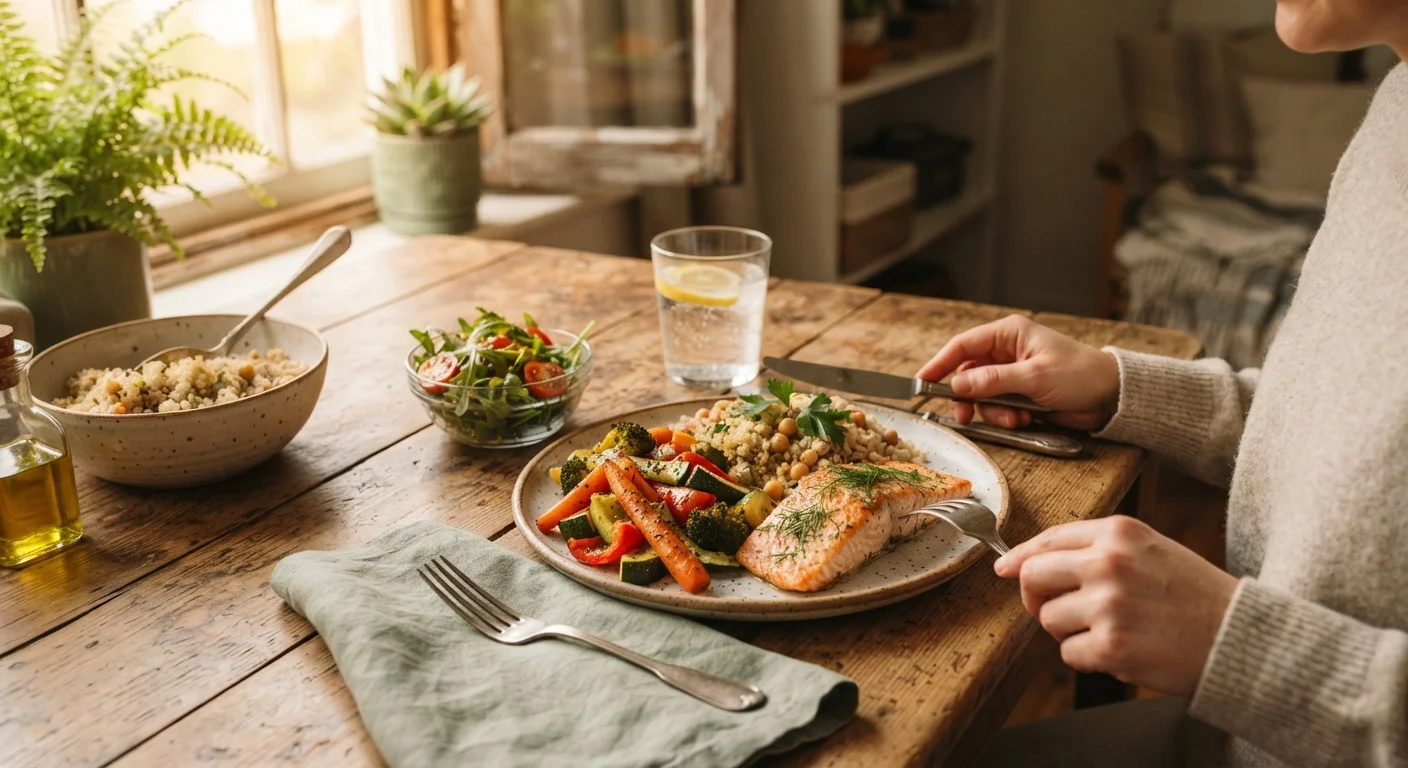
- A balanced plate can be built using simple visual proportions, no calorie counting required.
- Protein, fiber-rich carbohydrates, healthy fats, and vegetables each serve a distinct role.
- Variety across the week matters more than perfection at any single meal.
- Minimally processed foods generally offer more nutritional value than heavily processed alternatives.
- Hydration and mindful eating habits support how well your body uses the food you eat.
Summary
18 items · 15–30 minutes per meal
Why Simple Meal-Building Principles Work Better Than Rules
Nutrition advice often feels contradictory — one source says avoid carbs, another says count macros, a third promotes specific superfoods. For most everyday Americans, this noise creates more confusion than clarity. The good news: sound nutrition doesn't require expertise or tracking apps. It requires a reliable framework you can apply at any meal, using whatever is in your kitchen.
This checklist distills that framework into practical steps. Whether you're cooking a weeknight dinner or assembling a quick lunch, running through these points takes only a few minutes and helps you build a meal that genuinely nourishes — without the overthinking. For guidance on supporting your overall wellbeing beyond the plate, see our daily mental wellbeing checklist.
The checklist below covers the foundational elements — what to include, what to keep in check, and a few habits that make eating well easier over time. It's general nutrition information, not personalized medical or dietary advice. If you have specific health conditions or dietary needs, consult a registered dietitian or your healthcare provider.
One Meal Won't Make or Break Your Diet
Nutrition works cumulatively. A single meal that's short on vegetables or includes a processed food isn't cause for concern — what matters is the overall pattern across days and weeks. Avoid all-or-nothing thinking, which can make healthy eating feel more stressful than it needs to be.
What You'll Need to Get Started
No specialized equipment is required to build a nutritious meal. The tools below make the process more consistent and less stressful. Having a few of these in place before you start cooking reduces decision fatigue significantly.
A 9-inch dinner plate
Using a standard-sized plate helps you naturally manage portion proportions without measuring.
A reliable cutting board and sharp knife
Efficient vegetable prep encourages including more whole-food plant ingredients in every meal.
Dry and canned pantry staples
Keeping whole grains, legumes, and canned vegetables on hand makes building a balanced meal faster on any given day.
A kitchen scale or measuring cups
Useful for those building portion awareness early on — optional once you're comfortable eyeballing serving sizes.
A weekly meal plan template
A simple written plan for the week reduces last-minute decisions and supports nutritional variety over time.
The Meal-Building Checklist
Work through these grouped items each time you prepare a meal. Not every item will apply to every situation — the goal is awareness and consistency over time, not rigid compliance at every sitting. For a deeper dive into the vitamins and minerals in the foods you're eating, our plain-language micronutrient reference is a helpful companion.
Plate Composition
Food Quality Checks
Cooking Method
Eating Habits
If you regularly eat packaged or prepared foods, understanding what's on the label is just as useful as knowing what to cook. Our guide to nutrition label literacy walks through every section of a standard label in plain terms.
Special Dietary Needs Require Professional Guidance
This checklist is designed for generally healthy adults looking to build more balanced meals at home. If you are managing a chronic health condition, food allergy, or specific dietary restriction — or if you are pregnant, nursing, or planning meals for young children or older adults — please work with a registered dietitian or your healthcare provider rather than relying on general guidance alone.
This article provides general nutrition information for educational purposes only. It is not a substitute for personalized advice from a qualified healthcare professional or registered dietitian.