
Micronutrients at a Glance: A Plain-Language Reference to Vitamins and Minerals

| Total essential vitamins | 13 (4 fat-soluble, 9 water-soluble) |
| Total essential minerals | Over 20, including 7 major and multiple trace minerals |
| Primary source for most people | Whole foods across varied food groups |
| Vitamin B12 note | Found almost exclusively in animal-based foods (National Institutes of Health, Office of Dietary Supplements) |
| Iron absorption tip | Pair plant iron sources with vitamin C to boost uptake |
What Are Micronutrients and Why Do They Matter?
Macronutrients — carbohydrates, protein, and fat — tend to get most of the nutrition spotlight. But vitamins and minerals, collectively called micronutrients, are equally essential. They are needed in much smaller amounts than macronutrients, yet they drive processes your body cannot live without: energy conversion, immune defense, bone formation, and cell repair, among many others.
Unlike macronutrients, your body cannot manufacture most micronutrients on its own, so food is the primary delivery system. Understanding which nutrients do what — and where to find them — helps you make more confident everyday food choices without needing a biochemistry degree. For a broader look at how macronutrients fit alongside these nutrients, see our guide to what carbs, protein, and fat actually do.
| Total essential vitamins | 13 (4 fat-soluble, 9 water-soluble) |
| Total essential minerals | Over 20, including 7 major and multiple trace minerals |
| Primary source for most people | Whole foods across varied food groups |
| Vitamin B12 note | Found almost exclusively in animal-based foods (National Institutes of Health, Office of Dietary Supplements) |
| Iron absorption tip | Pair plant iron sources with vitamin C to boost uptake |
Key Vitamins: What Each One Does
Vitamins fall into two broad categories: fat-soluble (A, D, E, and K), which are stored in body fat and liver tissue, and water-soluble (the B vitamins and vitamin C), which are not stored and need regular replenishment through food.
Micronutrients
Vitamins and minerals required by the body in small amounts to support essential physiological functions. Unlike macronutrients, they provide no calories but are critical for health.
Fat-soluble vitamins
Vitamins A, D, E, and K, which dissolve in fat and can be stored in the body's fatty tissue and liver. Because they accumulate, excessive supplementation can potentially reach harmful levels.
Water-soluble vitamins
Vitamin C and the eight B vitamins, which dissolve in water and are not stored in the body to any significant degree. Excess amounts are typically excreted in urine, and regular dietary intake is needed.
Trace minerals
Minerals required in very small amounts — typically less than 100 milligrams per day — yet still essential for health. Examples include iron, zinc, iodine, and selenium.
Daily Value (DV)
A reference amount set by the FDA indicating how much of a nutrient a serving of food contributes to a general daily diet. It appears as a percentage on the Nutrition Facts label.
Antioxidant
A compound that helps neutralize unstable molecules called free radicals, which can damage cells. Several vitamins and minerals — including vitamin C, vitamin E, and selenium — have antioxidant properties.
Fat-Soluble Vitamins
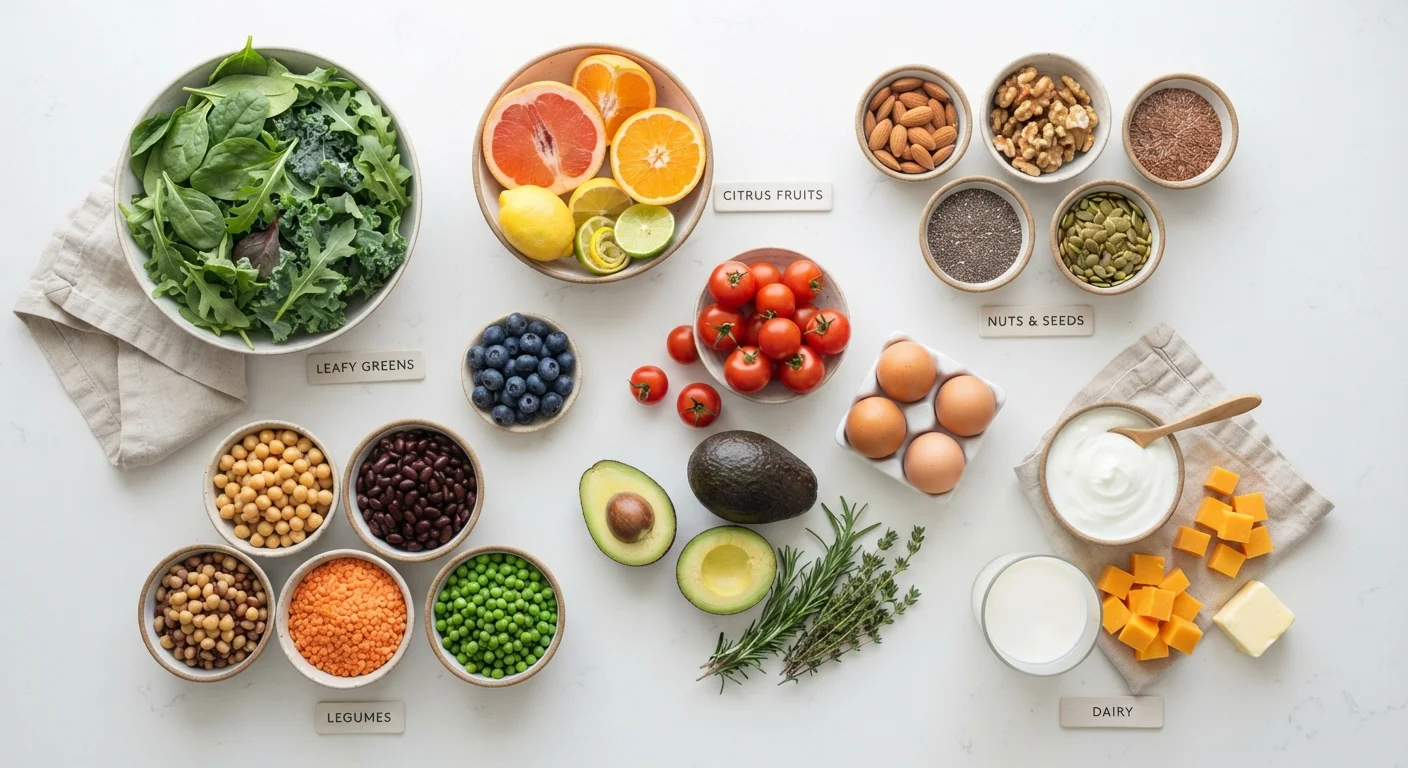
- Vitamin A — Supports vision, immune function, and skin integrity. Found in liver, dairy, eggs, and orange-pigmented produce like carrots and sweet potatoes.
- Vitamin D — Critical for calcium absorption and bone health; also plays a role in immune regulation. Fatty fish, fortified dairy, and egg yolks are dietary sources. The skin also synthesizes it from sunlight exposure.
- Vitamin E — Functions as an antioxidant, helping protect cells from oxidative damage. Nuts, seeds, and vegetable oils are rich sources.
- Vitamin K — Needed for normal blood clotting and bone metabolism. Leafy greens such as kale, spinach, and broccoli are among the best sources.
Water-Soluble Vitamins
- Vitamin C — Supports collagen production, wound healing, and immune response. Citrus fruits, bell peppers, strawberries, and broccoli are excellent sources.
- B vitamins (B1, B2, B3, B5, B6, B7, B9, B12) — This group collectively supports energy metabolism, nerve function, and red blood cell production. Whole grains, legumes, dairy, eggs, meat, and leafy greens provide various B vitamins. Vitamin B12 is found almost exclusively in animal products, making it a nutrient of note for those following plant-based diets.
When reading packaged food labels, the % Daily Value column reflects how much of a given vitamin one serving provides. Our nutrition label literacy guide explains how to interpret those numbers in practical terms.
Essential Minerals: The Building Blocks You Need Every Day
Minerals are inorganic elements that come from soil and water, entering the food supply through plants and animals. They are grouped into major minerals (needed in larger amounts) and trace minerals (needed in very small amounts, but no less important).
~45%
Adults not meeting magnesium needs from food alone
Research published in Nutrients journal suggests a significant portion of U.S. adults fall short of the estimated average magnesium requirement.
41%
U.S. adults with vitamin D insufficiency
According to CDC data from the National Health and Nutrition Examination Survey, vitamin D insufficiency is among the most common micronutrient gaps in the U.S.
13
Essential vitamins the human body requires
Recognized by nutrition authorities including the National Institutes of Health, these 13 vitamins each serve distinct and irreplaceable physiological roles.
Major Minerals
- Calcium — The most abundant mineral in the body; central to bone and tooth structure, muscle contraction, and nerve signaling. Dairy products, fortified plant milks, and leafy greens are reliable sources.
- Magnesium — Involved in hundreds of enzyme reactions, muscle function, and blood glucose regulation. Found in nuts, seeds, whole grains, and dark leafy greens.
- Potassium — Helps maintain fluid balance and supports healthy blood pressure. Bananas, potatoes, beans, and yogurt are good dietary sources.
- Sodium — Essential for fluid balance and nerve signaling, though most Americans already consume it in adequate — or excessive — quantities through processed foods.
Trace Minerals
- Iron — Essential for oxygen transport via red blood cells. Red meat, poultry, seafood, beans, and fortified cereals supply iron. Pairing plant-based iron sources with vitamin C enhances absorption.
- Zinc — Supports immune function, wound healing, and DNA synthesis. Oysters, red meat, poultry, beans, and pumpkin seeds are notable sources.
- Iodine — Required for thyroid hormone production, which regulates metabolism. Iodized salt, seafood, and dairy are primary sources for most Americans.
- Selenium — Acts as an antioxidant and supports thyroid function. Brazil nuts, seafood, and eggs are particularly concentrated sources.
Supplements Are Not a Substitute for Food
Whole foods deliver vitamins and minerals alongside fiber, phytonutrients, and other compounds that work together in ways supplements cannot fully replicate. While supplements can address specific, clinically identified gaps, they are generally not recommended as a replacement for a varied diet. Always speak with a healthcare provider before starting any supplement regimen, especially for fat-soluble vitamins, which can accumulate in the body.
Aiming for variety across food groups — rather than fixating on individual nutrients — is a practical way to cover your nutritional bases. Our article on building a nutritious meal without overthinking it offers a simple, non-prescriptive framework for doing exactly that.
This article is for general informational purposes only and does not constitute medical or dietary advice. Individual nutrient needs vary based on age, health status, and other factors. Consult a registered dietitian or qualified healthcare professional for guidance specific to your situation.