

Key Takeaways
- Clogged gutters can cause foundation damage, basement flooding, and fascia rot over time.
- Most homes need gutter cleaning at least twice a year — more if surrounded by trees.
- DIY cleaning is manageable for single-story homes with the right ladder safety practices.
- Downspout discharge should direct water at least four to six feet from the foundation.
- Gutter guards reduce maintenance frequency but do not eliminate the need for cleaning entirely.
Why Gutters Matter More Than Most Homeowners Realize
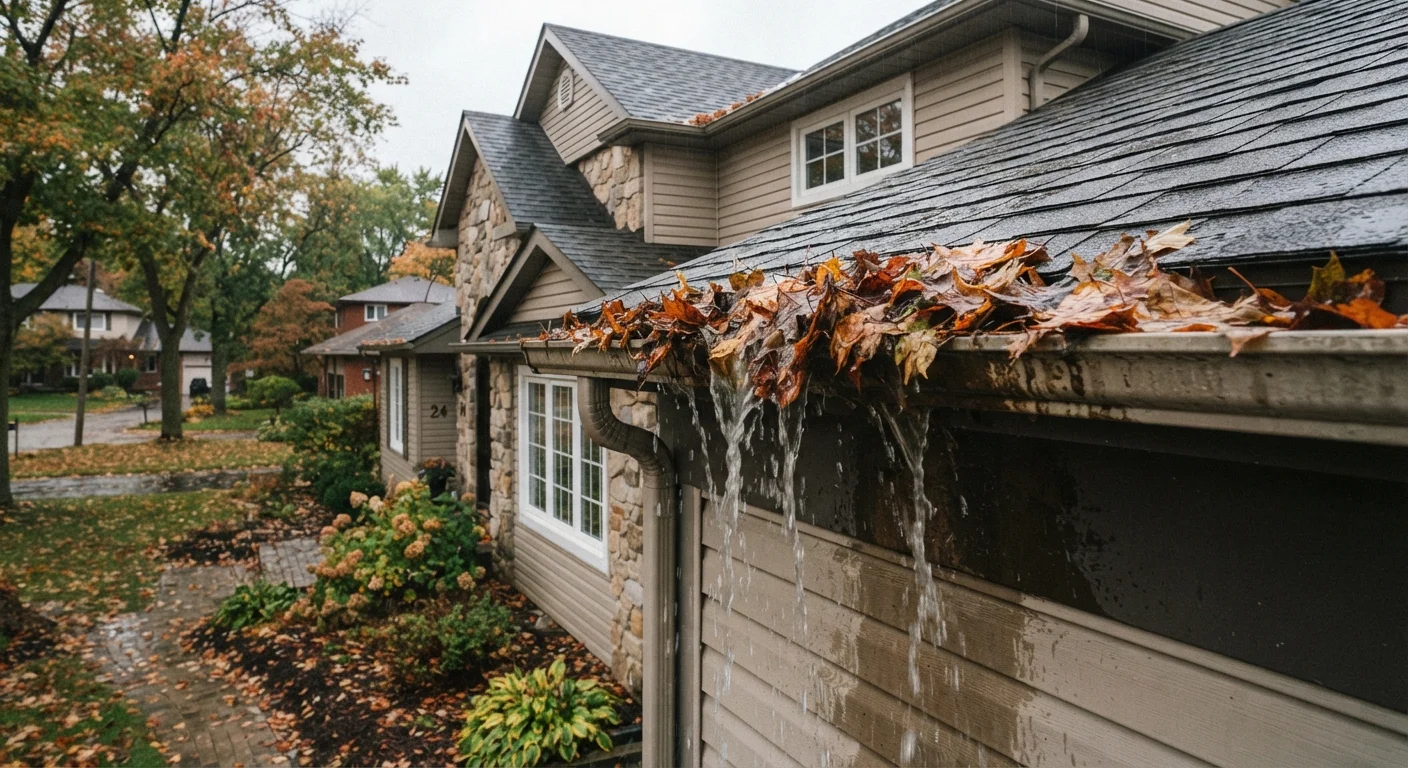
Gutters have one job: move rainwater off your roof and away from your home's foundation. It sounds simple, but when that system fails — through clogging, sagging, or leaking — the consequences spread fast. Water that pools near your foundation can cause soil erosion, basement seepage, and eventually structural settling. Water that backs up under roofing materials accelerates rot in the fascia and soffit boards, and can even work its way into your attic.
These aren't dramatic, sudden failures. They're slow, hidden ones — which is exactly why gutters get ignored until a homeowner notices a water stain on the basement wall or a sagging section pulling away from the roofline. See our guide to grading, drainage, and downspouts for a fuller picture of how water management around your home works together.
Water Near Your Foundation Is a Structural Risk
Gutters that overflow or downspouts that discharge too close to the house allow water to saturate the soil around your foundation. Over time this can cause settling, cracking, and basement water intrusion — all of which are costly to repair. Proper gutter function is one of the most direct ways to protect your home's structural integrity.
The Most Common Gutter Problems (and What Causes Them)
Understanding the failure modes helps you spot them early:
- Clogs: The most common issue. Leaves, seed pods, shingle grit, and even bird nests accumulate in gutters and block the downspout inlet. Water then backs up and overflows the sides.
- Sagging sections: Gutters are hung with spikes or hidden hangers. Over years, these loosen, causing sections to dip. Sagging gutters hold standing water, which adds weight and worsens the problem.
- Separated joints: Most gutters are assembled in sections joined with sealant. That sealant fails over time, creating leak points directly above the foundation or landscaping.
- Improper pitch: Gutters need a slight slope — roughly a quarter inch of drop per 10 feet — toward the downspout. If pitch is off, water pools instead of draining.
- Downspout discharge too close to the house: Even a functioning gutter fails if the downspout dumps water right at the foundation. Extensions should carry water at least four to six feet away.
This connects directly to broader roof maintenance issues — gutters and rooflines work as a system.
$4,000–$10,000+
Typical foundation repair cost range
According to general contractor estimates, water intrusion from poor drainage is among the leading causes of expensive foundation repairs.
2x per year
Minimum recommended gutter cleanings
Industry guidance from home maintenance organizations recommends cleaning gutters at least in spring and fall, with additional cleanings for tree-heavy properties.
How Often You Should Clean and Inspect Gutters
For most homes, cleaning twice a year — once in late spring after tree pollination and seed dispersal, and once in late fall after leaves have dropped — is the baseline. Homes with overhanging trees, particularly pine or oak, may need cleanings three or four times annually.
Inspection should happen at the same intervals. Walk the perimeter and look for:
- Gutters pulling away from the fascia
- Visible rust streaks or peeling paint on the fascia board
- Soil erosion directly below gutter sections (indicating overflow)
- Staining or efflorescence on the foundation
Pairing gutter inspection with your fall garden cleanup creates a natural seasonal rhythm that's easier to remember and maintain.
DIY Gutter Cleaning: What It Actually Takes
Cleaning gutters yourself is realistic for single-story homes and straightforward two-story homes with safe ladder access. You'll need a stable extension ladder, work gloves, a small hand trowel or gutter scoop, a bucket or tarp, and a garden hose.
- Set up your ladder safely at one end of a gutter run. Always maintain three points of contact and avoid overreaching.
- Scoop debris from the gutter into your bucket, working toward the downspout.
- Once cleared, flush the gutter with your hose from the far end toward the downspout to confirm drainage.
- Check the downspout for blockages. If flow is restricted, use the hose at full pressure from the top, or feed a plumber's snake down from the bottom.
- Inspect all joints and end caps for gaps. Reapply gutter sealant to any separating seams after the gutter dries completely.
Ladder Safety Is Not Optional
Falls from ladders are among the most common causes of serious home-improvement injuries. Always use a stable, properly rated ladder on level ground, have a spotter present, and never lean or overreach beyond your body's center. For two-story or steeply pitched homes, consider hiring a professional rather than working at dangerous heights.
After cleaning, run a garden hose from the far end of each gutter toward the downspout and watch for slow drainage or standing water — these reveal pitch problems before they worsen.
Low spots that hold water accelerate rust in steel gutters and promote mosquito breeding, so catching them early saves on repairs.
When inspecting the fascia board behind your gutter, press on the wood with your thumb. Soft or spongy areas indicate rot that needs addressing before re-hanging any gutter hardware.
Gutters attached to rotted fascia will pull away under the weight of water or debris, turning a simple repair into a full fascia replacement job.
Check Downspout Extensions Every Spring
Plastic downspout extenders can shift or detach over winter. Each spring, walk the perimeter of your home and confirm every extender is still directing water well away from the foundation. This two-minute check can prevent significant water intrusion over the season.
When to Call a Professional
Certain situations genuinely warrant professional help rather than a DIY approach:
- Two-story or higher rooflines with limited safe ladder placement
- Significant fascia rot discovered during inspection — this requires carpentry repair before new gutters can be properly anchored
- Full gutter replacement, especially with seamless aluminum systems that require specialized equipment to fabricate on-site
- Persistent overflow despite clean gutters, which may indicate undersized gutters for your roof's square footage or local rainfall intensity
When evaluating contractors, ask for references, confirm they carry liability insurance, and get written quotes from more than one provider. For broader context on what separates a surface-level fix from a real solution, see home maintenance tasks first-time owners overlook.
Permits Are Rarely Needed for Gutter Work
Routine gutter cleaning, rehanging, and sealing generally do not require permits in most U.S. jurisdictions. However, if you are replacing the entire gutter system or making changes that affect roofline drainage, it is worth checking with your local building department to confirm local requirements.
Gutter Guards: Do They Actually Help?
Gutter guards — screens, micro-mesh inserts, or surface-tension covers — are designed to block debris while allowing water in. They do reduce how often gutters need cleaning, and for homes surrounded by heavy tree cover, the time savings can be meaningful.
However, no gutter guard eliminates maintenance entirely. Fine debris like pine needles, seed husks, and shingle grit can still accumulate on or through most guard designs. Inspect guarded gutters at least once a year to confirm the guard itself isn't holding a debris mat that blocks water.
The quality and fit of gutter guards varies considerably. A poorly installed guard can actually trap debris more effectively than an open gutter would. If you're considering guards, have a professional evaluate whether the design is appropriate for the specific trees and debris common in your area.
“The gutter system is essentially your home's first line of defense against water. When it fails quietly — a small sag, a slow leak — the damage compounds well before it becomes visible.”
— National Association of Home Inspectors, Professional home inspection trade organization
This article is for general home maintenance information only. Always verify local building codes and consult a qualified contractor for structural, roofing, or significant repair work.