
Zero-Based Budgeting vs. Envelope Budgeting: Two Approaches to Controlling Your Money

Key Takeaways
- Zero-based budgeting assigns every dollar of income a specific job until the balance reaches zero.
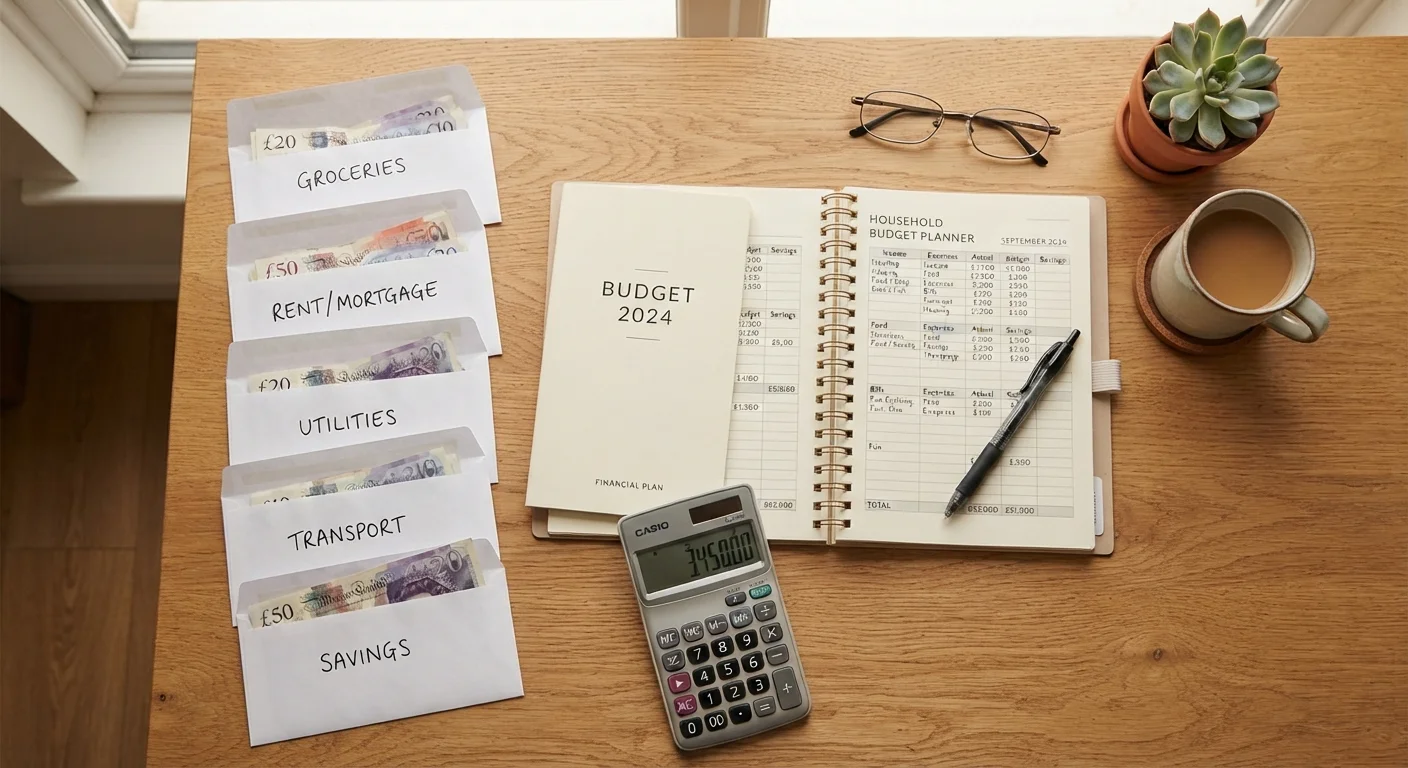
- Envelope budgeting physically separates cash into labeled spending categories so overspending becomes impossible.
- Both methods require tracking income and expenses, but differ in format and daily interaction.
- Zero-based budgeting works well digitally; envelope budgeting suits cash-heavy or tactile spenders.
- Neither method guarantees results — consistency and honest category amounts matter most.
- You can combine elements of both to build a hybrid that fits your lifestyle.
Option A
Zero-Based Budgeting
The intentional, every-dollar-assigned approach.
Best for: People who want a detailed monthly plan and are comfortable working with spreadsheets or budgeting apps.
Option B
Envelope Budgeting
The tactile, spend-what-you-hold approach.
Best for: People who overspend in specific categories and want a physical, visual limit on discretionary cash.
If you prefer managing money digitally and want full monthly visibility
Zero-Based Budgeting
Zero-based budgeting integrates naturally with apps and spreadsheets, making it easy to plan, adjust, and review every category each month.
If you routinely overspend on groceries, dining out, or entertainment
Envelope Budgeting
Physical envelopes create a hard stop — when the cash is gone, the spending stops, no willpower required.
If you have an irregular income that changes month to month
Zero-Based Budgeting
Zero-based budgeting lets you rebuild the plan from scratch each month, accommodating income swings without a fixed cash-withdrawal routine.
If you're new to budgeting and want the simplest possible start
Envelope Budgeting
Labeled envelopes require no software knowledge and make spending limits immediately visible and easy to understand.
If you manage household finances jointly with a partner
Zero-Based Budgeting
A shared digital budget is easier for two people to view, edit, and discuss together — see our guide on budgeting as a household for more.
What Each Method Actually Does
Both zero-based budgeting and envelope budgeting share the same core promise: stop money from disappearing without a plan. But they get there differently.
Zero-based budgeting starts with your total monthly income, then assigns a purpose to every single dollar — bills, groceries, savings, debt payments, even small categories like haircuts — until income minus expenses equals zero. That zero doesn't mean you're broke; it means every dollar has been accounted for. If you earn $4,200 this month, you build a plan that adds up to exactly $4,200. If something changes mid-month, you adjust other categories to compensate. It's a living document, typically maintained in a spreadsheet or budgeting app.
Envelope budgeting works through physical (or digital) envelopes, each labeled for one spending category. At the start of the month, you withdraw cash and distribute it. Groceries get $400. Gas gets $150. Dining out gets $100. When an envelope is empty, spending in that category stops. The method was popularized long before smartphones existed, but digital versions now replicate the same principle using virtual envelopes inside certain apps.
If you're still deciding on a broader budgeting framework, the overview of common budgeting methods covers how these and other approaches stack up.
| Criterion | Zero-Based Budgeting | Envelope Budgeting |
|---|---|---|
| Core mechanism | Assign every dollar a category until balance = zero | Distribute cash into labeled spending envelopes |
| Format | Digital (app or spreadsheet) or paper | Physical cash or digital envelope simulation |
| Best suited for | Full-budget planners, variable-income earners | Discretionary overspenders, cash-based households |
| Monthly setup time | Moderate — rebuild plan each month | Low — withdraw and sort cash on payday |
| Works for fixed bills | Yes — all expense types included | Partially — cash not ideal for rent or utilities |
| Overspending safeguard | Requires discipline and honest tracking | Hard limit — empty envelope stops spending |
| Adaptability mid-month | High — reallocate between categories | Lower — requires physically moving cash between envelopes |
Where Each Method Excels — and Where It Struggles
Zero-based budgeting's strength is its flexibility. Each month starts fresh, so if your income drops or a big expense appears, you reallocate rather than abandon the plan. It works for fixed and variable income alike and pairs well with digital tools. The trade-off is time: building the plan at the start of each month takes discipline, and it's easy to let categories become wishful thinking rather than honest estimates.
Envelope budgeting's strength is its physical immediacy. Seeing an envelope thin out is far more visceral than watching a number drop on a screen. Research in behavioral economics consistently finds that people spend more carefully with cash than with cards, partly because handing over bills feels more concrete than a tap or swipe. The limitation is practicality — many regular expenses (rent, utilities, subscriptions) don't lend themselves to cash payments, so envelope budgeting often works best for discretionary spending categories rather than the full budget.
~1 in 3
Americans report having no monthly budget
Surveys by the National Foundation for Credit Counseling have consistently found a large share of U.S. adults do not follow a formal budget.
10–15%
Typical overspend in discretionary categories
Behavioral finance studies suggest people commonly underestimate variable spending by 10–15% when relying on mental accounting alone.
For a closer look at which tracking tools complement each method, the comparison of paper, spreadsheet, and app-based tracking is a practical next read.
Putting Either Method Into Practice
Whichever method you choose, honest category amounts are the foundation. Budgets fail not because of the method but because categories are set too low and overspending gets quietly ignored.
For zero-based budgeting, start by listing every expense category — fixed first (rent, insurance, loan minimums), then variable (food, gas, personal spending), then savings and debt payoff goals. Add them up. If the total exceeds income, trim variable categories until you reach balance. Revisit the plan at every month's start.
For envelope budgeting, review two to three months of bank statements to find your realistic averages in the categories you'll cash-fund. Withdraw that amount on payday, sort it into labeled envelopes, and commit to the rule: empty envelope means done spending. You can reserve envelope budgeting for your three or four most problematic spending categories while handling fixed bills electronically.
A hybrid is also worth considering — use zero-based budgeting's structure as the monthly map, then pull cash envelopes only for the categories where you historically overspend.
If you've never built a formal budget before, the step-by-step guide to your first monthly budget walks through the setup process from scratch. And once you're running, a regular monthly budget checkup helps you stay on track before each new month begins.
Digital Envelope Apps Are an Option
If carrying physical cash feels impractical, several budgeting apps replicate the envelope method digitally by letting you assign money to virtual categories before spending occurs. This preserves the psychological benefit of preset limits without requiring cash withdrawals. The mechanics are the same — the format is just on your phone instead of your kitchen counter.
This article is for general informational and educational purposes only and does not constitute personalized financial advice. Consider consulting a qualified financial professional for guidance specific to your situation.