

Key Takeaways
- Short, focused sessions are more effective than long, inconsistent ones for most pets.
- Your pet's physical state — hunger, fatigue, stress — directly affects how well they can learn.
- Your own mindset and energy going into a session shapes the outcome as much as technique does.
- Removing distractions before starting is one of the highest-impact steps you can take.
- Consistent pre-session preparation builds a ritual your pet can recognize and respond to.
Summary
18 items · 5–10 minutes
Why a Pre-Session Checklist Changes Everything
Most training problems aren't caused by stubborn pets or flawed techniques — they're caused by poor conditions. A dog who just finished a meal isn't motivated by treats. A cat interrupted mid-nap is unlikely to engage. An owner who's rushed and frustrated will communicate that tension without realizing it.
This checklist exists to close that gap. By running through a quick readiness check before every session, you create the conditions where learning is actually possible. Think of it the way a pilot uses a pre-flight checklist: not because any single item is complicated, but because skipping one at the wrong moment has real consequences.
For a deeper look at the science behind what makes training work, our comprehensive behavior and training guide covers learning theory and routine-building from the ground up.
Your Pet's Readiness
Your Own Readiness
Environment Setup
Rewards and Equipment
Tools, Timing, and What to Have Ready
Beyond your pet's state of mind and your own, the practical logistics of a session matter more than most owners expect. Having your marker ready — whether that's a clicker or a verbal cue — and knowing which behavior you're targeting before you begin eliminates dead air during the session. Dead air breaks momentum and gives your pet a chance to disengage.
Precise timing is the foundation of effective animal training, and fumbling for a treat pouch or second-guessing your marker costs you that timing window. Prep your tools, load your rewards, and know your goal before your pet is in position.
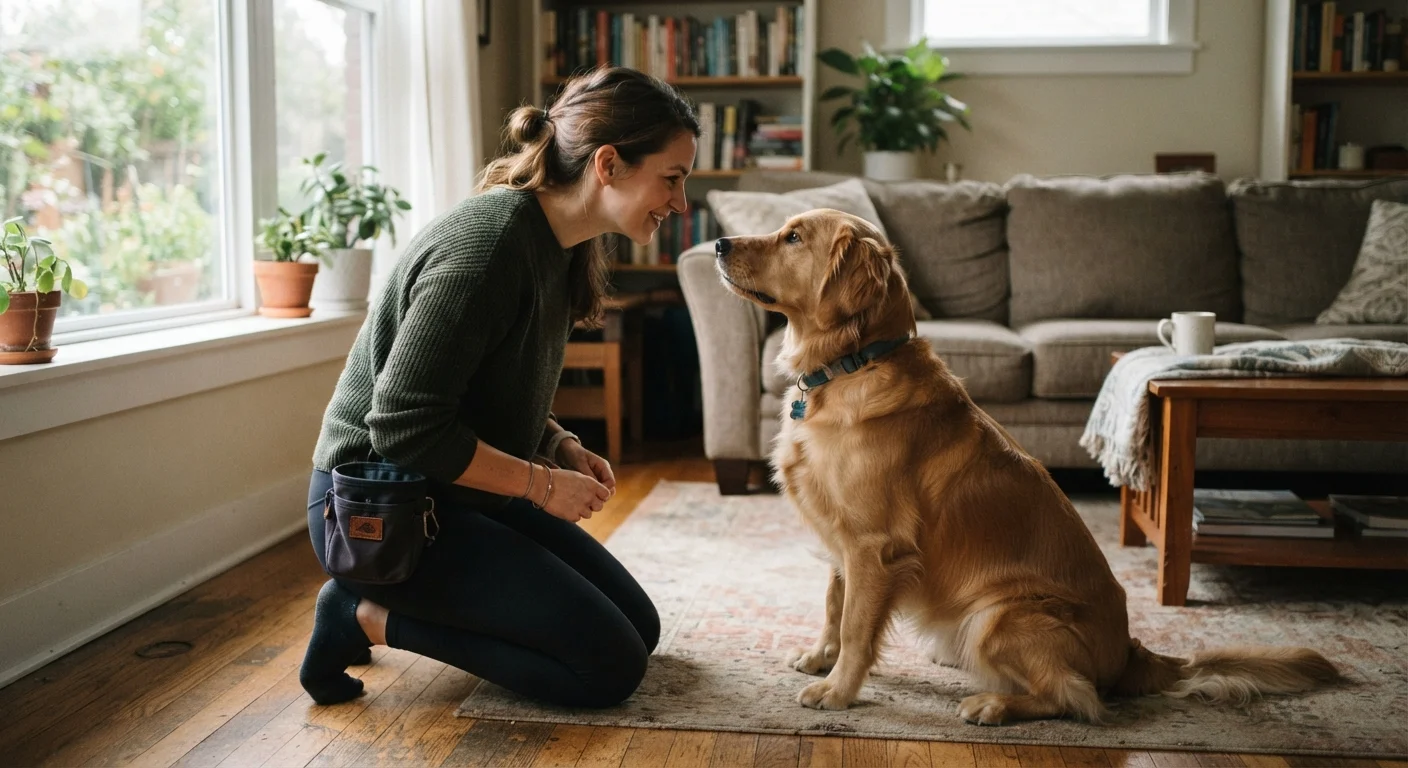
Treat pouch or small container
Keeps rewards accessible so you can deliver them within the critical timing window after a correct behavior.
Clicker or verbal marker
Marks the exact moment of correct behavior so your pet understands precisely what earned the reward.
High-value treats
Provides reinforcement appropriate to the skill difficulty; more challenging behaviors typically require more motivating rewards.
Timer or phone alarm
Signals the end of a session so you stop before your pet fatigues, keeping sessions short and productive.
Training mat or target
Gives your pet a defined starting position, which helps establish structure and signals that training has begun.
Notebook or training log
Records what was practiced and how the session went so you can track progress and plan the next session effectively.
If you're working with multiple pets in the same household, session logistics get more complex. Training when dogs and cats share a space requires additional setup steps worth reviewing separately.
Never Train Through Signs of Stress or Fear
If your pet is displaying stress signals — yawning excessively, lip-licking, whale eye, tucked tail, or attempting to leave the space — stop the session immediately. Continuing to push through these signs doesn't build resilience; it erodes trust and can make the behavior you're working on harder to train. Give your pet a break, reduce the difficulty in your next attempt, and consult a certified professional trainer if stress responses are frequent.
After the Session: Close the Loop
A checklist isn't just for before — ending intentionally matters too. Note what behaviors the pet offered well, what felt off, and whether your treat value seemed appropriate. This brief reflection shapes your next session's plan and helps you catch emerging issues early, including early signs of resource guarding or stress responses that can surface during training.
Consistent preparation is also a form of routine your pet learns to read. Over time, reaching for your treat pouch or moving to your training space becomes a cue in itself — one that signals to your pet that focused, rewarding interaction is about to happen. That anticipation is a training asset you build one session at a time.
This article is for general informational and educational purposes. For pets with known behavioral challenges, anxiety, aggression, or health concerns, consult a qualified veterinary behaviorist or certified professional trainer before beginning or modifying a training program.