

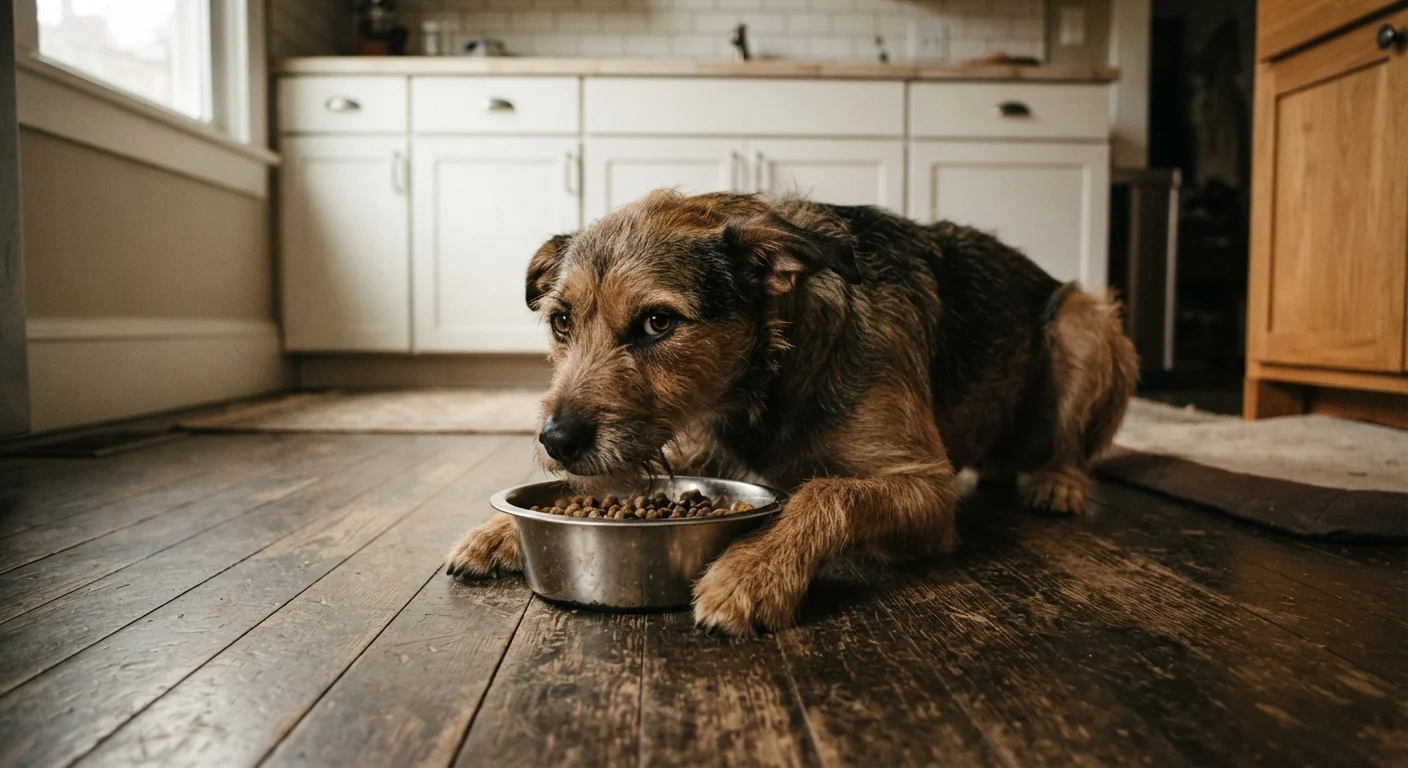
Key Takeaways
- Resource guarding is a normal canine behavior, but it can escalate into aggression if left unaddressed.
- Early signs include stiffening, freezing, and speeding up eating — not just growling or snapping.
- Punishing a growling dog can suppress warning signals without resolving the underlying anxiety.
- Positive reinforcement training techniques can reduce guarding behavior over time.
- Severe or escalating cases should involve a certified professional, not just at-home management.
- Dogs may guard food, toys, spaces, or even specific people in the household.
Resource Guarding in Dogs
Resource guarding is a behavior in which a dog uses threats, intimidation, or aggression to protect something it values — such as food, toys, sleeping spots, or even a person — from being taken away. It is a natural, instinct-driven behavior rooted in survival, but it can become a safety concern when directed at people or other pets. Dogs do not guard out of spite or dominance; they guard because they feel something important to them is at risk.
In behavioral science, resource guarding falls under the broader category of possessive aggression and can be assessed on a severity scale — ranging from mild (body stiffening, eating faster) to severe (snapping or biting). A certified applied animal behaviorist or veterinary behaviorist can conduct a formal assessment when escalation is a concern.
What Resource Guarding Actually Looks Like
Many pet owners associate resource guarding with dramatic snarling or snapping. In reality, the behavior exists on a spectrum, and the most manageable cases are caught well before that point. Understanding the full range of signals — from barely perceptible to overtly aggressive — is the first step to addressing the behavior safely.
Early-stage guarding behaviors include:
- Stiffening or freezing — the dog's body goes rigid when a person or animal approaches its resource
- Eating faster — the dog accelerates consumption as someone draws near
- Hard stare or whale eye — direct eye contact combined with showing the whites of the eyes
- Low growling — a warning vocalization, often continuous while the threat persists
- Hovering or covering — physically positioning over or around the item
As guarding intensifies, dogs may progress to snapping (a bite attempt without contact), lunging, or full biting. It is important to note that growling is communication, not defiance. A dog that growls around its bowl is signaling discomfort — and that signal deserves a measured response, not punishment.
Growling Is Communication, Not Defiance
A dog that growls is giving you a warning — and that warning is valuable information. Suppressing the growl through punishment removes the signal without removing the anxiety. Dogs that are corrected for growling may skip warning vocalizations entirely and bite without notice. Treat the growl as data, not disobedience.
Why Dogs Guard Resources
Resource guarding is rooted in survival instinct. Dogs evolved in environments where access to food, shelter, and valued objects was not guaranteed. Protecting those resources — even from packmates — was adaptive behavior. Domestication has softened many instincts, but guarding tendencies remain present in varying degrees across individual dogs.
Several factors can heighten a dog's tendency to guard:
- History of food insecurity — dogs who experienced competition for food (as strays, in shelters, or in large litters) often carry heightened vigilance around meals
- Lack of early socialization — puppies not exposed to people approaching during feeding may perceive that approach as a threat
- Inadvertent reinforcement — if a growl has successfully kept people away in the past, the dog learns it works
- Medical pain — a dog in pain may guard food or resting spots more aggressively; always rule out a physical cause with your veterinarian
For context on how early feeding habits connect to long-term behavior, see how nutritional routines shift across a dog's life stages. Consistent, structured mealtimes can reduce the anxiety that fuels guarding.
“The goal of behavior modification for resource guarding is not to take things away from dogs — it's to change how the dog feels about someone approaching. When the dog learns that your approach predicts good things, the need to guard diminishes.”
— Patricia McConnell, Certified Applied Animal Behaviorist and author on dog behavior
How to Respond — and What to Avoid
The most common mistake owners make is attempting to correct guarding through force — taking the item, scolding, or physically removing the dog. These actions escalate arousal and confirm the dog's fear that its resource is under threat. They also suppress warning signals without resolving the underlying anxiety, which can lead to biting without warning.
Effective responses are based on positive reinforcement and desensitization:
- Trade-up exercises — Offer the dog something of equal or greater value when you approach, so your presence near the resource predicts a reward rather than a loss.
- Approach-and-retreat — Walk toward the dog, drop a treat near the bowl without reaching for it, then move away. Repeated over time, this changes the association from threat to benefit.
- Controlled feeding environments — Reduce the number of competing animals or people near the dog at mealtimes to lower overall arousal.
- Teach a reliable "drop it" or "leave it" cue — Built through reward-based repetition, these cues give the dog an alternative response to guarding.
Start Training When Guarding Is Mild
The earlier you address resource guarding, the more options you have. Mild signals like stiffening or fast eating are far easier to work with than established snapping or biting. Begin trade-up exercises as soon as you notice any low-level warning signs — you don't need to wait for a growl to justify action.
These techniques require consistency. A single session rarely shifts deeply ingrained behavior. If your household includes young children or the dog has already snapped or bitten, involving a certified professional is strongly recommended rather than attempting management alone. This is also distinct from separation-related behavior — for a comparison, see what separation anxiety looks like and how training can ease it.
When to Bring in a Professional
Not all resource guarding cases are manageable through owner-led training alone. Situations that warrant immediate professional involvement include:
- Any bite that breaks skin, regardless of severity
- Guarding that has escalated in frequency or intensity over weeks
- Multi-dog households where guarding is triggering fights
- Households with children under 12
- Dogs that show guarding toward a specific person in the family
A certified applied animal behaviorist (CAAB) or a veterinary behaviorist (Dip ACVB) can conduct a full behavioral assessment and build an individualized behavior modification plan. Your primary care veterinarian is also a valuable first contact — especially to rule out pain as a contributing factor, since discomfort can amplify guarding intensity significantly. To understand more about pain-related behavioral changes, learn the subtle signs your dog may be in pain.
Before beginning any formal training program, review a session-readiness checklist to ensure you and your dog are set up for productive, low-stress work.
This article is for informational and educational purposes only and does not constitute veterinary or behavioral advice. If your dog is showing aggressive behavior, consult a qualified veterinarian or certified animal behaviorist for guidance specific to your situation.