

Key Takeaways
- Recall training works best when built gradually from zero-distraction environments to busy real-world settings.
- Every successful recall should be rewarded generously — this behavior is too important to treat casually.
- Never call your dog to you for something they dislike; it teaches them to hesitate.
- A long line gives your dog freedom to practice without the risk of them running off.
- Consistent repetition across different environments and handlers builds true reliability.
What you will need
Why Recall Is a Safety Skill, Not Just a Trick
A dog that returns when called can be stopped from running into traffic, engaging with an aggressive dog, or disappearing in an unfamiliar location. Recall is the one cue with the clearest life-or-death stakes — and yet it is frequently undertrained because it looks simple. In reality, you are asking your dog to disengage from something compelling and choose you instead. That requires consistent reinforcement over time.
Many dogs respond well in the living room but ignore the same cue at the dog park. This is not disobedience — it reflects a learning gap. The behavior was never sufficiently practiced under conditions that actually compete with it. As part of any solid training foundation (see the complete pet behavior training guide for broader context), recall should be treated as an ongoing investment rather than a one-time lesson.
Use a Unique Recall Word
Choose a recall cue — such as "come," "here," or a distinct whistle — and protect it. Don't repeat it when your dog isn't responding; repeating a cue your dog ignores teaches them it's optional. If a session isn't working, walk away and reset rather than nagging.
If you have a newly adopted dog, recall training pairs well with the broader habits outlined in building good habits in the first 30 days. Starting early means fewer patterns to correct later.
What You'll Need Before You Start
What you will need
High-Value Treats
Provides the motivational reward that makes returning to you worth your dog's effort, especially over competing distractions.
Long Training Line (15–30 ft)
Gives your dog freedom to move and practice recall at a distance while maintaining a safety backup.
Treat Pouch
Keeps rewards instantly accessible so you can deliver reinforcement within seconds of your dog arriving.
Clicker
Provides a precise marker signal that tells your dog exactly which behavior earned the reward.
Treat quality matters more here than in almost any other training context. Use something your dog finds genuinely exciting — small pieces of cooked chicken, cheese, or a commercial treat with a strong smell tend to outperform dry biscuits when competing with outdoor distractions. Save your most motivating reward exclusively for recall practice so it retains its power.
Step-by-Step: Building a Reliable Recall
Never Punish a Dog for Coming to You
Even if your dog took three minutes to respond, arriving is always the right outcome — punishing it teaches your dog that coming to you has negative consequences. That lesson is extremely difficult to undo. Always reward the return, regardless of how long it took.
Charge the Recall Cue Indoors
Start in a quiet room with no competing distractions. Say your recall cue once in a cheerful voice, then immediately back away a few steps. When your dog reaches you, deliver three to five small treats one at a time and praise warmly. Repeat this ten times per session for several days. You are not yet testing recall — you are making the cue predict something wonderful.
Practice Across Different Indoor Rooms
Once your dog is responding eagerly indoors, begin calling them from other rooms. Call once, then use movement or a happy sound to encourage approach. Reward every arrival generously. Varying the room changes the context slightly, helping your dog learn that the cue applies everywhere — not just in the living room where you trained.
Move Practice to a Low-Distraction Outdoor Space
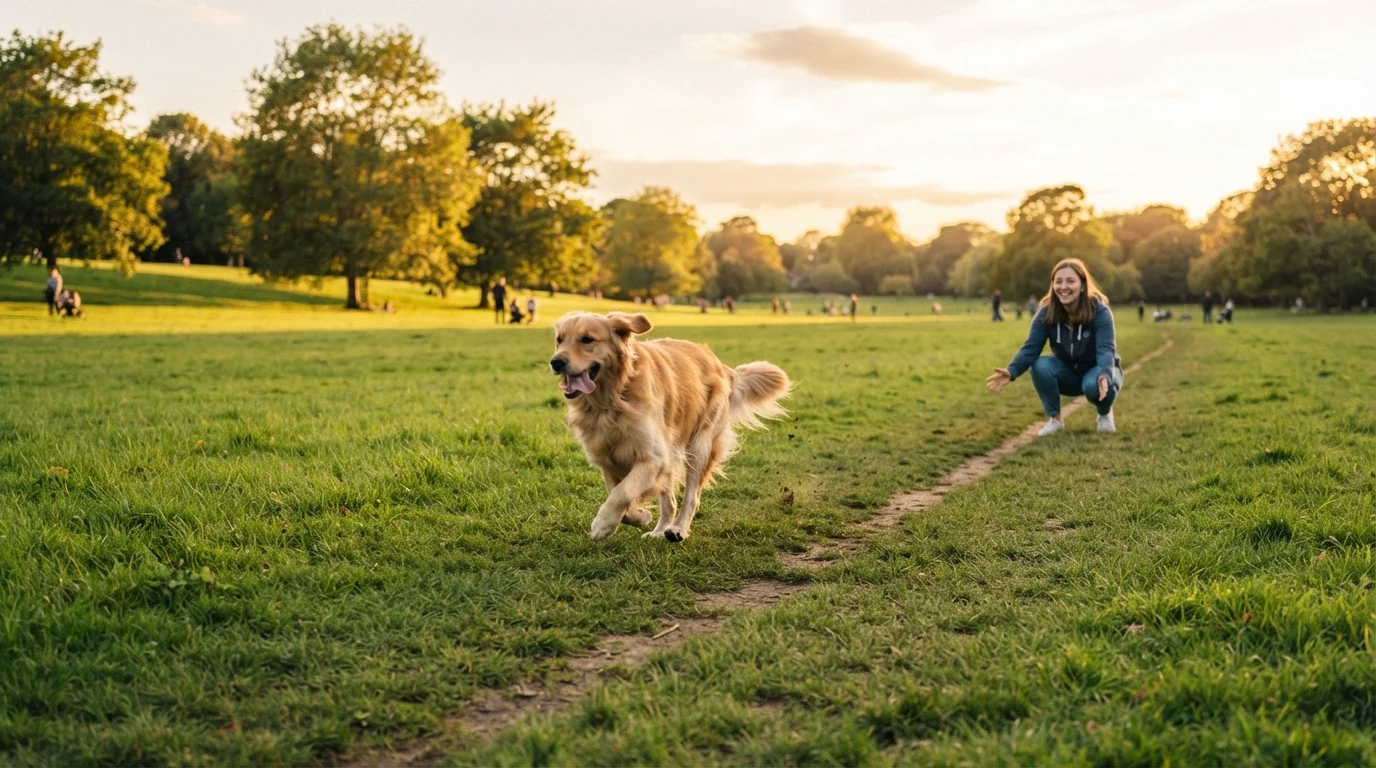
Attach a long training line before stepping outside. A fenced backyard or quiet corner of a park works well. With the long line dragging on the ground as a safety backup, call your dog once and move backward enthusiastically. Reward every return at least as generously as you did indoors — distractions make the behavior harder, so the reward needs to match the effort.
Introduce Mild Distractions Deliberately
Set up controlled distractions: a toy on the ground, a family member walking nearby, or a training session near a window where squirrels pass. Call your dog when they have noticed the distraction but are not fully engaged with it. This sweet spot — alert but not locked on — is where reliable recall is built. Keep sessions short; three to five recalls per distraction scenario is enough.
Proof the Recall in High-Distraction Environments
Gradually work up to busier settings: a park with other dogs visible, a sidewalk with foot traffic, or a sports field. Keep the long line attached. Call your dog when they are distracted and celebrate their choice to disengage and return. This is the hardest stage, and the most important. As covered in timing your reward correctly, deliver the treat the moment your dog's nose reaches you — not after you've reached down to clip the leash.
Maintain the Behavior Long-Term
Recall is not a skill you teach once and retire. Practice brief, rewarding recall sessions on walks for the life of your dog. Randomly reward recalls with high-value treats even after the behavior seems automatic — this maintains the dog's belief that coming to you is always worth it. If reliability slips, return to easier environments and rebuild systematically.
Troubleshooting Common Recall Problems
My dog comes partway, then veers off
Your dog is reinforced by something in the environment before they complete the recall. Shorten the distance, increase the treat value, and reward the moment they make direct eye contact with you — before they can redirect. Build full completion gradually.
My dog ignores the cue entirely when distracted
The distraction level is above your dog's current threshold. Increase distance from the distraction, work at the edge of the dog's awareness rather than in the thick of it, and work back up the difficulty ladder methodically.
My dog comes but seems reluctant or slow
Check whether the recall cue has ever predicted something unpleasant — bath time, nail trims, or end of an off-leash run. Dogs generalize quickly. Use a different cue word going forward, and make arriving the start of a reward rather than the end of fun. This kind of trust erosion is also relevant to dogs with anxiety around their owners, where rebuilding positive associations is central to progress.
Avoid Off-Leash Practice Too Early
Practicing recall off-leash before the behavior is solid in controlled settings sets your dog up to rehearse ignoring you. Use a long training line until your dog responds reliably across multiple distraction levels and locations.