

Key Takeaways
- Periodontal disease affects an estimated 80% of dogs and 70% of cats by age three.
- Bad breath in pets is a clinical sign, not just a nuisance — it often signals active bacterial infection.
- Oral bacteria can travel through the bloodstream and stress the heart, liver, and kidneys over time.
- Daily or frequent tooth brushing remains the most effective at-home prevention tool.
- Professional dental cleanings under anesthesia are necessary once disease has progressed beyond early gingivitis.
- Diet and chewing behavior both play a role in slowing plaque accumulation between vet visits.
Periodontal Disease in Pets
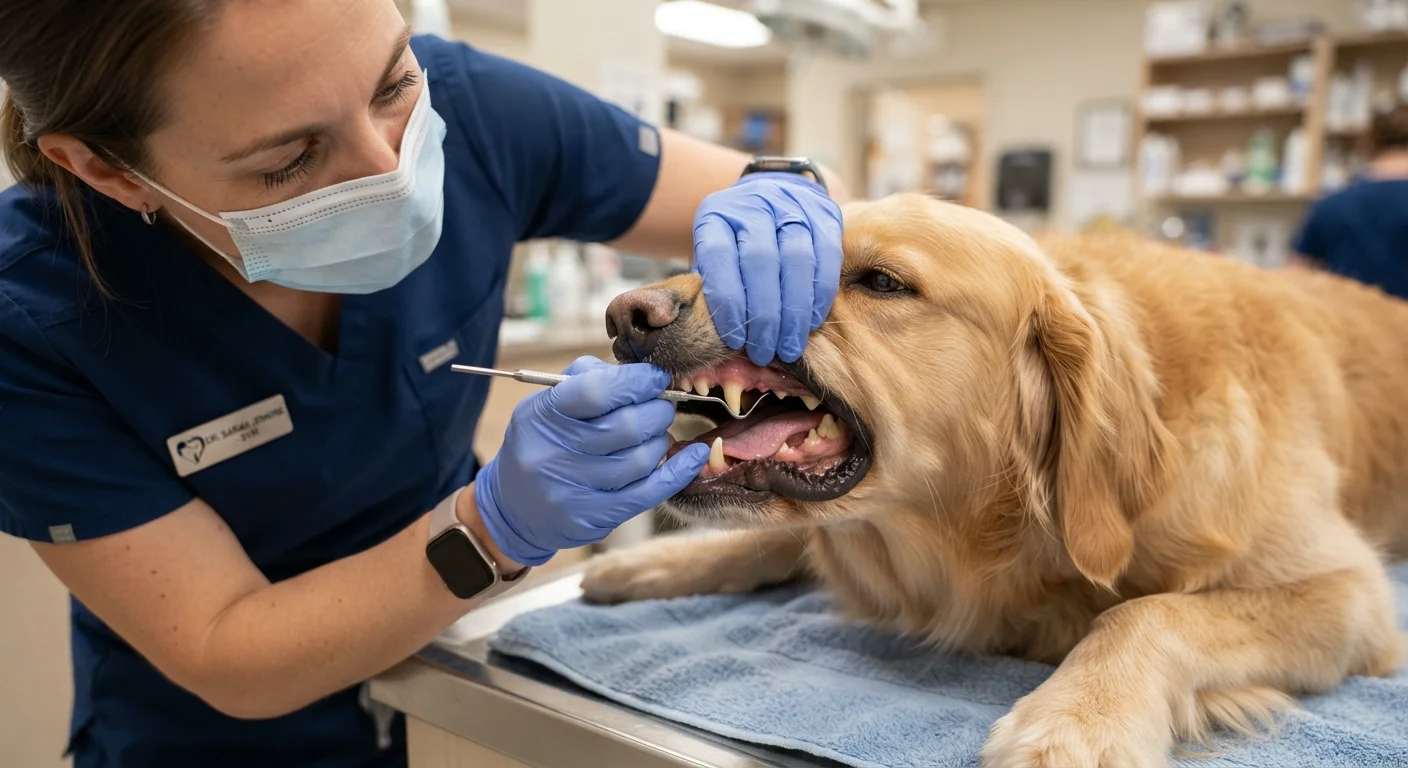
Periodontal disease is a progressive infection of the structures supporting the teeth — including the gums, ligaments, and jawbone. It begins as plaque buildup, advances to gingivitis (gum inflammation), and can progress to tooth loss and systemic health complications if left untreated. It affects both dogs and cats and is the most commonly diagnosed health condition in adult pets.
Periodontal disease is graded on a scale from Stage 1 (gingivitis only, fully reversible) to Stage 4 (severe bone loss, often requiring tooth extraction). Bacteria from advanced oral disease can enter the bloodstream, potentially affecting the heart, liver, and kidneys.
Why Dental Disease Is the Overlooked Health Crisis
Most pet owners worry about vaccines, parasites, and diet — but the health problem quietly affecting the majority of adult pets sits right inside their mouths. Periodontal disease is the most frequently diagnosed condition seen in veterinary practice, yet surveys consistently show it is among the least-addressed by pet owners at home.
The core reason is visibility. Plaque and tartar accumulate gradually, gum disease develops silently, and most pets — dogs especially — do not vocalize oral pain. By the time an owner notices a problem, the disease may have progressed significantly. Understanding what dental disease actually is, and what it can lead to, is the first step toward changing that pattern.
See our guide to veterinary care for new pet owners for a broader picture of what preventive visits should cover, including oral health screening.
Small Breeds Face Higher Risk
Toy and small dog breeds — including Chihuahuas, Dachshunds, and Yorkshire Terriers — tend to develop periodontal disease faster and more severely than larger breeds. Their teeth are often crowded relative to jaw size, which traps plaque between teeth and accelerates buildup. If you own a small breed, discuss a proactive dental schedule with your vet early.
How the Disease Progresses: From Plaque to Organ Risk
Dental disease follows a predictable path. It begins with plaque — a film of bacteria that forms on tooth surfaces within hours of eating. When plaque is not removed, it mineralizes into tartar (also called calculus), a hard deposit that bonds to enamel and cannot be brushed away. Tartar creates rough surfaces where more bacteria accumulate, and those bacteria migrate below the gum line.
Below the gum line, bacterial infection attacks the periodontal ligament and jawbone — the structures that hold teeth in place. This is true periodontal disease: invisible to the naked eye and diagnosable only through dental X-rays and probing under anesthesia.
The consequences extend beyond the mouth. Bacteria from infected oral tissue can enter the bloodstream through inflamed gum tissue, a process that places a chronic burden on the heart, liver, and kidneys. While direct causation in all cases is still an area of ongoing veterinary research, the association is well-established enough that most veterinarians treat oral health as a whole-body concern.
~80%
Of dogs affected by age 3
The American Veterinary Medical Association estimates that most dogs show signs of periodontal disease by their third birthday.
~70%
Of cats with some gum disease by age 3
Cats develop periodontal disease at nearly the same rate as dogs, though they are often better at masking oral discomfort.
Stage 1–4
Grading scale for periodontal severity
Veterinary dental disease is classified in four stages, with only Stage 1 (gingivitis) considered fully reversible with professional cleaning and home care.
Recognizing the Warning Signs
Because pets do not complain about tooth pain the way humans do, owners need to know what to look for. Review your pet's mouth regularly — ideally as part of a handling routine established early in life.
- Bad breath — persistent odor is a sign of bacterial activity, not normal pet behavior
- Red, swollen, or bleeding gums — classic signs of gingivitis
- Yellow or brown buildup along the gum line — visible tartar
- Dropping food, chewing on one side, or avoiding hard food — possible oral pain
- Pawing at the mouth or face rubbing — behavioral signs of discomfort
- Loose teeth or receding gums — indicators of advanced disease
If your dog shows subtle discomfort signals you cannot immediately explain, our article on signs your dog may be in pain covers the full range of behavioral and physical cues worth knowing.
Prevention and Professional Care: What Actually Works
Daily tooth brushing is the gold standard for at-home prevention. Pet-safe enzymatic toothpastes help break down plaque chemically as well as mechanically. Acclimating a pet to brushing takes patience — starting with a finger wrap and rewarding calm behavior consistently builds tolerance over time.
Between brushings, dental chews, water additives, and certain diets can support oral health, though none replaces brushing. The Veterinary Oral Health Council (VOHC) evaluates products that meet defined standards for plaque and tartar reduction — your veterinarian can guide you toward options that have earned that recognition.
Diet plays a supporting role as well. Our comparison of dry kibble versus wet food includes how food texture affects plaque accumulation — a useful reference when thinking about your pet's overall dental health.
Once tartar has bonded or disease has progressed below the gum line, professional veterinary dental cleaning under anesthesia is the only way to fully address it. This includes scaling above and below the gum line, dental X-rays to assess bone health, and extraction of any non-viable teeth. The frequency of professional cleanings varies by individual animal — your veterinarian can recommend a schedule based on your pet's specific risk factors.
Start Brushing Early — Even If It Takes Time
The earlier you introduce tooth brushing to a pet, the more accepting they tend to be. Even older pets can be trained to tolerate brushing with gradual desensitization — start by letting them taste the toothpaste, then introduce the brush over several sessions. Consistency matters far more than perfection: even a few brushings per week is meaningfully better than none.
Dental care is also a natural part of broader preventive health care throughout your pet's life — and it scales in importance as pets age into their senior years.
This article is for general informational purposes only and does not constitute veterinary medical advice. Always consult a licensed veterinarian for guidance specific to your pet's health needs.