

| Most common pet toxin calls | Human foods (including chocolate, grapes, xylitol) (ASPCA Animal Poison Control Center annual data) |
| Xylitol risk in dogs | Hypoglycemia and potential liver failure (Veterinary toxicology consensus) |
| Theobromine source | Chocolate (highest in dark/baking chocolate) (ASPCA Poison Control) |
| Allium sensitivity | Cats > Dogs for garlic and onion toxicity (Veterinary clinical literature) |
| Safe dose of grapes/raisins | None established — any amount is suspect (ASPCA and veterinary toxicologists) |
Why Common Foods Can Be Toxic to Pets
Dogs and cats metabolize substances very differently from humans — and from each other. A food that's harmless or even beneficial for people can trigger organ failure, neurological damage, or death in pets. This reference covers the most documented toxic foods, explains the mechanism of harm, and notes species-specific differences where relevant.
If you suspect your pet has eaten any of the items below, contact your veterinarian or an animal poison control hotline immediately. Do not wait for symptoms to appear — early intervention significantly improves outcomes. This article is general educational information, not a substitute for veterinary guidance.
| Most common pet toxin calls | Human foods (including chocolate, grapes, xylitol) (ASPCA Animal Poison Control Center annual data) |
| Xylitol risk in dogs | Hypoglycemia and potential liver failure (Veterinary toxicology consensus) |
| Theobromine source | Chocolate (highest in dark/baking chocolate) (ASPCA Poison Control) |
| Allium sensitivity | Cats > Dogs for garlic and onion toxicity (Veterinary clinical literature) |
| Safe dose of grapes/raisins | None established — any amount is suspect (ASPCA and veterinary toxicologists) |
High-Risk Foods: Dogs and Cats
The following foods are considered toxic to both species, though severity and thresholds can vary.
Grapes and Raisins
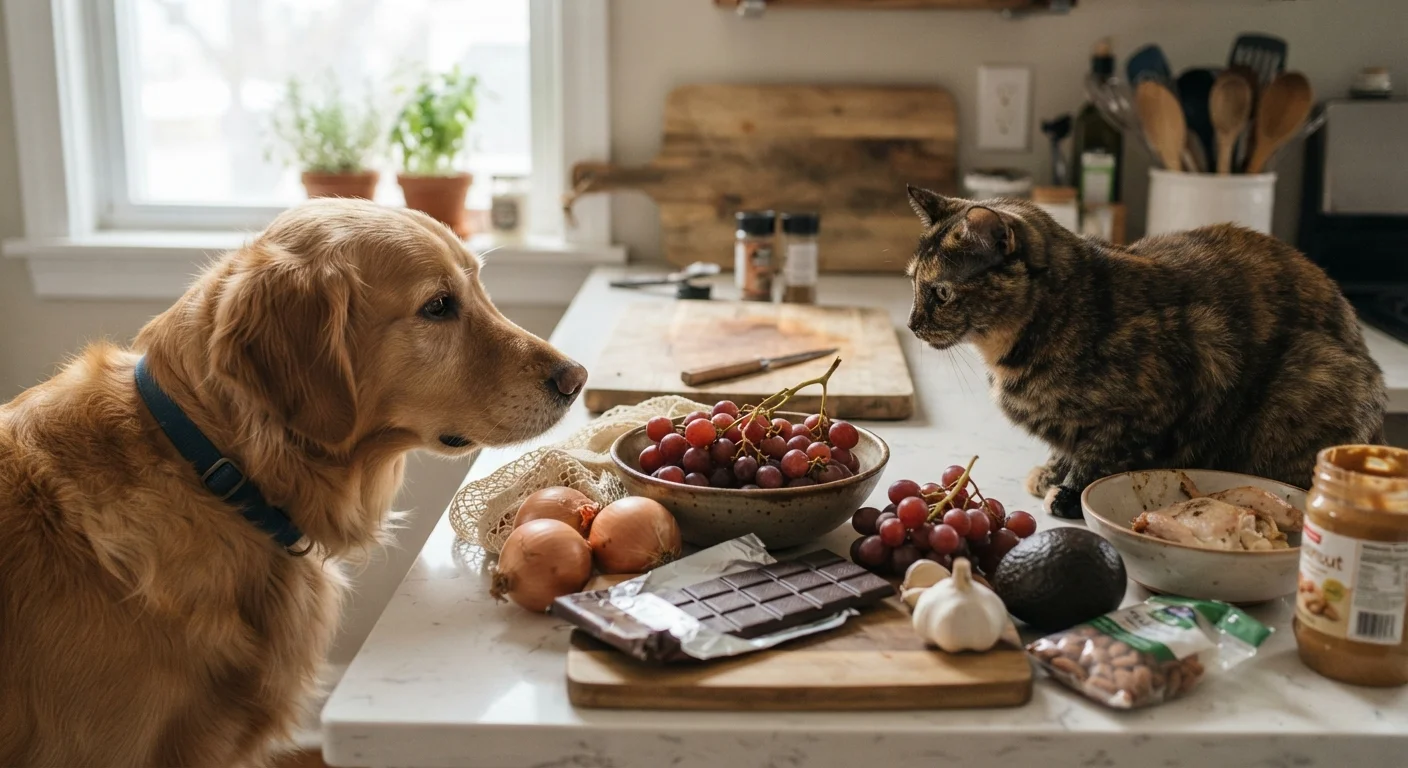
Grapes, raisins, currants, and sultanas can cause acute kidney failure in dogs and are suspected to pose similar risks to cats. The exact toxic compound remains unidentified, which means no safe dose is established — even small amounts have caused severe illness in some animals. Dried forms (raisins, currants) are more concentrated and considered higher risk per gram.
Xylitol
This sugar alcohol, used as a sweetener in sugar-free gums, candies, some peanut butters, baked goods, and certain medications, causes a rapid and dangerous drop in blood sugar (hypoglycemia) in dogs and can lead to liver failure. Cats appear less commonly exposed but are not considered immune. Always check ingredient labels on any human food before offering it to a pet.
Chocolate
Chocolate contains theobromine and caffeine, both of which dogs and cats cannot metabolize efficiently. Dark chocolate and baking chocolate contain the highest concentrations. Symptoms include vomiting, muscle tremors, seizures, and cardiac arrhythmias. Cats are less likely to seek out sweet foods but are equally vulnerable if they consume it.
Caffeine
Coffee, tea, energy drinks, and caffeine-containing supplements are toxic to both dogs and cats. Caffeine stimulates the central nervous and cardiovascular systems in ways pets cannot tolerate safely.
Theobromine
A naturally occurring compound in cacao (and therefore chocolate) that acts as a stimulant. Dogs and cats metabolize it far more slowly than humans, causing it to accumulate to toxic levels.
Xylitol
A sugar alcohol used as a sweetener in many sugar-free products. In dogs, it triggers an abnormal release of insulin, leading to dangerously low blood sugar and potential liver damage.
Hemolytic anemia
A condition in which red blood cells are destroyed faster than they can be produced. In pets, Allium-family plants (onions, garlic) are a known dietary trigger for this condition.
Thiosulfate
Sulfur-containing compounds found in onions, garlic, and related plants. They oxidize red blood cells in dogs and cats, impairing the cells' ability to carry oxygen.
Hypoglycemia
Abnormally low blood sugar. In dogs exposed to xylitol, a sudden drop in blood glucose can cause weakness, collapse, and seizures within 30–60 minutes of ingestion.
Foods Especially Dangerous to Dogs
Onions, Garlic, Leeks, and Chives
All members of the Allium family — onions, garlic, leeks, shallots, and chives — contain compounds called thiosulfates that damage red blood cells and can lead to hemolytic anemia in dogs. Cats are actually more sensitive to Allium toxicity than dogs, but dogs are more frequently exposed due to their indiscriminate eating habits. Cooked forms remain toxic; powdered garlic and onion are especially concentrated.
Macadamia Nuts
Macadamia nuts cause weakness, vomiting, tremors, and hyperthermia in dogs. The toxic mechanism is not fully understood, and the condition is rarely fatal when treated promptly, but ingestion still requires veterinary attention.
Alcohol
Dogs are far more sensitive to ethanol than humans. Even small quantities found in alcoholic drinks, fermented foods, or raw bread dough (which produces alcohol as yeast ferments) can cause respiratory depression, coma, and death.
Top 3
Chocolate ranks among most reported pet toxin exposures annually
According to ASPCA Animal Poison Control Center reporting, chocolate consistently appears among the top reported pet toxin calls each year.
~0.3 oz/lb
Approximate toxic dose of dark chocolate for dogs (body weight)
Veterinary toxicologists note that even small amounts of dark or baking chocolate can be dangerous for small dogs; thresholds vary by body weight and individual sensitivity.
Unknown
Safe minimum threshold for grape/raisin toxicity in dogs
No safe dose has been established; individual dogs have developed acute kidney failure after very small exposures, per veterinary case reports.
Foods Especially Dangerous to Cats
Cats have unique metabolic limitations — particularly in the liver — that make certain compounds far more dangerous for them than for dogs or humans. If you're building a homemade feeding plan, see our guide to homemade pet food risks and what nutrients cats specifically need before proceeding.
Onions and Garlic
As noted, cats are more sensitive to Allium toxicity than dogs. A single small serving of onion-containing food — including baby food with onion powder — can cause oxidative damage to feline red blood cells.
Raw Dough with Yeast
Yeast fermentation in the warm environment of a pet's stomach produces carbon dioxide and alcohol. Both the expansion of gas (causing bloat) and alcohol absorption make raw dough dangerous to cats and dogs alike.
Tuna in Large Amounts
Occasional plain tuna is not acutely toxic, but a diet heavy in tuna can lead to mercury accumulation and thiamine deficiency in cats over time. This is a concern relevant to cats whose owners feed large quantities of canned tuna intended for human consumption rather than balanced cat food. For a broader look at feline nutrition, see our overview of key cat nutrients.
Understanding what's harmful is one part of responsible ownership. For broader feeding guidance, common pet nutrition myths debunked by veterinary science is a useful next step.
This article is for general informational purposes only and does not constitute veterinary medical advice. Always consult a licensed veterinarian regarding your individual pet's health, diet, and any concerns about toxic ingestion.