

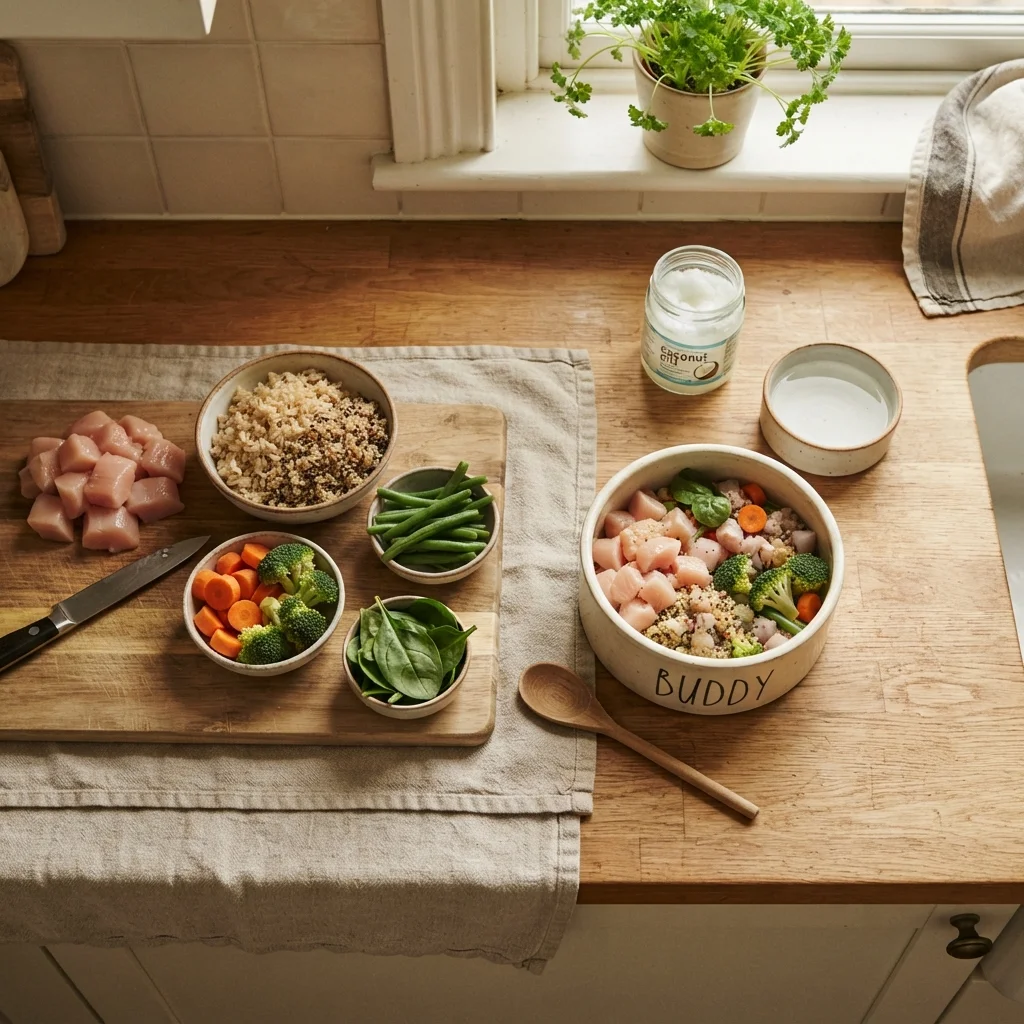
Key Takeaways
- Homemade pet food can offer ingredient control but rarely meets all nutritional requirements without expert guidance.
- Nutritional deficiencies — not toxicity — are the most common risk in home-cooked pet diets.
- A board-certified veterinary nutritionist can formulate recipes that are genuinely complete and balanced.
- Common human foods including onions, garlic, grapes, and xylitol are toxic to dogs and cats.
- Most homemade diets require supplementation; choosing the right supplements demands professional input.
Full visibility into every ingredient used
Home cooking eliminates uncertainty about ingredient sourcing and processing, which appeals to owners whose pets have had adverse reactions to commercial foods.
Useful for managing documented food allergies
When a pet has a confirmed allergy to a specific protein or additive, a home-cooked elimination diet under veterinary supervision allows precise control that few commercial options provide.
Adaptable for certain medical conditions
Conditions like kidney disease or pancreatitis sometimes call for nutrient adjustments — such as reduced phosphorus or fat — that can be more finely tuned in a home-prepared diet formulated by a veterinary nutritionist.
Can improve palatability for picky eaters
Some pets that consistently refuse dry or canned food will eat home-cooked meals readily, which matters for animals recovering from illness or with reduced appetite.
Most home recipes are nutritionally incomplete
Research has repeatedly found that the majority of owner-created pet recipes fail to meet established nutrient profiles, with deficiencies in calcium, zinc, and vitamins being especially common.
Deficiencies develop slowly and go undetected
Unlike toxicity, which shows up quickly, nutritional shortfalls from an unbalanced diet may take months or years to manifest as symptoms — by which point meaningful harm may already have occurred.
Risk of accidental inclusion of toxic foods
Common kitchen ingredients including onions, garlic, grapes, and xylitol-sweetened products are toxic to pets; owners unfamiliar with these hazards may inadvertently include them in recipes.
Time-intensive and difficult to maintain consistently
Preparing balanced meals daily requires significant planning, shopping, and cooking time — and any shortcuts, like ingredient substitutions, can disrupt the nutritional formula.
Supplementation is complex and carries its own risks
Most home-cooked diets need added vitamins and minerals, but dosing must be precise; excessive fat-soluble vitamins like A and D can accumulate to toxic levels in the body.
Higher cost compared to many commercial options
Sourcing quality proteins, produce, and appropriate supplements generally costs more per meal than equivalent-quality commercial pet food, particularly for larger breeds.
Our Verdict
Homemade pet food is a legitimate feeding choice, but it carries real nutritional risks that are easy to underestimate. Without a properly formulated recipe reviewed by a veterinary nutritionist, most home-cooked diets fall short on key minerals and vitamins — sometimes with serious long-term consequences. With the right professional guidance, however, it can be a safe and meaningful way to feed a pet.
Best suited to owners of pets with complex food allergies or medical conditions that make commercial options difficult, provided they commit to working with a veterinary nutritionist and following a complete, formulated recipe consistently.
Why Pet Owners Turn to the Kitchen
Interest in homemade pet food has grown steadily over the past decade, fueled partly by ingredient transparency concerns and partly by a broader cultural shift toward whole foods. For many owners, cooking for a pet feels like an act of care — a way to know exactly what goes into every meal.
That instinct isn't misguided. Commercial pet food recalls, while relatively rare, do happen, and label complexity can make it hard to evaluate what a product actually contains. Our guide to reading a pet food label walks through what the fine print actually means, and it highlights just how much information owners are expected to parse.
Still, motivation and outcome are different things. Wanting to feed your pet well at home is reasonable — achieving it safely requires understanding both the advantages and the significant pitfalls involved.
The Real Advantages of Home-Cooked Pet Food
There are genuine benefits to preparing your pet's meals at home, particularly in specific circumstances.
Full visibility into every ingredient used
Home cooking eliminates uncertainty about ingredient sourcing and processing, which appeals to owners whose pets have had adverse reactions to commercial foods.
Useful for managing documented food allergies
When a pet has a confirmed allergy to a specific protein or additive, a home-cooked elimination diet under veterinary supervision allows precise control that few commercial options provide.
Adaptable for certain medical conditions
Conditions like kidney disease or pancreatitis sometimes call for nutrient adjustments — such as reduced phosphorus or fat — that can be more finely tuned in a home-prepared diet formulated by a veterinary nutritionist.
Can improve palatability for picky eaters
Some pets that consistently refuse dry or canned food will eat home-cooked meals readily, which matters for animals recovering from illness or with reduced appetite.
Pets with documented food allergies or intolerances may benefit considerably, since owners can eliminate specific proteins or ingredients under veterinary guidance. Similarly, pets with kidney disease, pancreatitis, or other conditions sometimes require dietary adjustments that are easier to make precisely in a home-cooked format than through available commercial options.
For owners who invest the time to work with a veterinary nutritionist, home cooking can also produce a diet that is genuinely tailored to a specific animal's health history and life stage — something no mass-produced food can fully replicate.
The Risks Most Owners Don't Anticipate
The most common danger in homemade pet diets is not dramatic toxicity — it's slow, silent nutritional deficiency. Studies examining owner-formulated pet recipes have found that the vast majority are deficient in one or more essential nutrients, most often calcium, zinc, copper, and certain vitamins. These shortfalls don't show up immediately but can cause serious harm over months or years.
Most home recipes are nutritionally incomplete
Research has repeatedly found that the majority of owner-created pet recipes fail to meet established nutrient profiles, with deficiencies in calcium, zinc, and vitamins being especially common.
Deficiencies develop slowly and go undetected
Unlike toxicity, which shows up quickly, nutritional shortfalls from an unbalanced diet may take months or years to manifest as symptoms — by which point meaningful harm may already have occurred.
Risk of accidental inclusion of toxic foods
Common kitchen ingredients including onions, garlic, grapes, and xylitol-sweetened products are toxic to pets; owners unfamiliar with these hazards may inadvertently include them in recipes.
Time-intensive and difficult to maintain consistently
Preparing balanced meals daily requires significant planning, shopping, and cooking time — and any shortcuts, like ingredient substitutions, can disrupt the nutritional formula.
Supplementation is complex and carries its own risks
Most home-cooked diets need added vitamins and minerals, but dosing must be precise; excessive fat-soluble vitamins like A and D can accumulate to toxic levels in the body.
Higher cost compared to many commercial options
Sourcing quality proteins, produce, and appropriate supplements generally costs more per meal than equivalent-quality commercial pet food, particularly for larger breeds.
Raw or undercooked meat introduces a separate layer of risk. Pathogens including Salmonella and Listeria can affect both the pet and the humans handling the food. Our overview of zoonotic disease risks explains how food-handling habits matter for household safety, not just pet health.
Owners should also be aware that many everyday human foods are outright toxic to dogs and cats. Foods that are dangerous to dogs and cats include onions, garlic, grapes, raisins, and anything containing xylitol — all of which can appear in recipes a well-meaning owner might assume are safe.
Cats Have Unique Nutritional Requirements
Cats are obligate carnivores with nutrient needs that differ substantially from dogs and humans. They cannot synthesize taurine, arachidonic acid, or vitamin A from plant precursors — all must come from animal-source ingredients. A diet that appears balanced for a dog may be dangerously deficient for a cat. Species-specific formulation is non-negotiable.
For a broader look at persistent misconceptions around pet feeding, common pet nutrition myths covers why assumptions borrowed from human dietary thinking often don't translate to dogs and cats.
What a Nutritionally Complete Recipe Actually Requires
Dogs require at least 37 essential nutrients in specific proportions; cats have additional requirements, including taurine and arachidonic acid, that must come from animal sources. Meeting these needs through whole foods alone is difficult without precise formulation.
95%+
Home recipes found nutritionally deficient
Multiple published analyses of owner-submitted homemade pet food recipes have found that the vast majority fail to meet AAFCO nutrient profiles for dogs or cats.
37+
Essential nutrients dogs require daily
Dogs require over 37 essential nutrients in specific amounts; cats require even more, including species-specific compounds like taurine that must come from animal tissue.
The Association of American Feed Control Officials (AAFCO) provides nutrient profiles that serve as the benchmark for complete and balanced pet diets. A recipe that meets AAFCO standards for your pet's life stage — whether growth, maintenance, or senior — is the minimum bar worth aiming for.
In practice, most home-cooked diets require targeted supplementation to close nutritional gaps. Choosing the right supplements — and the right amounts — is where professional guidance becomes essential. Over-supplementing fat-soluble vitamins such as A and D carries its own toxicity risks. Our article on pet supplements with evidence behind them provides useful context on what's supported and what isn't.
How to Approach This Decision With Your Vet
If you're considering home cooking for your pet, the conversation with your veterinarian is the essential first step — not an optional follow-up. Your vet can assess whether your pet has any health conditions that make a modified diet appropriate, refer you to a board-certified veterinary nutritionist if needed, and help you evaluate whether your chosen approach is feasible given your lifestyle and resources.
Before making any switch, it's worth reviewing the checklist for switching your pet's food, which covers nutritional completeness, life-stage suitability, and how to transition safely without causing digestive upset. A gradual transition matters even when moving to a home-cooked diet.
If you decide to proceed, commit to following a recipe formulated by a credentialed professional — not one sourced from a general website or cookbook. Recipes should be followed precisely; substituting ingredients changes the nutritional math. Periodic monitoring through veterinary check-ups and bloodwork helps confirm that the diet is working as intended over time.
This article is for general informational purposes only and does not constitute veterinary or medical advice. Always consult a licensed veterinarian or board-certified veterinary nutritionist before making significant changes to your pet's diet.