

Key Takeaways
- Raw diets carry documented food-safety risks, including bacterial contamination that can affect both pets and their human family members.
- Many raw diets are nutritionally incomplete unless carefully formulated with veterinary or nutritionist guidance.
- Some pet owners report coat and stool improvements, but controlled clinical evidence for these benefits remains limited.
- Immunocompromised people, young children, and elderly household members face elevated risk from raw-diet handling.
- Consulting a board-certified veterinary nutritionist before switching is strongly recommended by major veterinary organizations.
Our Verdict
Raw feeding is neither the miracle its advocates claim nor an outright danger to every pet. The honest picture is that risks — particularly pathogen exposure and nutritional imbalance — are well-documented, while the claimed benefits remain largely anecdotal or understudied. Commercially prepared raw diets with AAFCO nutritional statements offer a safer middle ground than homemade raw, but no raw diet eliminates the handling and contamination concerns entirely.
| Best for | Recommended |
|---|---|
| Healthy adult dogs or cats with no immunocompromising conditions | Commercially prepared, AAFCO-complete raw diet with strict hygiene protocols |
| Households with young children, elderly members, or immunocompromised individuals | Commercially cooked complete-and-balanced diet to minimize pathogen exposure |
| Pet owners who want more ingredient control | Veterinary-supervised homemade cooked diet as a lower-risk alternative |
| Pets with confirmed food sensitivities or allergies | Veterinary prescription or limited-ingredient diet rather than DIY raw |
What Raw Feeding Actually Means
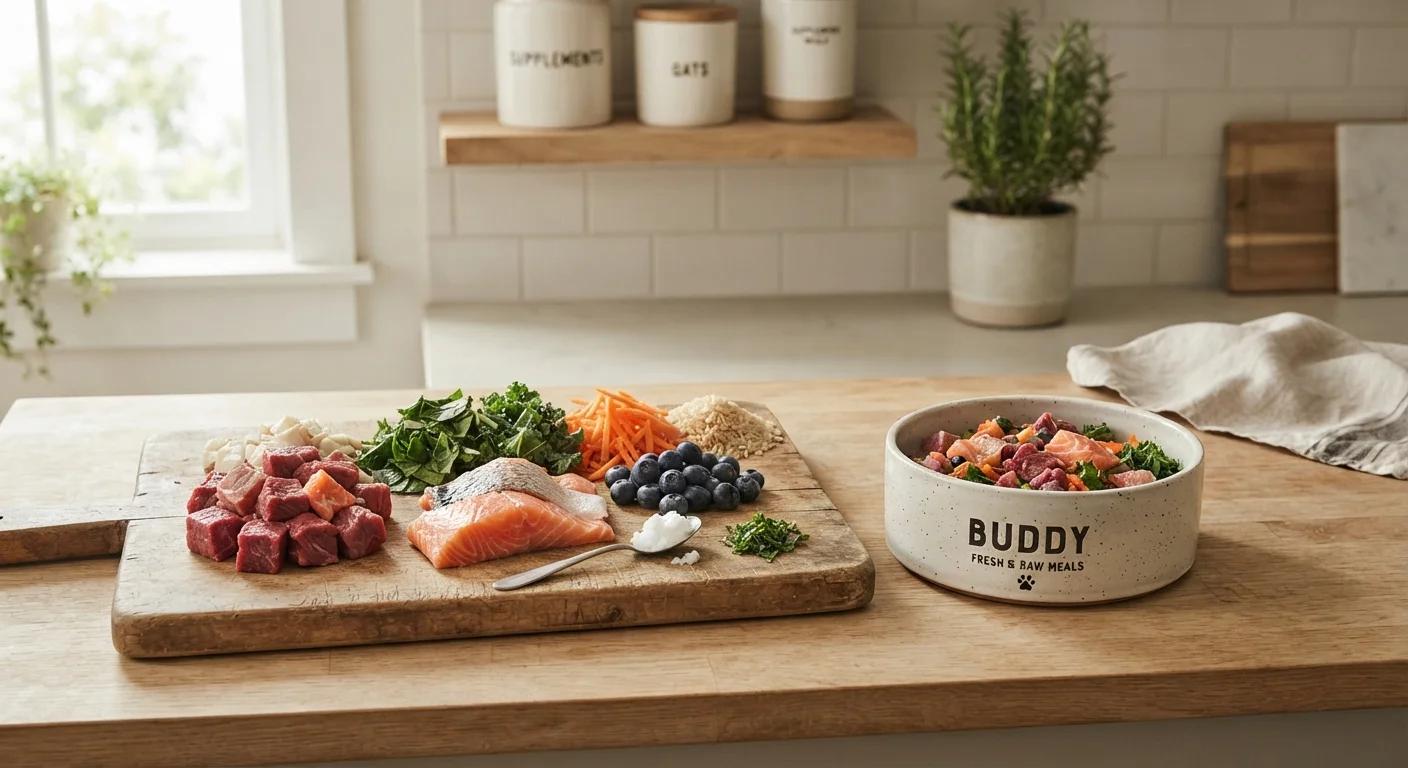
Raw feeding — broadly called BARF (Biologically Appropriate Raw Food or Bones and Raw Food) — typically involves uncooked muscle meat, organ meat, raw meaty bones, and sometimes fruits, vegetables, and eggs. It can be assembled at home, purchased as commercially frozen or freeze-dried products, or ordered through specialty suppliers.
Not all raw diets are equal. A commercially prepared raw product that carries an AAFCO (Association of American Feed Control Officials) nutritional adequacy statement has been formulated to meet established nutrient profiles. A homemade raw diet built from scratch without professional guidance almost certainly has gaps. Understanding that distinction matters before evaluating any claim made for or against raw feeding. For a grounding in what pets actually need nutritionally, see our Pet Nutrition 101 guide.
What the Evidence Says: Claimed Benefits Under the Microscope
Raw diet advocates commonly point to shinier coats, firmer stools, higher energy, and reduced allergies. Some of these observations are plausible in principle — diet quality does affect coat condition and digestive output — but few have been tested in rigorous, controlled studies.
A 2022 review published in Frontiers in Veterinary Science found that raw-fed dogs showed some differences in gut microbiome composition compared to kibble-fed dogs, but the clinical significance of those differences remains unclear. Correlation between raw feeding and health outcomes is not the same as causation, and selection bias is significant: owners who choose raw diets tend to be highly engaged with their pet's health overall.
| Commercially Prepared Raw | Homemade Raw | Cooked Commercial Diet | |
|---|---|---|---|
| Nutritional completeness | AAFCO-compliant options available | High risk of gaps without expert formulation | Reliable if AAFCO-labeled |
| Pathogen risk | Moderate — contamination found in tested products | Higher — no safety processing | Low — heat kills pathogens |
| Household safety concern | Moderate | High | Low |
| Ingredient transparency | Moderate | High — owner controls sourcing | Variable by brand |
| Veterinary consensus | Cautious; not broadly recommended | Generally discouraged without supervision | Broadly supported |
| Suitability for vulnerable households | Not recommended | Not recommended | Recommended |
Claims about raw diets being more "species-appropriate" because wolves eat raw prey are also contested. Domestic dogs have undergone thousands of years of co-evolution with humans and show genetic adaptations — including enhanced starch digestion — that wild canids do not. Our article on common pet nutrition myths explores this further.
Documented Risks: Food Safety and Nutritional Gaps
The risks associated with raw feeding are better characterized than the benefits. Multiple studies have detected Salmonella, Listeria monocytogenes, E. coli, and other pathogens in commercially prepared raw pet foods, even in sealed, refrigerated products. The U.S. Food and Drug Administration and the American Veterinary Medical Association (AVMA) have both issued guidance noting these contamination risks.
Higher Risk for Vulnerable Household Members
Raw pet diets pose an elevated risk in homes with children under five, adults over 65, pregnant individuals, or anyone undergoing chemotherapy or otherwise immunocompromised. Pathogens shed by pets can be transmitted through normal household contact. Major veterinary and public health organizations advise that these households avoid raw feeding arrangements entirely.
The concern extends beyond the pet. Infected animals can shed bacteria in their feces and through licking, creating transmission pathways to household members. This risk is especially relevant in homes with children under five, adults over 65, pregnant individuals, or anyone with a compromised immune system.
Nutritional incompleteness is the second major, documented concern. A study in the Journal of Nutritional Science found that a significant proportion of homemade raw diets analyzed were deficient in calcium, phosphorus, zinc, or essential vitamins. Raw meaty bones can contribute calcium but introduce fracture and intestinal perforation risks. If you're weighing the broader trade-offs of home-prepared feeding, our piece on homemade pet food risks and trade-offs addresses those concerns in detail.
Handling Raw Diets Safely If You Choose to Proceed
If you have consulted a veterinarian and decided to try a raw diet, handling hygiene is non-negotiable. Treat raw pet food with the same precautions you would apply to raw poultry for human consumption.
Safe Handling Practices for Raw Pet Food
Store raw pet food frozen and thaw only in the refrigerator — never on the counter. Use dedicated bowls and utensils that are washed with hot soapy water after every feeding. Wash your hands thoroughly with soap and water immediately after handling raw food or cleaning feeding surfaces. Keep raw food away from surfaces used for human food preparation.
Beyond hygiene, choosing a commercially prepared product with an AAFCO nutritional adequacy statement — rather than assembling a recipe independently — meaningfully reduces the risk of nutrient deficiency. Before making any diet change, work through a structured evaluation process; our food-switching checklist can help. And if your pet needs supplements to round out any dietary gaps, see what the evidence says about pet supplements before adding them.
This article provides general educational information about pet nutrition and is not a substitute for personalized veterinary advice. Always consult a licensed veterinarian or board-certified veterinary nutritionist before making significant changes to your pet's diet.