

| Established (oldest of the five) | Yellowstone — 1872, the world's first national park (National Park Service) |
| Largest of the five (by area) | Yellowstone — approx. 2.2 million acres (National Park Service) |
| Annual visitors (combined, approx.) | Over 20 million across the Big Five (NPS visitor statistics) |
| Entry fee structure | Each park charges a per-vehicle fee; America the Beautiful annual pass covers all (nps.gov/fees) |
| Peak season (general) | June through August — all five parks see highest congestion (National Park Service) |
| Permit requirements | Zion's Angels Landing and Yosemite Half Dome both require advance permits (nps.gov) |
Why These Five Parks Define American Wilderness
When Americans talk about iconic national parks, five names rise to the top almost every time: Yellowstone, Yosemite, the Grand Canyon, Zion, and Glacier. Each is genuinely distinct — different geology, climate, wildlife, and visitor experience. Knowing what sets each one apart helps you choose the right park for your travel style and prepare realistically before you arrive.
One thing they all share: high demand. If you're heading to any of these parks during summer, start planning early. Timed-entry permits, limited camping, and crowded trailheads are the reality. For a deeper look at managing the busy season, see our guide on visiting national parks during peak season.
| Established (oldest of the five) | Yellowstone — 1872, the world's first national park (National Park Service) |
| Largest of the five (by area) | Yellowstone — approx. 2.2 million acres (National Park Service) |
| Annual visitors (combined, approx.) | Over 20 million across the Big Five (NPS visitor statistics) |
| Entry fee structure | Each park charges a per-vehicle fee; America the Beautiful annual pass covers all (nps.gov/fees) |
| Peak season (general) | June through August — all five parks see highest congestion (National Park Service) |
| Permit requirements | Zion's Angels Landing and Yosemite Half Dome both require advance permits (nps.gov) |
Park-by-Park Breakdown: What Makes Each One Unique
Yellowstone — Geothermal Wonderland
Yellowstone sits atop one of the world's largest volcanic hotspots, giving it a landscape found nowhere else: erupting geysers, prismatic hot springs, and bubbling mud pots. Old Faithful is the headliner, but the Grand Prismatic Spring and Lamar Valley — prime wolf and bison territory — are equally worth your time. The park spans Wyoming, Montana, and Idaho, and its sheer size (over 2.2 million acres) means road-tripping between attractions is part of the experience.
Yosemite — Granite Cathedrals and Waterfalls
Yosemite Valley is one of the most photographed places in North America — and for good reason. Sheer granite walls like El Capitan and Half Dome, combined with seasonal waterfalls and old-growth forest, create an overwhelming visual impact. The valley floor gets extremely crowded in summer; consider visiting in spring for peak waterfall flow or in fall for thinner crowds and golden oak leaves.
Grand Canyon — Scale That Defies Description
No photograph fully prepares you for standing at the South Rim. The Grand Canyon is roughly 277 miles long, up to 18 miles wide, and over a mile deep. Most visitors stay on the rim, but hikers willing to descend into the canyon encounter an entirely different — and significantly hotter — environment. Permits for the Havasupai campground (located on tribal land within the canyon) are separate and extremely competitive. For more desert context, explore how Southwest destinations differ.
Zion — Slot Canyons and Vertical Terrain
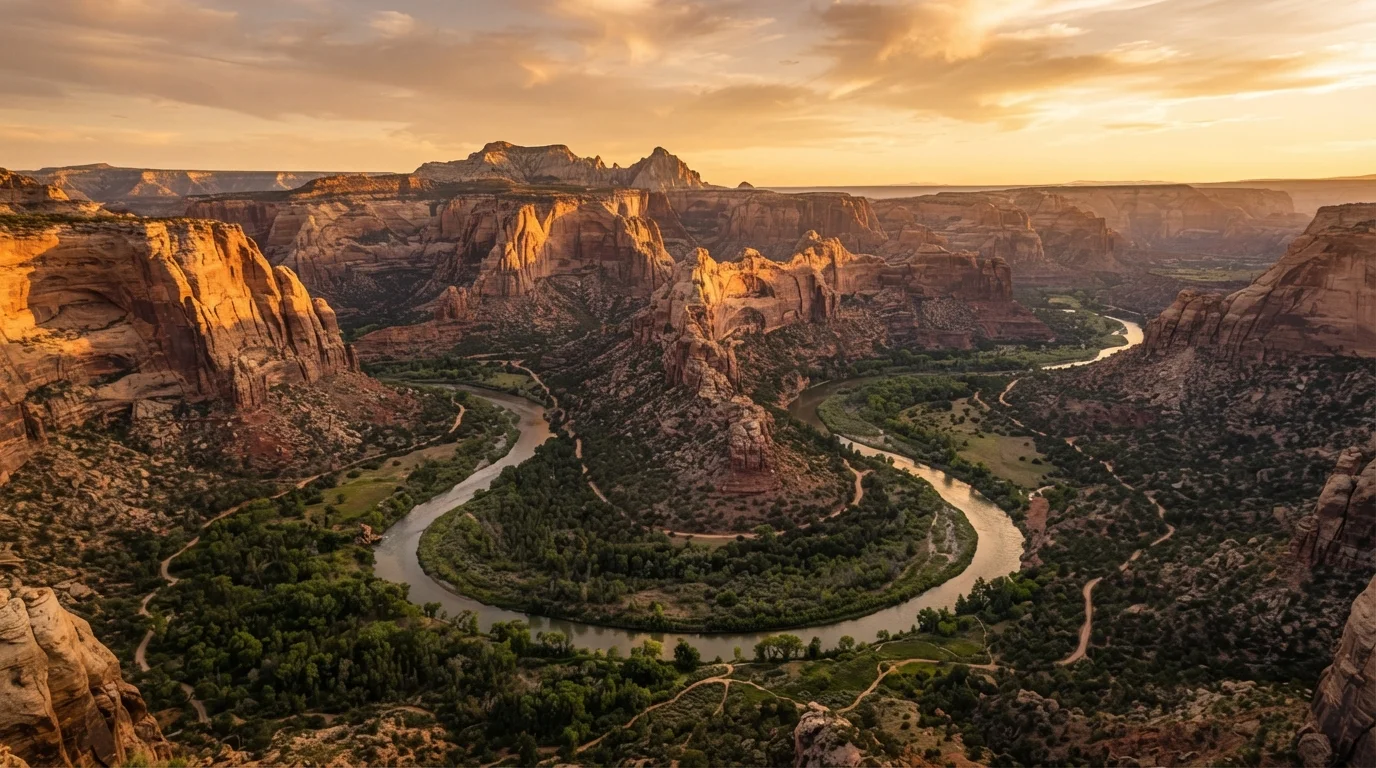
Zion in southern Utah trades breadth for intimacy. Towering Navajo sandstone cliffs in shades of red, orange, and cream channel the Virgin River through a narrow canyon that hikers wade directly through on the famous Narrows trail. Angels Landing — a vertiginous climb with chain-assisted sections and a permit requirement — is one of the most memorable hikes in the US. The park runs a mandatory shuttle system during peak season to manage traffic.
Glacier — The Northern Rockies at Their Rawest
Montana's Glacier National Park rewards visitors willing to make the effort to reach it. Going-to-the-Sun Road (open roughly late June through October, depending on snowpack) traverses the Continental Divide and offers views of glacially carved peaks and alpine meadows. The park's namesake glaciers have retreated significantly over the past century — what you see today is a fraction of what existed in the mid-1800s. Wildlife encounters with grizzly bears, mountain goats, and moose are genuine possibilities here.
Timed-entry permit
A reservation required to enter a park or trailhead during a specific time window. Several of the Big Five use these systems during peak months to manage congestion. Permits are typically reserved online weeks in advance.
Geothermal feature
A surface expression of underground volcanic heat, including geysers, hot springs, fumaroles, and mud pots. Yellowstone has the world's largest concentration of active geothermal features.
Continental Divide
The ridge of the Rocky Mountains that separates river systems draining to the Pacific from those draining to the Atlantic and Gulf of Mexico. Glacier's Going-to-the-Sun Road crosses it directly.
Slot canyon
A narrow, steep-walled canyon formed by water erosion through rock — often only a few feet wide. The Zion Narrows is one of the most visited slot canyon hikes in the US.
Planning Across All Five: What to Know Before You Go
Each of these parks requires advance planning — walk-up availability for permits, campsites, and lodging is unreliable at best. Check the National Park Service website (nps.gov) for current entry requirements, reservation windows, and any seasonal closures before booking anything else.
Traveling with children? Road-tripping between parks is absolutely doable, but the distances are significant. Our family road trip planning guide covers route structuring and stop strategies that apply directly to multi-park itineraries.
If crowds at the Big Five feel overwhelming, it's worth knowing that lesser-known state parks often sit within a few hours of each major national park and offer solitude that's nearly impossible to find at the flagship destinations.
1 mile+
Grand Canyon depth rim to river
The canyon drops over 6,000 feet from the South Rim to the Colorado River, according to the National Park Service.
700+
Miles of trails in Yellowstone
Yellowstone's trail network spans more than 900 miles, offering everything from boardwalk geyser loops to multi-day backcountry routes.
~85%
Glacier's ice lost since 1850
Research by the US Geological Survey estimates the park's glaciers have retreated dramatically since the mid-19th century.
Travel conditions, permit requirements, and park access can change. Always verify current entry rules, reservations, and road conditions directly with the National Park Service or relevant tribal authorities before your trip.