

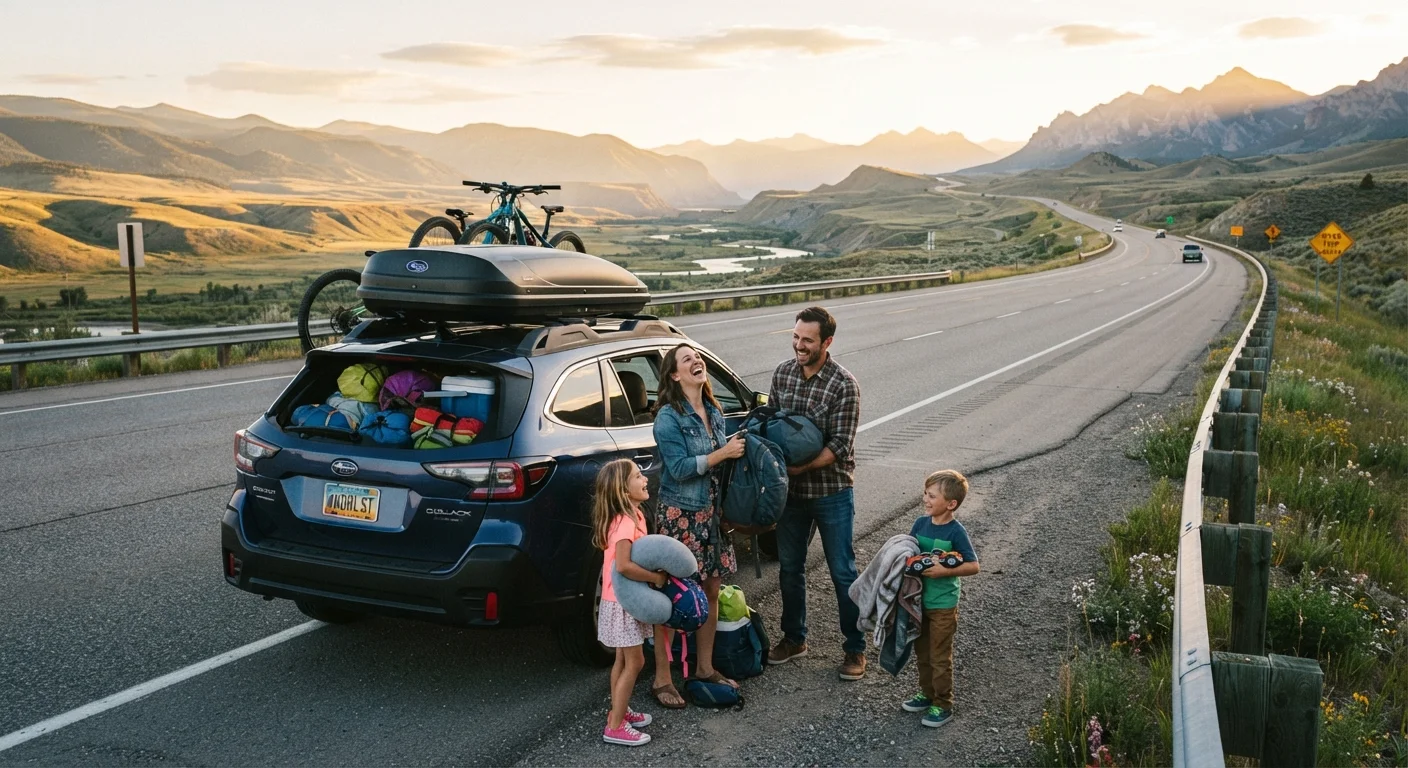
Key Takeaways
- Breaking long drives into 2-hour segments significantly reduces backseat meltdowns and driver fatigue.
- Timing departures around kids' sleep schedules can turn hours of highway into stress-free rolling nap time.
- Purposeful pit stops — not just rest areas — double as mini-adventures that reset everyone's energy.
- Pre-loading entertainment and snacks the night before removes in-car scrambling on day one.
- Flexible itineraries outperform rigid timetables when traveling with children of any age.
Think in Driving Segments, Not Total Miles
The single biggest mistake families make is staring at a 600-mile total and thinking they can power through. Kids' bodies — and honestly, most adults' patience — don't work that way. A far more manageable frame is to break your driving day into two-hour segments with intentional pauses in between.
Before you finalize your route, map out where those natural breaks will land. Are you crossing a state line near a welcome center with a playground? Is there a small-town main street worth ten minutes of leg-stretching? These details are what separate an exhausting marathon from a trip that feels like a series of small, connected adventures. See our guide to building a realistic itinerary for a framework you can apply directly to road trips.
As a general rule of thumb, plan for roughly 300–350 miles of progress per day on a family road trip — less if you have toddlers or kids prone to motion sickness, more if your children are older teens who can genuinely entertain themselves.
~2 hrs
Recommended max driving stretch before a family break
Child development and travel experts broadly suggest that two-hour intervals balance progress with children's physical and emotional needs on long drives.
300–350 mi
Realistic daily mileage for family road trips
Family travel planners commonly recommend this daily range to allow adequate stop time and avoid driver fatigue on multi-day drives.
Work With Sleep Schedules, Not Against Them
One of the most underused road-trip strategies for families with young children: depart when kids are naturally ready to sleep. An early morning departure — think 5:00 or 6:00 a.m. — means most children will drift off within the first hour, handing you 90 minutes to two hours of quiet, uninterrupted highway miles.
Evening departures work similarly if your kids handle a later bedtime. The car's gentle motion, combined with darkness, can ease even reluctant sleepers into a nap. This isn't a guarantee (no travel strategy is), but it's a rhythm many experienced road-trip families swear by.
Pair this with a consistent "car routine" — the same playlist, the same comfort object, the same snack — so your child's brain starts associating the car with a manageable, familiar environment rather than an unpredictable one.
Early Departures Are a Family Road Trip Superpower
Leaving by 5 or 6 a.m. might sound brutal, but young children will often fall back asleep within the first hour — giving you quiet, productive highway miles. Load the car the night before and set out clothes so the morning itself is as low-friction as possible. Many families find this single habit transforms the mood of the entire first day.
Make Your Stops Work Harder
Not all stops are equal. A gas-station pull-off where everyone stretches for three minutes and climbs back in is very different from a 20-minute stop at a riverside park where kids can actually run. Whenever possible, choose stops that offer physical movement — even modest ones.
Planning a route through the American Southwest or along the Pacific Coast? Both regions are lined with short nature trails, overlooks, and small-town squares that serve double duty as rest stops and genuine memories. Check out what sets each Southwest destination apart or the Pacific Coast Highway route breakdown for stop ideas built right into iconic drives.
For families heading to national or state parks, remember that the parks themselves can be both destination and rest stop. A short ranger-led walk or even a picnic at a trailhead gives kids a sense of arrival well before you reach your hotel. Lesser-known state parks are especially useful here — less crowded, often easier to pop in and out of without a long entrance line.
Cap driving time at two consecutive hours before stopping
Children's ability to self-regulate boredom and physical discomfort diminishes sharply after about two hours of confinement. Regular stops prevent the escalating tension that makes long drives miserable for everyone.
Assign each child a "road trip job" suited to their age
Kids who feel they have a role in the trip are more engaged and less likely to spiral into boredom. It also builds a sense of shared ownership over the journey.
Pre-download all entertainment before leaving home
Rural highways and national park corridors frequently have no cellular signal. Streaming failures mid-drive are a guaranteed frustration — downloading everything in advance removes that variable.
Keep a dedicated first-hour snack supply separate from the main stash
The first stretch of any long drive sets the emotional tone. Having special, novel snacks available only during the opening hour gives kids something to look forward to and keeps things positive from the start.
Verify vehicle safety and tire condition before a multi-day drive
A breakdown with children in the car adds significant stress and safety risk. Basic pre-trip checks — tire pressure, fluids, wiper blades — are worthwhile before any long highway journey.
Pack and Prepare the Night Before
Morning chaos is the enemy of smooth departures. The more decisions you can eliminate before the day begins, the calmer your launch will be. This means snacks portioned and ready to hand back, entertainment loaded onto devices and tested, and every bag in the car before anyone goes to bed.
A dedicated "car bag" — separate from luggage — should hold everything needed during the drive: snacks, wipes, a change of clothes for young kids, headphones, chargers, and any motion-sickness remedies your family uses. When you stop for gas, you shouldn't need to dig through checked luggage to find anything.
For a fuller planning framework that covers the whole trip — not just the drive — The Anatomy of a Well-Planned Trip walks through each phase from early research to final packing. And if you're still weighing whether driving is right for your family at all, our road trip vs. flying comparison lays out the honest trade-offs.
Build Flexibility Into Every Day
Even the most carefully structured road trip will encounter an unexpected detour, a bathroom emergency, or a child who simply refuses to get back in the car. Rigid hour-by-hour schedules tend to collapse — and then nobody's having fun trying to make up lost time.
A better approach: set a daily "anchor" goal (a destination, a landmark, a meal) and allow the specific path to breathe. If your kids are loving a roadside attraction you hadn't planned for, stop. If everyone's exhausted at 3 p.m. and the next hotel is 90 minutes away, that's fine — you built margin into the day.
This flexibility is especially valuable if your road trip includes high-demand destinations. The Big Five national parks each have their own crowd patterns and logistics; knowing what to expect lets you adjust on the fly without feeling like the trip is falling apart. For deeper context on how family travel differs from adult-only trips, traveling with kids requires a different planning mindset — and embracing that difference is what makes it work.
Flexibility Looks Different for Every Family
The right amount of built-in buffer depends on your kids' ages, temperaments, and any accessibility or medical considerations. A family with a toddler and an infant will need far more margin than one traveling with school-age children. Build your baseline schedule around your least adaptable traveler — then everyone benefits. If any family member has specific health or mobility needs, consult relevant professionals before finalizing a multi-day driving itinerary.