

Key Takeaways
- Toronto offers the widest cultural diversity and the most extensive urban attractions for first-time visitors.
- Vancouver is the go-to city for travelers who want easy access to both urban amenities and dramatic outdoor scenery.
- Montreal delivers a European-flavored experience with a world-class food scene and vibrant festival calendar.
- Quebec City is the most historically immersive destination, with a walkable Old Town unlike anything else in North America.
- All four cities require a valid passport for US travelers; always verify current entry requirements before departure.
Our Verdict
Each of Canada's major cities makes a compelling case on its own terms. Toronto suits travelers who want maximum variety and scale. Vancouver wins for those who crave outdoor adventure alongside city comforts. Montreal is ideal for food lovers and culture seekers. Quebec City delivers the most concentrated dose of old-world atmosphere. Your best pick depends almost entirely on what kind of experience energizes you most.
| Best for | Recommended |
|---|---|
| First-time visitors and those wanting urban variety | Toronto |
| Outdoor adventurers who also enjoy city life | Vancouver |
| Food, arts, and festival enthusiasts | Montreal |
| History lovers and romantics seeking European atmosphere | Quebec City |
Why Canada Makes Such a Strong Case for American Travelers
Canada sits right next door, yet it can feel genuinely foreign — in the best possible way. A shared language (mostly), familiar currency exchange dynamics, and no transatlantic jet lag make it an approachable international trip. Still, each major Canadian city has a personality distinct enough to matter when you're deciding where to go. Whether you're a first-time independent traveler or a seasoned itinerary-builder, Canada rewards deliberate destination choice.
US citizens need a valid passport to enter Canada by air; land border crossings require at minimum a passport card or Enhanced Driver's License. Always verify current entry requirements with official government sources before booking. With logistics sorted, the real question becomes: which city?
4
Distinct city personalities to consider
Toronto, Vancouver, Montreal, and Quebec City each rank among Canada's most visited destinations by international travelers, according to Destination Canada tourism data.
~1 hour
Typical US-to-Canada flight time (border cities)
Many American travelers can reach Toronto or Montreal in roughly an hour from East Coast hubs, making Canada one of the most accessible international destinations by air.
Toronto, Vancouver, Montreal, and Quebec City: Head-to-Head
These four cities dominate most Canada itineraries for good reason — each is genuinely world-class in different categories. Here's how they stack up across the criteria that tend to matter most to American visitors.
| Toronto | Vancouver | Montreal | Quebec City | |
|---|---|---|---|---|
| Primary appeal | Diversity, scale, urban culture | Outdoor access + city life | Food, arts, French culture | History, atmosphere, walkability |
| Best season to visit | May–October | June–September | June–September | July–August or Feb (Carnival) |
| Language | English dominant | English dominant | French dominant | French dominant |
| Outdoor access | Moderate (lakefront, parks) | Exceptional (mountains, ocean) | Moderate (parks, river) | Good (river, regional parks) |
| Historical depth | Moderate | Limited | Strong | Exceptional |
| US flight connectivity | Excellent | Very good | Very good | Limited (often connects via Montreal) |
| Trip pacing | Fast-paced, big city | Relaxed, outdoor-oriented | Leisurely, neighborhood-focused | Slow, walkable, intimate |
If you're still deciding between a city-focused trip and something more nature-driven, the framework in our guide on choosing between a city break and a nature escape can help you narrow it down before committing to flights.
City-by-City Breakdown: What Actually Sets Each Apart
Toronto
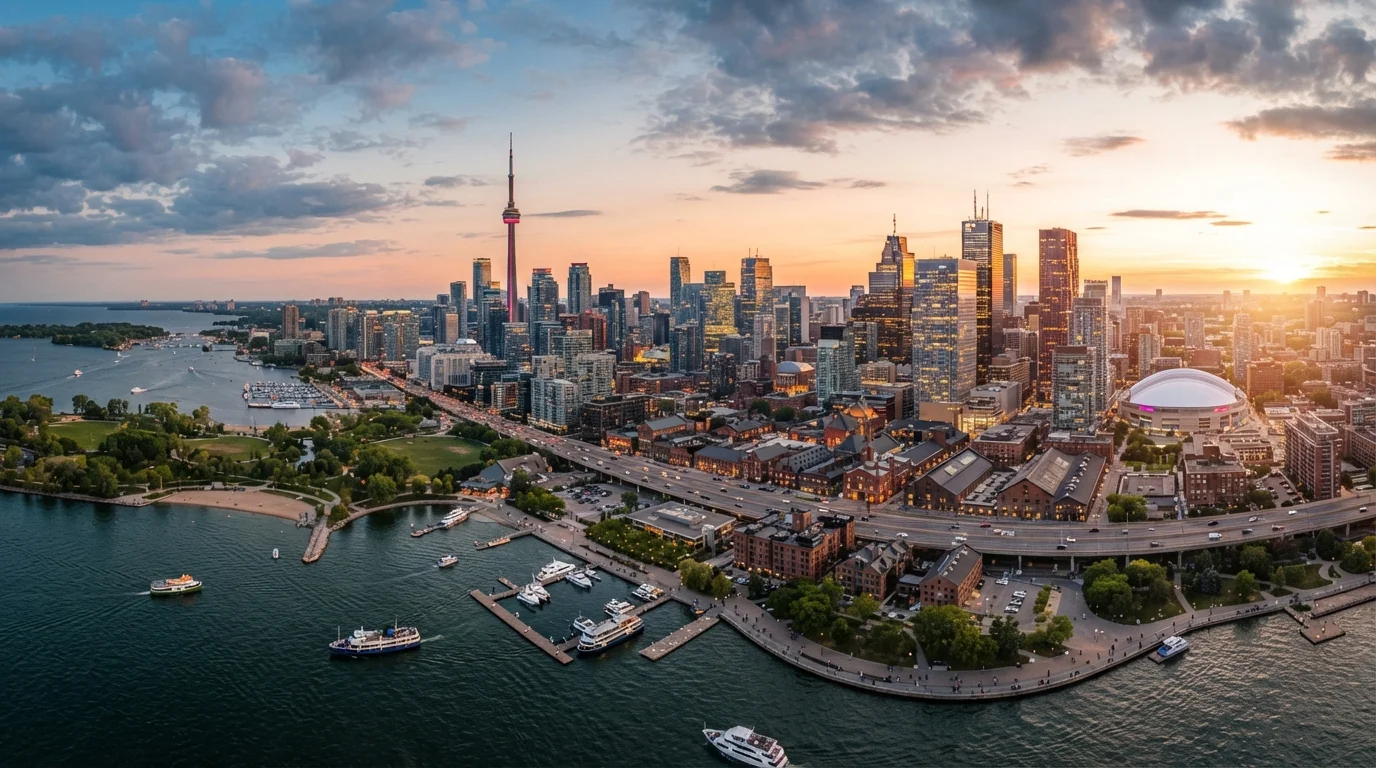
Canada's largest city functions like a greatest-hits collection of urban experiences. The waterfront, Kensington Market, the Distillery District, and the Royal Ontario Museum can each anchor a full day. The city's density of neighborhoods — and genuine multicultural energy — means you're unlikely to run out of things to do on a long weekend. It's also the most connected hub for flights from US cities.
Vancouver
Vancouver's calling card is its setting: mountains to the north, the Pacific to the west, and Stanley Park sitting improbably at the edge of downtown. The city pairs that scenery with a sophisticated dining scene and a relaxed West Coast pace. Day trips to Whistler or the Sea-to-Sky Highway are genuinely spectacular — and easy to pull off. Compared to America's major national parks, the proximity of raw wilderness to a full-service city is unusual and worth appreciating.
Montreal
Montreal operates on a different cultural rhythm. French is the city's first language, and that Francophone identity shapes everything from the signage to the café culture to the joie de vivre on a Saturday evening in the Plateau neighborhood. The food scene — ranging from legendary bagels and smoked meat to haute cuisine — consistently draws serious attention. The city also hosts one of North America's most impressive festival calendars across the warmer months.
Brush Up on Basic French Before Montreal
While most Montrealers working in tourism and hospitality are bilingual, making an effort to greet people in French — even just 'Bonjour!' — goes a long way. Locals genuinely appreciate it, and it sets a warmer tone for every interaction. A handful of basic phrases will serve you well throughout the trip.
Quebec City
Quebec City is the outlier in the group: smaller, slower, and deeply historic. Old Quebec (Vieux-Québec) is a UNESCO World Heritage Site, and its fortified walls and cobblestone streets create an atmosphere unlike any other city on the continent. It's compact enough to explore largely on foot, and the Saint Lawrence River views from the Château Frontenac terrace are reliably dramatic.
Timing Your Visit: Seasonal Considerations
Canada's climate varies dramatically — both by city and by season. Vancouver enjoys the mildest winters of the four but sees considerable rain from November through March. Montreal and Quebec City experience full-blown winters with heavy snowfall, though both cities lean into winter culture (Quebec's Winter Carnival is a notable draw). Toronto falls somewhere in between. Summer — roughly June through August — is peak season across all four cities, with the most events, the longest days, and the warmest temps.
Shoulder seasons (May and September–October) often deliver a satisfying balance of pleasant weather and thinner crowds. For a deeper look at what off-peak timing actually means in practice, our piece on what 'off-season' really means for popular destinations lays out what to realistically expect when you travel outside peak windows.