

Key Takeaways
- Your energy levels, trip length, and travel companions are the most reliable guides to choosing between city and nature.
- City breaks pack more variety into fewer days; nature escapes often require more planning for logistics and gear.
- Both trip types work for solo travelers, couples, and families — the experience differs, not the feasibility.
- Budget structures differ significantly: cities carry higher accommodation and dining costs, while nature trips may require gear investment.
- Many destinations offer hybrid options, combining urban access with nearby natural landscapes.
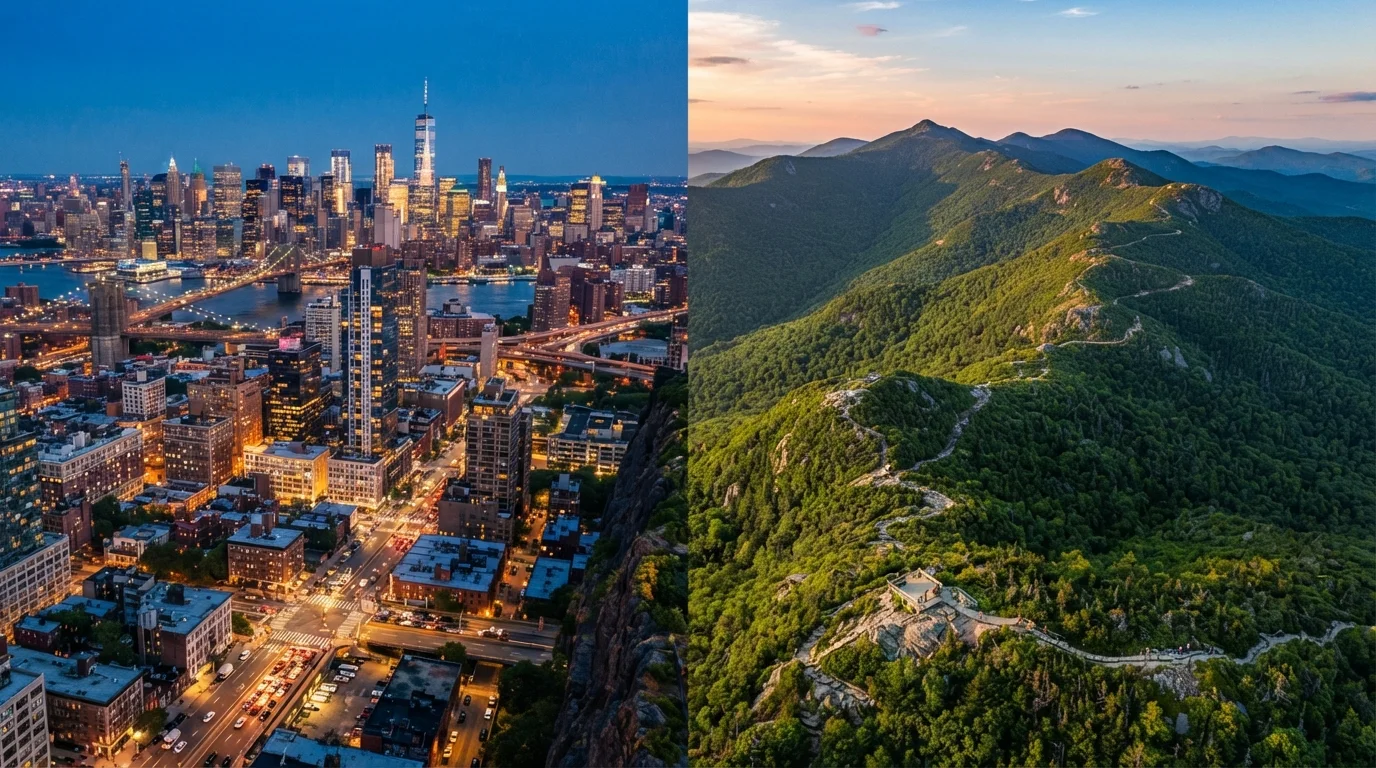
Option A
City Break
The culturally rich, ever-stimulating urban adventure.
Best for: Travelers who want museums, food scenes, neighborhoods, and nightlife packed into a short trip.
Option B
Nature Escape
The restorative, scenery-driven outdoor retreat.
Best for: Travelers craving fresh air, physical activity, and genuine disconnection from daily routines.
If you have only 2–3 days and want maximum stimulation
City Break
Urban destinations compress enormous variety into walkable areas, making short trips feel full and satisfying without logistical overhead.
If you're feeling burned out and need to genuinely recharge
Nature Escape
Natural settings reduce mental fatigue in ways city environments typically cannot — and a slower pace lets recovery actually happen.
If you're traveling with children who need structured activities
City Break
Museums, zoos, markets, and transit systems give families predictable, weather-independent options throughout the day.
If physical activity and scenery are your primary travel motivation
Nature Escape
Hiking, paddling, wildlife watching, and stargazing are simply inaccessible in urban environments — nature trips deliver these at their core.
If you want culture and trails in a single trip
City Break
Cities like Denver, Portland, and Asheville sit adjacent to exceptional natural areas, letting you design a hybrid itinerary with both.
The Core Difference: Stimulation vs. Restoration
Choosing between a city break and a nature escape isn't really about scenery — it's about what you need from a trip. City breaks are fundamentally high-input experiences: new neighborhoods, restaurant decisions, gallery hours, transit maps. That richness is the point. Nature escapes run on a different engine entirely. They strip away input and replace it with physical presence, open space, and quiet.
Research in environmental psychology consistently suggests that natural settings can lower perceived stress and mental fatigue, while urban environments — even enjoyable ones — tend to sustain cognitive load. Neither type of trip is objectively better. But they produce different mental and physical states, and understanding that difference is the first step toward choosing well.
Ask yourself honestly: do you want to come home full of memories and experiences, or do you want to come home rested? That single question eliminates a lot of second-guessing. For a broader framework on making this call early in the planning process, see our guide to the anatomy of a well-planned trip.
| Criterion | City Break | Nature Escape |
|---|---|---|
| Ideal trip length | 2–4 days | 3–7 days |
| Planning lead time | Low to moderate | Moderate to high |
| Weather dependency | Low — indoors available | High — conditions matter |
| Gear requirements | Minimal | Moderate to significant |
| Primary experience | Culture, food, history | Scenery, activity, solitude |
| Accommodation cost | Typically higher | Variable; camping lowers cost |
| Family-friendliness | High — structured options | Moderate — age-dependent |
| Physical demand | Light to moderate walking | Moderate to strenuous |
Planning Demands and Logistics
City breaks are logistically forgiving. Flights and trains run frequently to major urban centers, accommodation options are dense, and food is always a short walk away. If plans change or weather turns, a museum or café absorbs the disruption. That flexibility makes cities especially practical for first-time independent travelers — our travel planning guide for first-timers covers this runway in detail.
Nature escapes demand more upfront work. Trailhead access, campsite reservations (which often open months in advance at popular US parks), gear readiness, and weather windows all require earlier commitment. That's not a deterrent — it's just a different planning posture. If you're drawn to lesser-known US state parks, you'll often find the reservation pressure is far lower than at marquee national parks, with equally rewarding scenery.
72%
Americans who say outdoor recreation improves mood
According to the Outdoor Industry Association's participation research, the overwhelming majority of Americans report mental well-being benefits from outdoor activity.
6 months
Advance booking window for popular US campsites
High-demand sites at popular national parks and recreation areas often open reservations up to six months ahead, according to Recreation.gov booking data.
3x
Higher average nightly hotel cost vs. camping
Urban hotel rates in major US cities can run three or more times the cost of a developed campsite, based on general travel cost comparisons across booking platforms.
Budget structures also diverge sharply. Urban destinations typically carry higher nightly accommodation rates and consistent dining spend. Nature trips can reduce those costs significantly — but gear, park fees, and transport to remote trailheads add up in ways that catch travelers off guard. Building your budget around trip type before booking is always worthwhile.
Destination Examples That Clarify the Choice
Sometimes the clearest way to test your instincts is to imagine yourself in a specific place. For a classic urban weekend, Chicago delivers world-class museums, distinct neighborhoods, and an extraordinary food scene within a very walkable core. Internationally, Lisbon has become a go-to for solo travelers and couples alike — Portugal's appeal goes well beyond cost, with a relaxed pace that suits both city energy and slower exploration.
On the nature side, the American Southwest remains one of the most dramatic and accessible landscapes for US-based travelers. The region's variety is genuinely striking — from Sedona's red rocks to Tucson's saguaro forests, each area delivers a distinct experience. For those who want a hybrid, cities like Vancouver combine a genuinely urban cultural offer with mountains and ocean access — worth considering if you're weighing Canadian cities as travel destinations.
Hybrid Destinations Are Worth Considering
Several US cities sit close enough to wilderness areas that a single trip can include both experiences. Asheville, NC offers walkable arts districts minutes from Blue Ridge trail access. Salt Lake City puts you within an hour of both urban culture and world-class mountain terrain. If you're torn between trip types, a hybrid destination can sidestep the decision entirely — just plan each day's focus in advance so neither half feels rushed.
Once you've identified your trip type, building a realistic day-by-day plan becomes much simpler. Our itinerary-building framework helps you structure either type of trip without overpacking the schedule.