

Key Takeaways
- Each liquid container must be 3.4 oz (100 ml) or smaller — the total bag size matters too.
- One clear, quart-sized zip-top bag per traveler is the TSA standard for carry-on liquids.
- Solid and powder alternatives can replace many liquids and free up valuable bag space.
- Labeling and pre-packing your toiletry kit before every trip dramatically cuts checkpoint delays.
- Prescription medications follow different rules — always verify current guidelines with the TSA.
What you will need
Why the Toiletry Bag Trips Up So Many Travelers
The TSA's 3-1-1 rule has been in place for years, yet toiletries remain one of the most common reasons bags get flagged at security. The confusion usually comes down to three things: misunderstanding what counts as a liquid, assuming a half-empty container is fine, and underestimating how quickly a quart bag fills up.
Getting this right isn't just about avoiding confiscation — it's about moving through the checkpoint efficiently and starting your trip without unnecessary friction. Whether you're a weekend road-tripper or a frequent flyer, a well-built toiletry kit pays off every single time you fly. And if you're working toward a carry-on-only travel style, nailing your toiletry kit is one of the most impactful steps you can take.
What you will need
What You'll Need
Before you start packing, gather the right supplies. Having the correct containers and bag format from the start saves you from having to rebuild your kit at the airport.
Quart-sized clear zip-top bag
Holds all carry-on liquids in the TSA-compliant format required at U.S. security checkpoints.
Travel-sized refillable bottles
Lets you transfer your preferred products into containers that meet the 3.4 oz size limit.
Luggage scale
Helps confirm your checked bag weight if you're moving larger liquid items out of your carry-on.
Waterproof toiletry bag
Organizes your kit inside your main bag and contains any leaks during transit.
How to Build Your Kit Step by Step
Follow these steps in order the first time you build your kit. Once it's set up, maintaining it before each trip takes only a few minutes.
List Every Product You Typically Use
Start by writing down every toiletry item you reach for on a typical morning — shampoo, conditioner, face wash, moisturizer, toothpaste, deodorant, razor, and so on. Don't edit yet; just get everything on paper. This full inventory is your baseline for deciding what travels with you and what stays home.
Identify Which Items Count as Liquids
TSA defines liquids broadly: liquids, gels, aerosols, creams, and pastes all fall under the 3-1-1 rule. This includes toothpaste, shaving cream, hair gel, lotions, liquid foundation, and even peanut butter. Solid deodorant, bar soap, and powder products generally do not count — though powders over 12 oz may require separate screening. When in doubt, check the TSA regulations reference guide for a clear breakdown.
Switch Liquids to Solid or Powder Alternatives Where Possible
Shampoo bars, solid conditioner bars, powdered face wash, and solid sunscreen sticks have all matured as product categories. Switching even two or three items to solid form can open up significant space in your quart bag — or eliminate the need to check a bag entirely. This is one of the core strategies behind the carry-on only mindset that experienced light packers rely on.
Decant Remaining Liquids Into Compliant Containers
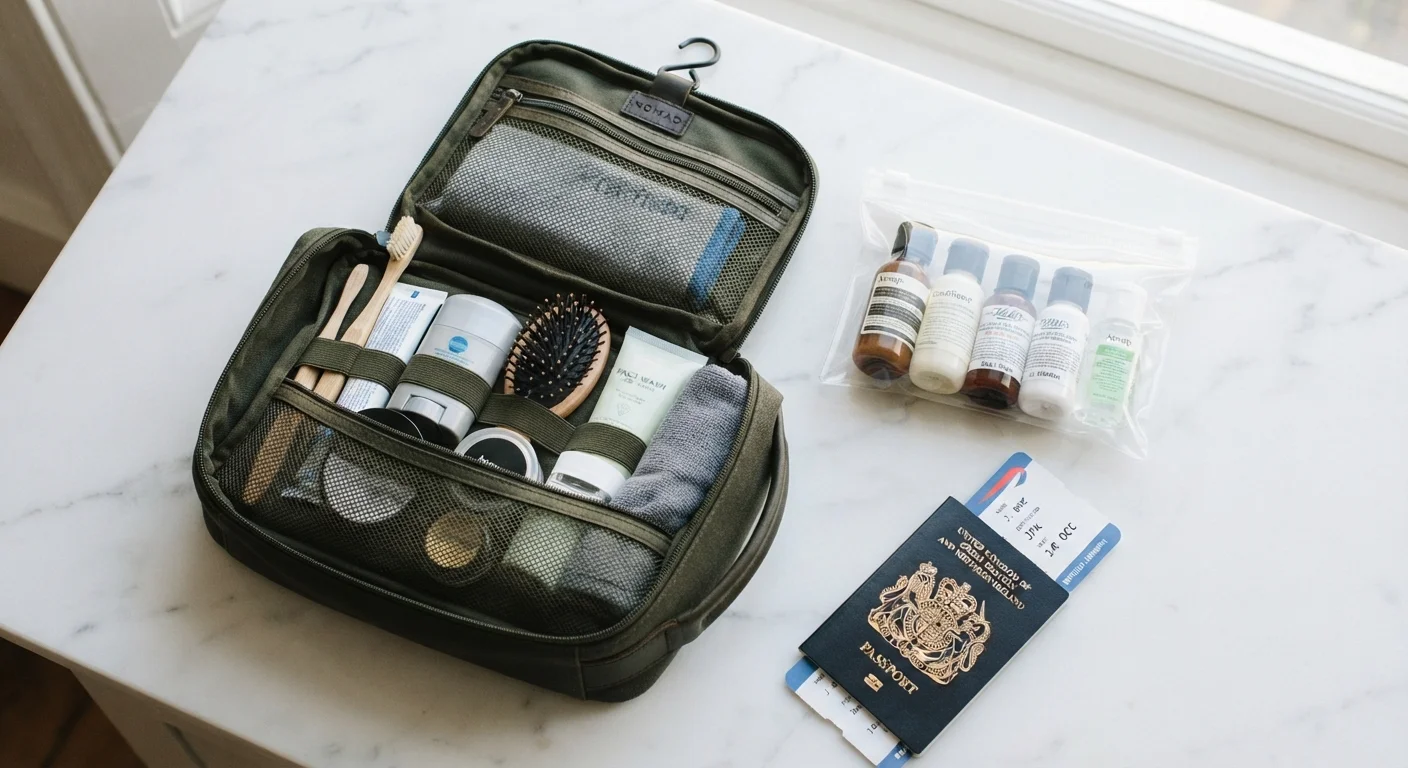
For liquids you can't replace, transfer them into refillable travel bottles clearly labeled at 3.4 oz or less. Lay all your liquid containers out and confirm each one physically fits inside a single quart-sized zip-top bag with the bag able to fully close. If items don't fit, either eliminate products or move them to your checked luggage.
Pack Your Quart Bag for Easy Checkpoint Access
At the checkpoint, you'll need to remove your quart bag from your carry-on and place it in a screening bin. Pack it last — or in an exterior pocket — so it's immediately accessible. A toiletry bag buried under clothes slows down the line and increases the chance of a secondary bag check. For broader packing organization strategies, the packing strategies guide covers how to structure your bag layout from the outside in.
Handle Medications and Special Items Separately
Prescription liquid medications, insulin, and similar medically necessary liquids are exempt from the standard 3.4 oz limit but may require additional screening. Pack them separately from your main toiletry quart bag and be prepared to declare them to a TSA officer. Always verify current TSA guidance on medically necessary liquids directly at tsa.gov before your trip — policies are subject to change.
Build a Dedicated Travel Kit You Never Unpack
Keep a second set of travel-sized essentials permanently packed in your toiletry bag. After each trip, simply restock what you used. This approach eliminates the last-minute scramble before every departure and ensures your kit is always checkpoint-ready.
Common Mistakes and How to Avoid Them
Even well-prepared travelers make a few recurring mistakes with their toiletry kits. Here's what to watch for:
- Forgetting that aerosols count: Dry shampoo, hairspray, and spray sunscreen are all subject to the 3.4 oz rule.
- Packing the quart bag too full to close: The bag must seal completely — overstuffed bags don't meet the standard.
- Assuming hotel toiletries will cover everything: Hotel supplies vary widely. If you rely on a specific product, bring it.
- Neglecting to restock after each trip: Running out of travel-sized toothpaste mid-trip is avoidable with a simple post-trip checklist.
Always Verify Rules Before You Fly
TSA regulations can change, and international checkpoints apply their own standards. The steps in this guide reflect commonly published TSA guidance, but you should confirm current rules at tsa.gov or your airline's website before every trip. Never rely solely on a third-party source — including this article — for compliance decisions at the checkpoint.
For a full reference on what's allowed and what isn't, including carry-on size rules and prohibited items, see the TSA rules and packing regulations overview. And if you want to take your packing system even further, the complete packing and gear guide covers everything from bag selection to item-by-item organization.
Oversized Containers Won't Pass — Even If Half Empty
A common misconception is that a 6 oz bottle of shampoo is fine as long as you've only used half of it. TSA rules apply to container size, not the volume of liquid inside. If the container label reads more than 3.4 oz, it will not clear the checkpoint in your carry-on, regardless of how much liquid remains.