
TSA Liquid Rules, Carry-On Size Limits, and Other Packing Regulations at a Glance

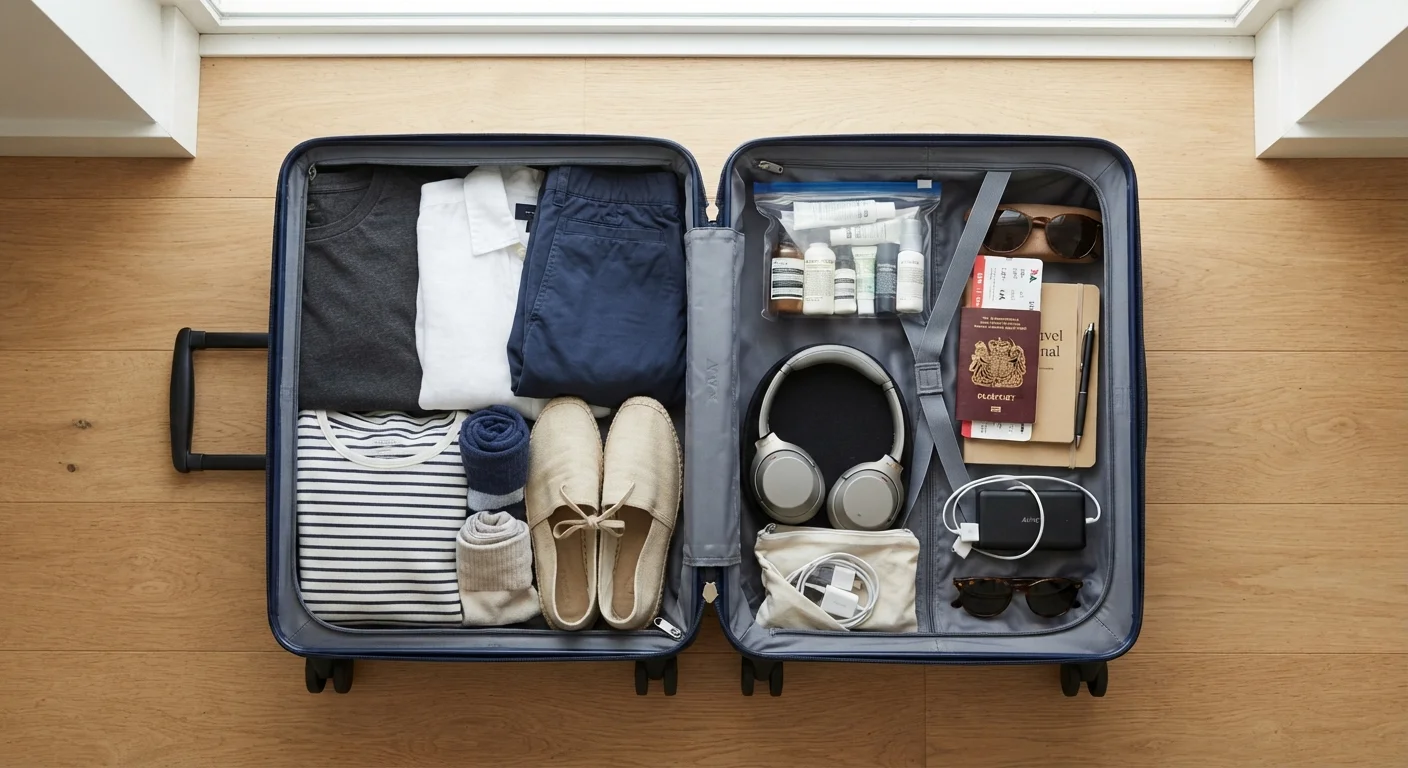
| Max liquid container size (carry-on) | 3.4 oz / 100 ml per container (TSA 3-1-1 rule) |
| Liquids bag size allowed | 1 quart-sized clear zip-top bag per passenger (TSA 3-1-1 rule) |
| Common carry-on size guideline | 22 × 14 × 9 inches (including handles and wheels) (Varies by airline; verify with your carrier) |
| Powder quantity threshold for extra screening | Over 12 oz (350 ml) in carry-on (TSA guidance) |
| Checked bag alcohol limit | Up to 5 liters per passenger (24%–70% ABV) (TSA regulations) |
| Spare lithium batteries | Carry-on only; generally prohibited in checked bags (TSA and FAA guidance) |
The 3-1-1 Liquids Rule, Explained
The TSA's 3-1-1 rule governs how liquids, gels, aerosols, creams, and pastes can travel in your carry-on bag. Understanding it clearly is one of the fastest ways to speed through security without surprises.
| Max liquid container size (carry-on) | 3.4 oz / 100 ml per container (TSA 3-1-1 rule) |
| Liquids bag size allowed | 1 quart-sized clear zip-top bag per passenger (TSA 3-1-1 rule) |
| Common carry-on size guideline | 22 × 14 × 9 inches (including handles and wheels) (Varies by airline; verify with your carrier) |
| Powder quantity threshold for extra screening | Over 12 oz (350 ml) in carry-on (TSA guidance) |
| Checked bag alcohol limit | Up to 5 liters per passenger (24%–70% ABV) (TSA regulations) |
| Spare lithium batteries | Carry-on only; generally prohibited in checked bags (TSA and FAA guidance) |
Here's what each number stands for:
- 3.4 oz (100 ml) or less per individual container
- 1 quart-sized clear, zip-top plastic bag per passenger
- 1 bag placed in the screening bin separately from your carry-on
Items that count as liquids under this rule include shampoo, conditioner, lotion, toothpaste, lip gloss, mascara, liquid foundation, and spray deodorant. Solid versions of many of these products — bar soap, solid deodorant, powdered sunscreen — are generally not subject to the liquid rule, though powder quantities over 12 oz (350 ml) may receive extra screening.
For a deeper look at organizing your toiletries around these rules, see Building a Travel Toiletry Kit That Clears Security Every Time.
Exceptions worth knowing: Medically necessary liquids, prescription medications, baby formula, and breast milk are generally exempt from the 3.4 oz limit, but you may be asked to declare them at the checkpoint. Always verify current TSA guidance at tsa.gov before you fly, as rules can change.
Carry-On Size and Weight Standards
There is no single universal carry-on size limit — airlines set their own policies, and they vary meaningfully. That said, a commonly cited guideline across major U.S. carriers is roughly 22 × 14 × 9 inches (including wheels and handles). Personal items — the smaller bag that fits under the seat — are often expected to measure no more than about 18 × 14 × 8 inches, though again, this varies by airline.
3-1-1 Rule
A TSA guideline requiring that carry-on liquids be in containers of 3.4 oz (100 ml) or less, all fitting within one quart-sized clear zip-top bag, with one bag allowed per traveler.
Carry-On Bag
A piece of luggage small enough to fit in the overhead bin on an aircraft. Size limits vary by airline, but a common guideline for U.S. carriers is approximately 22 × 14 × 9 inches.
Personal Item
A smaller second bag — such as a purse, backpack, or laptop bag — that must fit under the seat in front of you. Most airlines allow one personal item in addition to a carry-on.
Prohibited Item
Any item that the TSA does not allow in carry-on or checked baggage. The official list is maintained on tsa.gov and covers weapons, explosives, and certain hazardous materials.
Restricted Item
An item that is allowed under specific conditions — for example, only in a checked bag, or only up to a certain quantity. Lithium batteries and alcohol are common examples.
Quart-Sized Bag
A clear, zip-top plastic bag approximately 7 × 8 inches in size, used to consolidate carry-on liquids for TSA screening. Only one is permitted per passenger.
Weight limits for carry-ons are less uniformly enforced on domestic U.S. flights, but international carriers and budget airlines tend to apply them strictly — sometimes as low as 15–22 lbs. Always check your specific airline's website before packing, and measure your bag with contents inside.
If you're committed to traveling carry-on only, our guide The Carry-On Only Mindset walks through how experienced travelers cut their packing lists dramatically. And if you're weighing whether a checked bag makes more sense for a given trip, Checked Bag vs. Carry-On covers the real trade-offs.
Common Prohibited and Restricted Items
The TSA maintains a detailed list of prohibited items on its website (tsa.gov/travel/security-screening/whatcanibring/all), but a few categories trip up travelers most frequently:
4,500+
Items on TSA's searchable permitted items list
The TSA's 'What Can I Bring?' tool at tsa.gov covers thousands of specific items to help travelers plan ahead.
~2 million
Passengers screened at U.S. airports daily
According to TSA checkpoint travel numbers, U.S. airports handle roughly 2 million passengers on a typical day.
Carry-On Prohibited Items
- Sharp objects: box cutters, razor blades (not in a cartridge), knives over 2.36 inches
- Firearms and ammunition (must be declared and checked in hard-sided locked luggage)
- Explosive and flammable items: fireworks, lighter fluid, strike-anywhere matches
- Self-defense sprays: pepper spray may be checked but not carried on
Items Allowed with Conditions
- Lighters: one common lighter (e.g., a disposable BIC-style) is generally allowed in your carry-on or on your person; torch lighters are prohibited
- Lithium batteries: carry-on preferred; spare lithium-ion batteries are generally not permitted in checked bags
- Alcohol: in carry-on must follow the 3-1-1 rule; in checked bags, alcohol 24%–70% ABV is allowed up to 5 liters per passenger
Rules Can Change — Always Verify Before You Fly
TSA regulations and airline policies are updated periodically, and what was allowed on your last flight may have changed. Before every trip, check tsa.gov for the latest prohibited and restricted items list, and review your airline's current carry-on size and weight policy on their website. This is especially important for international flights, where additional country-specific rules may apply.
For a broader look at how these rules fit into smarter packing overall, explore Packing Strategies Worth Knowing Before Your Next Trip — from the capsule wardrobe method to what to leave behind. And The Complete Guide to Packing and Travel Gear is a great end-to-end reference for all things luggage and organization.
This article is for general informational purposes only. TSA regulations, airline policies, and security procedures change periodically. Always verify current rules directly with the TSA (tsa.gov) and your airline before traveling.