

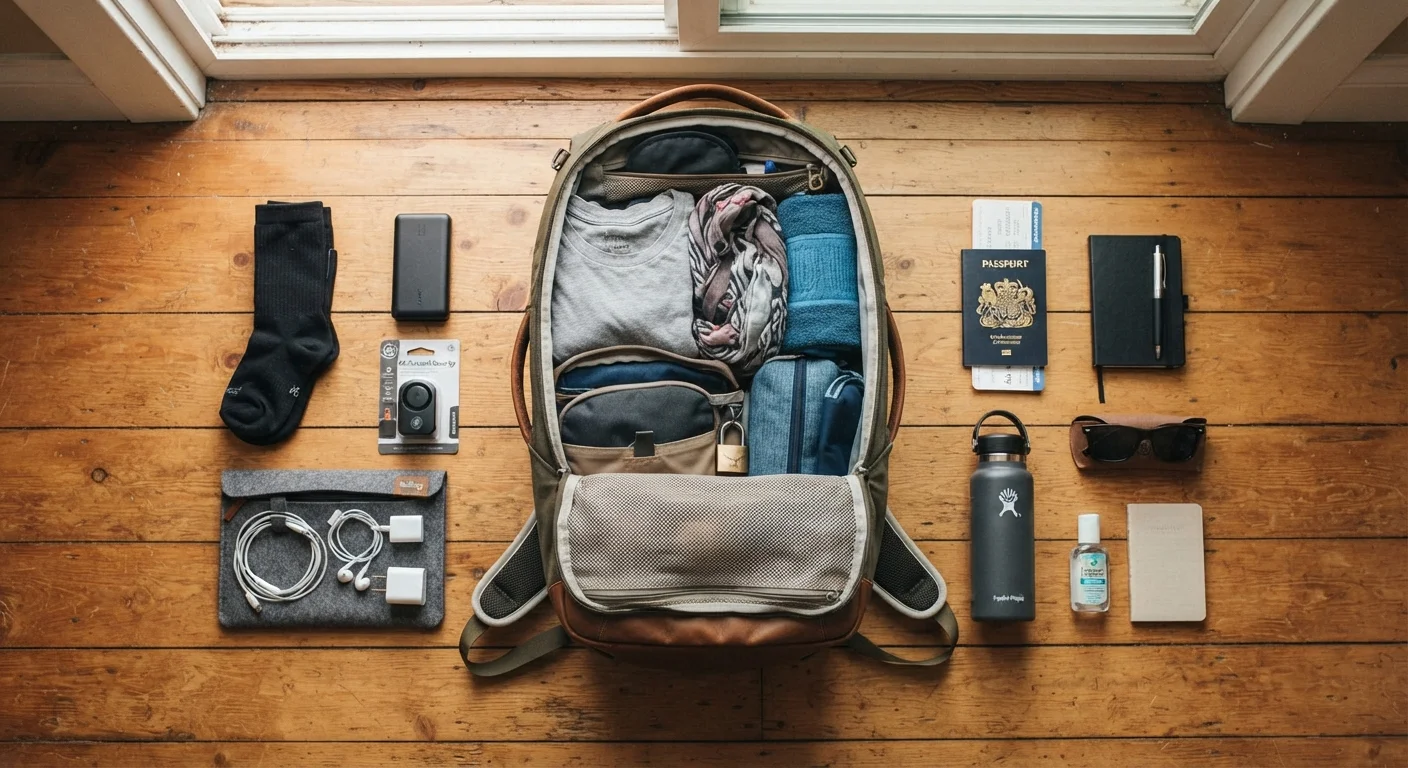
Key Takeaways
- Several lightweight travel items are routinely skipped until a trip makes their absence painfully obvious.
- Items like compression socks, door alarms, and a portable charger address real on-the-road problems without adding significant weight.
- Smart packing isn't just about reducing volume — it's about anticipating gaps before they become inconveniences.
- Many overlooked items cost very little and take up minimal space, making their omission hard to justify on a second trip.
- Reviewing your gear list before every trip — not just major ones — prevents the same regrets from repeating.
The Items Nobody Packs Until They Wish They Had
Every traveler has a version of the same story: a moment mid-trip when they'd have paid almost anything for a simple item sitting untouched at home. It's rarely a forgotten passport or misplaced ticket — those get remembered. The overlooked gear is subtler: the thing that solves a problem you didn't know you'd have.
This list isn't about packing more. It's about packing smarter. If you're already thinking about how your overall kit comes together, the Complete Guide to Packing and Travel Gear covers the full picture. But for now, let's zero in on the specific items that consistently earn their place only after travelers learn the hard way.
Compression socks
Long flights and extended train rides reduce circulation in your lower legs. Compression socks apply gentle graduated pressure that keeps blood moving and reduces swelling — something many travelers only discover matters after their feet arrive puffy and uncomfortable. They're light, packable, and work just as well on an overnight bus as at 35,000 feet. Talk to a healthcare provider if you have circulation concerns or underlying conditions before relying on them for medical reasons, but for general travel comfort, they're widely used and commonly recommended by frequent flyers.
Compression socks are one of the simplest solutions to a problem most travelers don't notice until it's already happening.
A portable door alarm
Hotel room security varies enormously — even at reputable properties. A portable door alarm, typically a small wedge or hook device that emits a loud alert if the door is opened, adds a layer of reassurance for solo travelers and light sleepers especially. It fits in a pocket and costs very little. Many travelers dismiss it as paranoid until they stay somewhere with a flimsy latch or a door that doesn't close firmly. At that point, having one feels less like caution and more like common sense.
A portable door alarm weighs almost nothing and provides peace of mind that no hotel deadbolt can guarantee on its own.
A multi-port USB charging hub
Most travelers pack one cable and assume outlets will be available and compatible. In practice, international accommodations often have one accessible outlet per room, and US plugs frequently don't fit foreign sockets without an adapter. A compact multi-port USB hub solves both problems at once — charge your phone, headphones, and camera simultaneously from a single outlet, often without a separate adapter if it accepts universal voltage. This is especially valuable when traveling carry-on only and every gram of bag space matters.
One multi-port hub replaces three separate chargers and the scramble for outlets you'll otherwise lose to other guests.
Earplugs or a sleep mask (or both)
Hotel curtains are often thin. Urban accommodations can be noisy well past midnight. A red-eye flight with a chatty row behind you is its own special experience. Earplugs and sleep masks are individually small and collectively transformative for sleep quality on the road. Travelers who rely on being able to sleep anywhere tend to carry both as a default. Those who don't often spend a trip running on less rest than they'd like and wish they'd added two items that weigh practically nothing.
Quality sleep during travel isn't a luxury — it shapes how much you actually enjoy every day of a trip.
A small cable and accessory organizer
By the second day of any trip, cables, adapters, earbuds, and memory cards have a way of becoming a tangled mess at the bottom of a bag. A compact organizer — essentially a flat zippered case with elastic loops and pockets — keeps everything visible and accessible. The real payoff comes at airport security, where having all your electronics neatly contained speeds up the bin-and-basket process considerably. If you're building out your security-friendly kit, treating your tech the same way you treat your liquids bag is a straightforward upgrade.
An organizer doesn't just reduce chaos — it consistently saves time at security checkpoints and during hotel room searches.
A reusable silicone travel bottle set
TSA's 3-1-1 liquid rule catches travelers off guard regularly — including experienced ones. Decanting your preferred products into a set of reusable silicone bottles lets you carry exactly what you need without overpacking full-size containers or buying duplicates at your destination. The bottles are squeezable, leak-resistant when sealed correctly, and compatible with most viscosities from shampoo to sunscreen. Pair them with a clear quart-sized bag and the entire liquid situation becomes routine rather than stressful. For a fuller look at making this system work consistently, building a TSA-compliant toiletry kit is worth a read before your next departure.
Reusable silicone bottles let you carry exactly the right amount of every product — no more, no less.
Microfiber towel
Many accommodation types — hostels, vacation rentals, budget guesthouses, and some international hotels — either charge for towels, provide thin ones, or omit them entirely. A microfiber travel towel dries in a fraction of the time of a standard towel, compresses into a small pouch, and handles everything from post-beach rinses to sweaty day hikes. Travelers who've been handed a single hand-sized towel at a guesthouse abroad tend to add this to their permanent list immediately. Those on carry-on-only itineraries find it especially practical.
A microfiber towel is one of those items that feels unnecessary right up until the moment you desperately need one.
Making These Items a Default, Not an Afterthought
The common thread across every item above isn't cost or size — it's timing. Travelers tend to think about gear in terms of what they need to do on a trip rather than what might go sideways. A quick habit shift fixes this: after you finalize your clothing and toiletries, run through a short comfort-and-contingency checklist. That's when these items reveal themselves as necessary rather than optional.
Create a standing 'contingency' packing list
Keep a separate notes document or list specifically for comfort and contingency items — not clothing or toiletries. Review it once before every trip as a final pass. This way, decisions about compression socks or a door alarm happen in advance at home, not reactively at an airport shop. A few minutes of planning consistently prevents the kind of mid-trip regrets that inspired this article. For broader packing strategy, packing strategies worth knowing is a strong companion read.
If you're evaluating your whole packing system, it's also worth reading about overpacker traps — because adding smarter items only pays off if you're not already carrying things you don't need. Traveling well means leaving home with the right things, not just fewer things.