

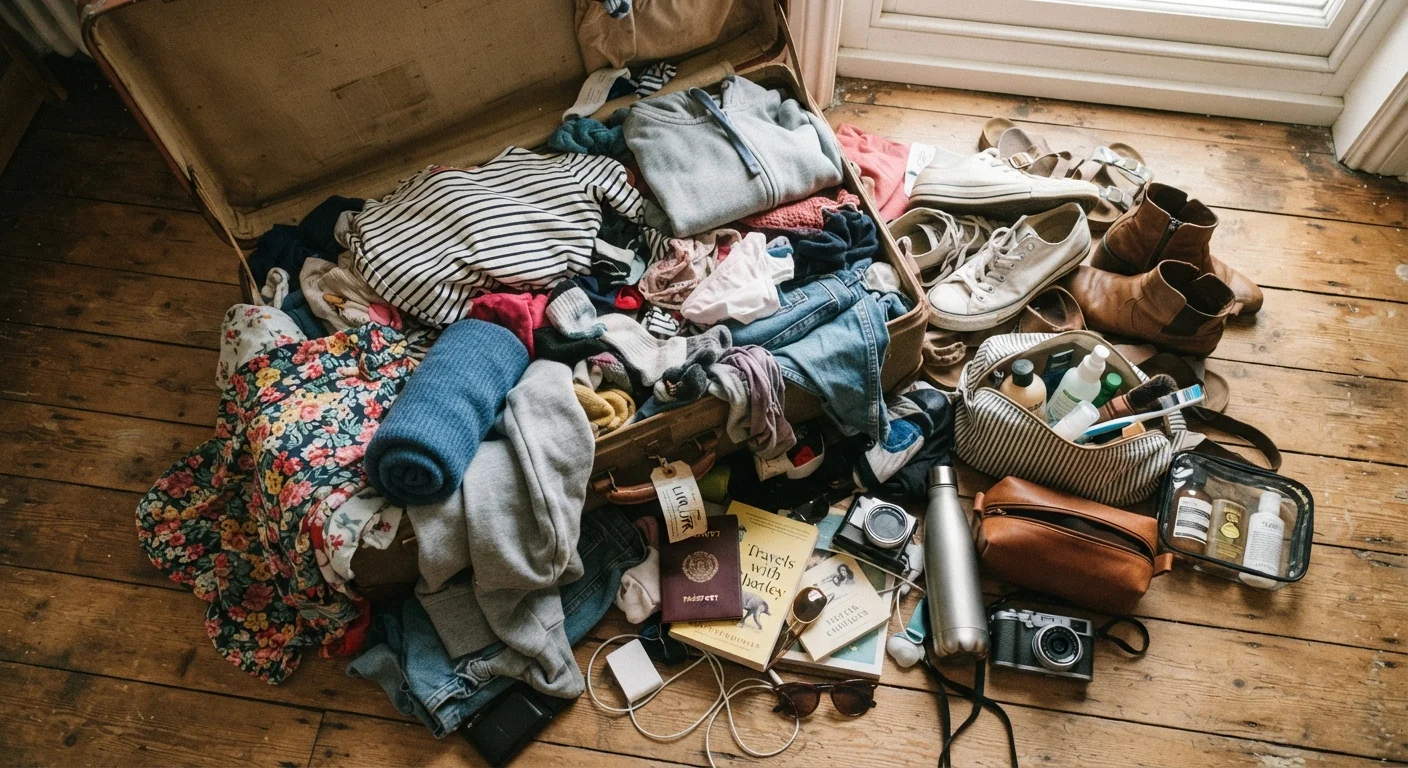
Key Takeaways
- Overpacking is almost always habit-driven, not necessity-driven — specific triggers cause it.
- Packing for worst-case scenarios rather than likely scenarios is the leading cause of bag bloat.
- A visual packing list reviewed the night before departure can eliminate most last-minute additions.
- Buying items at your destination is often easier and lighter than carrying them from home.
- Outfit planning before packing — not during — is the most reliable way to reduce clothing volume.
Why Overpacking Feels Rational in the Moment
Nobody opens their suitcase and thinks, I'm going to pack twice what I need today. Overpacking happens through a sequence of small, individually defensible decisions: a backup outfit for a dinner that might get dressy, an extra pair of shoes just in case, a full-size toiletry because the travel size ran out. Each item feels reasonable. The combined weight does not.
The traps below aren't character flaws — they're predictable patterns that show up across experienced and first-time travelers alike. Recognizing them is what gives you leverage to change them. For a broader look at how these habits connect to smarter packing frameworks, see our complete guide to packing and travel gear.
Packing for every possible scenario instead of the most likely ones.
Why it happens: Travelers default to worst-case thinking — what if it rains every day, what if one outfit gets ruined, what if the hotel doesn't have a hair dryer. This mindset multiplies items without a realistic trigger.
Waiting until the last hour to pack.
Why it happens: Time pressure activates anxiety, and anxiety leads to throwing items in 'just in case.' There's no mental bandwidth left for deliberate editing when the cab is arriving in 45 minutes.
Treating the remaining bag space as space that must be filled.
Why it happens: Empty space in a bag triggers a psychological urge to fill it — extra snacks, a second book, 'just in case' items that weren't on any list. The bag's capacity sets an unofficial ceiling travelers feel compelled to reach.
Packing full-size versions of items available in travel sizes or at the destination.
Why it happens: Grabbing the familiar, already-open bottle from the bathroom shelf is faster than decanting or sourcing travel sizes. It feels efficient in the moment.
Packing shoes as the last step, after clothes are already decided.
Why it happens: Shoes are bulky and heavy, but travelers tend to pick outfits first and then find shoes to match — rather than choosing versatile shoes first and building outfits around them.
Building Better Habits Before You Zip Up
Breaking the overpacking cycle isn't about willpower — it's about changing the conditions under which you pack. A few structural shifts make a significant difference.
~50%
Packed items reportedly left unused
Travel surveys consistently find that roughly half of what travelers pack never gets worn or used during a trip.
2–3 days
Outfits most travelers actually cycle through
Travel behavior research suggests most people rotate just two or three core outfits regardless of how many they bring.
Plan outfits before touching your bag. Lay out complete looks — top, bottom, shoes, layer — for each day or occasion. Then look for repeats. Shoes and outer layers that work across multiple outfits are the fastest path to a lighter bag. If an item only works with one outfit, it's a candidate to cut.
Write a list and stick to it. Packing from memory invites last-minute additions. A written list reviewed the night before departure acts as a firewall against impulse grabs. Cross items off only once they're physically in the bag.
Reframe what's available at the destination. Most US cities and international destinations have pharmacies, grocery stores, and laundromats. Shampoo, sunscreen, a forgotten phone charger — these are problems that can be solved for a few dollars in-destination, not emergencies that justify an extra 10 lbs of luggage.
Travelers who've made this mental shift often discover that bringing less makes a trip more flexible, not less. Our piece on the carry-on only mindset explores how seasoned travelers think about this trade-off. And if you're prepping for a longer trip and wondering where to start, packing light for a two-week trip offers a grounded starting point. For the strategies behind all of this, packing strategies worth knowing covers capsule wardrobes, rolling vs. folding, and more.
Don't Overlook What You Actually Might Miss
Packing lighter doesn't mean ignoring genuinely useful gear. Some items only earn their reputation after travelers wish they'd had them. Our piece on gear travelers consistently overlook covers the small, high-value items worth the space — so you're cutting the right things, not the wrong ones.