

Key Takeaways
- Rolling clothes generally reduces wrinkles and saves space compared to flat folding.
- A capsule wardrobe built around neutral colors maximizes outfit combinations with fewer items.
- Packing cubes add structure but work best when sized to match your specific bag.
- Heaviest items packed closest to your back improve comfort and bag stability.
- A written or digital packing list prevents forgotten essentials and curbs overpacking.
- Choosing carry-on versus checked luggage early shapes every other packing decision you make.
Why Your Packing Strategy Actually Matters
Most packing headaches — overstuffed bags, missing items, wrinkled clothes — trace back to the same root problem: no clear system. A deliberate packing strategy doesn't just keep your suitcase tidy; it determines how smoothly your trip starts and how easy it is to move through airports, hotels, and new cities.
The good news is that packing well is a learnable skill, not a talent. The strategies below cover both classic methods and practical frameworks that hold up across trip types, from a weekend drive to a two-week international adventure. For a broader look at the whole packing picture, the Complete Guide to Packing and Travel Gear is a strong starting point.
Roll, Don't Just Fold
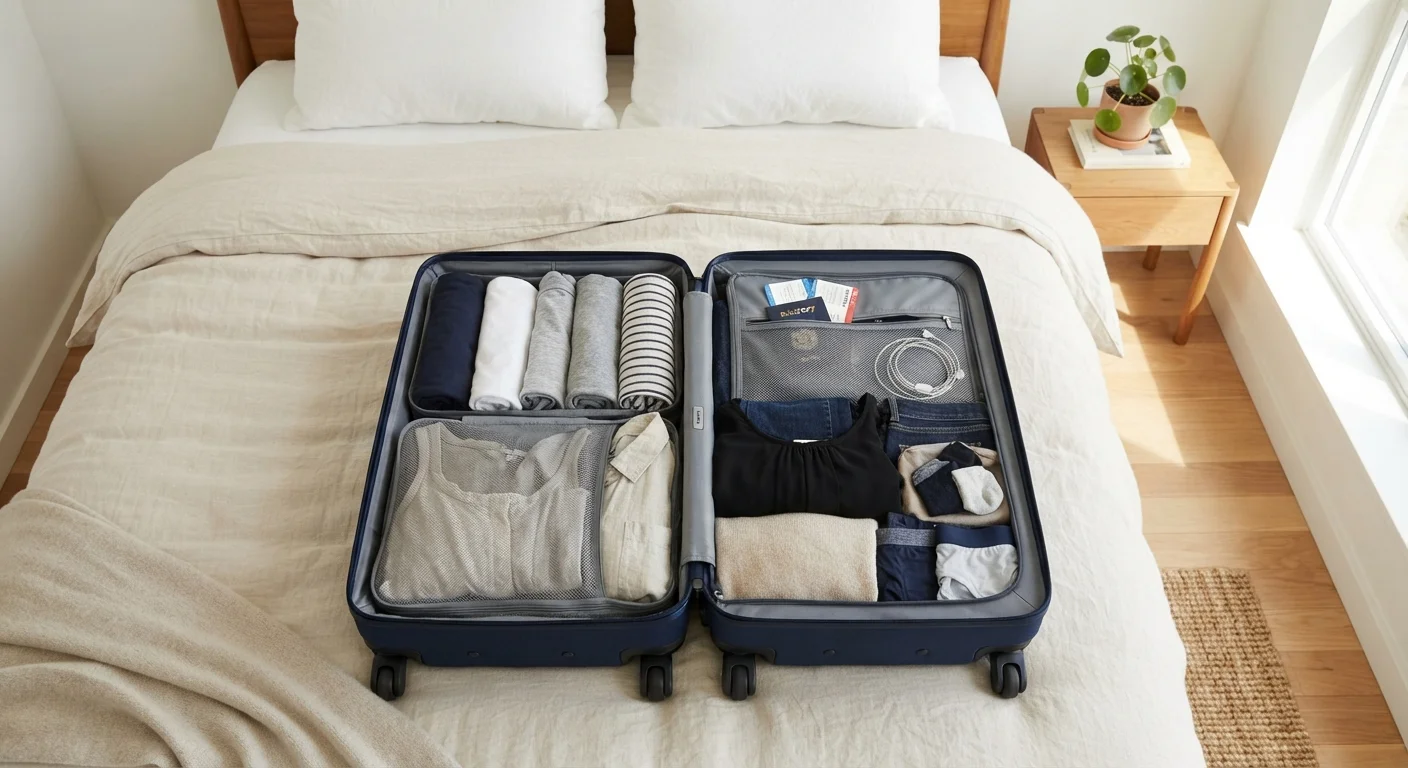
Rolling clothes into tight cylinders rather than flat-folding them is one of the most widely used packing methods — and for good reason. Rolls compress soft items like T-shirts, jeans, and casual pants into compact shapes that fill irregular bag spaces more efficiently than stacked squares. Rolling also tends to reduce creasing in casual fabrics, though structured blazers and dress shirts still benefit from folding flat or using a garment folder.
A practical approach: roll casual, wrinkle-resistant items and fold structured pieces. Lay the rolls side by side vertically (so you can see each item at a glance) rather than stacking them horizontally where everything tumbles when you pull one thing out.
Rolling casual clothes into cylinders fills bag gaps and reduces wrinkles compared to flat stacking.
Build a Capsule Wardrobe Before You Pack
A capsule wardrobe approach means selecting a tight cluster of clothes that all work together — typically anchored in two or three neutral colors with one or two accent pieces. The goal is maximum outfit combinations from minimum items. A navy shirt, gray pants, and a versatile outer layer can generate more combinations than a bag packed with uncoordinated individual outfits.
Before putting anything in your bag, lay every clothing item on the bed and test whether each piece pairs with at least two others. If an item only works as part of one specific outfit, it's a candidate to leave behind. This method pairs especially well with packing for wildly different climates, where layering flexibility matters most.
Every clothing item in your bag should pair with at least two other pieces you're bringing.
Use Packing Cubes Strategically
Packing cubes are fabric organizers that divide your bag into labeled zones — tops in one cube, bottoms in another, underwear and socks in a third. They don't magically create more space, but they do make your bag dramatically easier to navigate, especially on multi-stop trips where you're repacking frequently.
The key to making them work: size matters. Cubes that are too large for your bag create wasted gaps; cubes that are too small for your items leave them stuffed and wrinkled. Measure your bag's interior before choosing cube dimensions. For a deeper look at when cubes genuinely earn their place, see Packing Cubes Explained.
Packing cubes work best when sized to match your bag — too large or too small undermines the whole system.
Weight Distribution Shapes How Your Bag Feels
Where you place heavy items inside your bag affects both comfort and bag stability. For backpacks, heaviest items — shoes, toiletry bags, electronics — should sit closest to your back and centered vertically. This keeps the center of gravity stable and reduces shoulder strain on long travel days. For wheeled luggage, heavy items work best at the bottom (the wheel end) so the bag rolls without tipping.
Lighter, compressible items like clothing can fill the remaining space around heavier anchors. Fragile items and things you'll need quickly — like a travel document pouch or a light jacket — belong at the top or in an exterior pocket.
Placing heavy items closest to your back keeps your bag balanced and reduces physical strain during travel.
Start With a Written Packing List
A packing list sounds basic, but it is consistently one of the highest-impact habits among frequent travelers. A written or digital list removes the cognitive load of trying to remember everything at once — especially useful when you're packing the night before a 6 a.m. flight. It also catches forgotten essentials that are obvious in retrospect but easy to overlook under pressure.
Build category-based lists (clothing, toiletries, documents, tech, medications) and refine them after each trip by noting what you used and what came home untouched. For a ready-made starting point, the Weekend Trip Packing Checklist covers the essentials for two- to three-night trips. Items you consistently skip for three trips in a row probably don't belong on your list.
Refine your packing list after every trip — items unused on three consecutive trips rarely need to come along.
Decide on Bag Type Before Anything Else
Every other packing decision flows from one foundational choice: what kind of bag are you bringing? A carry-on forces disciplined editing and eliminates checked-bag fees and wait times. A checked bag gives you volume and flexibility — useful for longer trips, formal events, or when you need to pack specialty gear. A personal item or daypack can handle short overnight trips if you pack intentionally.
Settle this question first, because your bag choice sets the literal boundaries for everything else. If you're leaning toward traveling lighter, Packing Light for a Two-Week Trip walks through how to make a smaller bag work even on longer itineraries.
Choosing your bag type first sets the non-negotiable limits around every other packing decision.
Put It All Together Before You Leave
No single method works perfectly for every traveler or every trip — the key is knowing your options and matching the right approach to your situation. A beach weekend calls for different logic than a multi-climate business trip. Once you've chosen your strategies, test your packed bag before the day you leave: lift it, walk with it, and make sure you can access what you need quickly.
If you're still working out whether a carry-on can handle your needs, weigh the real trade-offs between checked bags and carry-ons before committing. And if you want to explore the minimalist end of the spectrum, the carry-on only mindset is worth a read — it might change how you think about what you actually need to bring.
Pack Your Toiletry Kit Last
Toiletries are often the most awkward items to fit and the easiest to forget. Pack them last so they're accessible without disrupting everything else, and keep them in a dedicated pouch you can pull out quickly at security. If you're flying, make sure liquids comply with TSA guidelines — the travel toiletry kit guide covers exactly what the rules require.