

Key Takeaways
- Match highway traffic speed before the merge point, not after entering the lane.
- Use your full on-ramp length - stopping or braking at the end creates serious rear-end crash risk.
- Signal early and check your blind spot twice before committing to the lane change.
- Highway drivers are not legally required to yield, but cooperative merging reduces everyone's risk.
- Poor merging is a leading trigger for road rage and tailgating incidents on busy interstates.
What you will need
Why Merging Failures Cause So Many Crashes
Highway merging is one of the most demanding maneuvers in everyday driving - yet most drivers receive little formal instruction on how to do it well after they pass their licensing test. The result is a mix of habits: some drivers stop at the ramp's end, others merge at 40 mph into 70-mph traffic, and others dart across without signaling. Each of these behaviors disrupts the flow of traffic and elevates crash risk for everyone nearby.
The underlying problem is a speed and timing mismatch. Highways function efficiently when vehicles travel at similar speeds with consistent spacing. A slow-merging vehicle forces the nearest highway driver to brake suddenly, and that braking ripples backward through traffic - a phenomenon traffic engineers call a shockwave. These shockwaves are responsible for the phantom traffic jams that seem to appear for no reason. Poor merging is also a well-documented trigger for aggressive driving responses. Tailgating often escalates from merge-related frustration, turning a routine commute into a higher-risk situation for multiple drivers.
Understanding right-of-way rules on highway merges is also important: in most US states, the merging driver - not the highway driver - bears the legal responsibility to yield and merge safely. Highway drivers may choose to accommodate a merge out of courtesy, but they are not required to.
Never Stop at the End of an On-Ramp
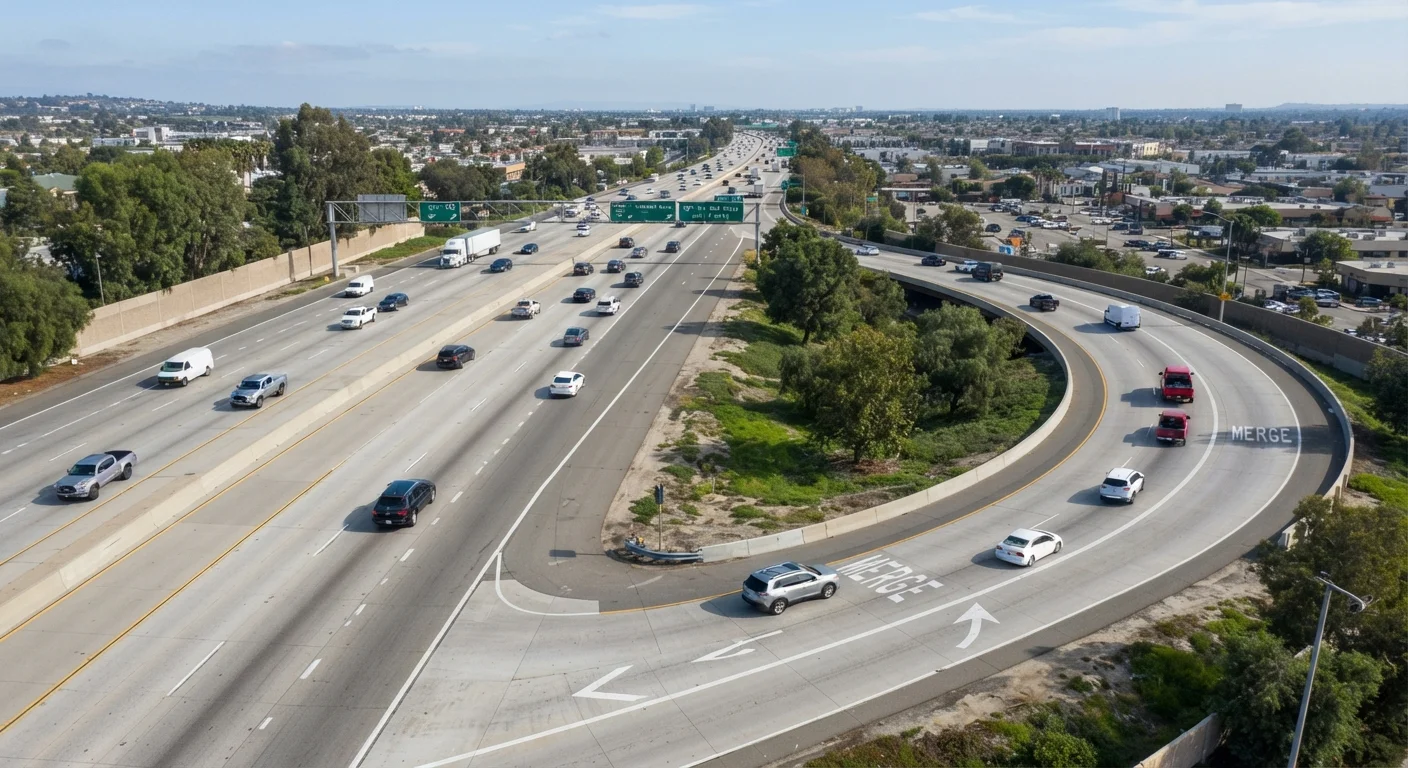
Coming to a full stop at the merge point - unless traffic is completely gridlocked - is one of the most dangerous things a driver can do on a highway entrance. A stopped vehicle at highway speed differentials dramatically increases rear-end crash risk. Use the entire length of the ramp to build speed and find a gap, even if that means reaching the gore point (the painted triangle where the ramp ends) before you merge.
Before You Hit the Ramp: Equipment and Mindset
A clean merge starts before the on-ramp. Your mirrors should be properly positioned to minimize blind spots - side mirrors angled so you can just barely see the edge of your own vehicle, and the rearview mirror centered on the rear window. If you haven't checked your mirror alignment recently, doing so takes under a minute and meaningfully improves your situational awareness.
Beyond equipment, the right mindset matters. Even experienced drivers can fall into overconfident habits - assuming they know the traffic pattern on a familiar ramp, or misjudging closing speeds because they've merged there hundreds of times before. Treat each merge as a fresh read of current conditions.
What you will need
Properly Adjusted Side and Rearview Mirrors
Reduces blind spot size and gives the widest possible view of adjacent lanes before merging.
Functioning Turn Signals
Communicates your merging intention to highway drivers so they can adjust their spacing.
Speedometer Awareness
Confirms you are matching highway traffic speed before entering the travel lane.
Step-by-Step: Executing the Merge
Follow these steps each time you approach a highway entrance ramp. The sequence is consistent whether you're merging in light traffic or a busy rush-hour corridor.
Read the on-ramp and traffic ahead early
As soon as you enter the on-ramp, begin scanning the highway lanes to your left. Look for gaps in traffic, the speed of vehicles, and any congestion that might limit your options. The earlier you gather this information, the more time you have to adjust your own speed and positioning on the ramp.
Accelerate steadily to match highway speed
Use the on-ramp's length to accelerate smoothly toward the speed of traffic already on the highway. On most US interstates, that means reaching 55-70 mph before the merge point. Arriving too slowly forces highway drivers to brake suddenly, which can trigger rear-end collisions behind them. Arrive too fast and you reduce your own reaction time to find a safe gap.
Signal your intent before you need the gap
Activate your left turn signal while you are still on the ramp - not at the last second. This gives drivers in the right lane several seconds of advance notice. Some drivers will adjust their spacing to create room; others will hold their position. Either way, your signal removes ambiguity about your intentions.
Identify a gap and position yourself alongside it
A safe gap for merging at highway speeds is generally a minimum of three to four seconds of following distance - the space it takes you to count 'one-one-thousand, two-one-thousand, three-one-thousand' while a fixed point passes both the front car and your position. Adjust your ramp speed slightly - accelerate or briefly ease off the gas - to align your vehicle with that gap before you move over.
Check mirrors, then physically check your blind spot
Before committing to the lane change, check your left mirror, then your rearview mirror, then physically turn your head briefly to scan your blind spot. Do this even if the gap looked clear ten seconds ago - highway speeds mean vehicles close distance fast. This two-check habit takes less than two seconds and can prevent a serious sideswipe collision.
Merge smoothly and cancel your signal
Move into the lane with a steady, confident steering input - not a sharp jerk. Once you are fully in the travel lane, cancel your turn signal and match the pace of surrounding traffic. Avoid braking immediately after merging; maintain your speed to prevent the driver behind you from having to react suddenly. If the on-ramp ends and no gap has appeared, slow gradually and look for an opening - but treat a full stop as a last resort only.
Use the Zipper Merge When Traffic Is Heavy
In stop-and-go or lane-ending situations, the zipper merge - where drivers alternate one-by-one from two lanes into one - has been shown by traffic engineers to reduce overall congestion compared to early merging. Stay in your lane until the merge point, then take turns with adjacent drivers. It feels counterintuitive but keeps traffic moving more efficiently.
Blind Spot Checks Are Not Optional
Mirrors alone do not show the full picture of your blind spot - the area roughly beside and slightly behind your rear door. Always turn your head briefly to confirm the lane is clear before moving over. Vehicles traveling 65-70 mph can close distance quickly, and a mirror glance alone can miss them.
Special Situations: Rain, Heavy Traffic, and Short Ramps
Standard merging technique needs adjustment in certain conditions. On wet roads, your vehicle's grip is reduced and stopping distances increase - factors that make arriving at the merge point with a wider gap even more important. Wet pavement changes how quickly you can accelerate and stop, so build in more buffer time on rainy days.
Short on-ramps - common in older urban interchanges - don't allow for a full speed build. In these cases, signal immediately upon entering the ramp, identify your gap as early as possible, and recognize that you may need to merge slightly below highway speed. Once in the lane, accelerate promptly to match the flow rather than lingering at a lower speed.
In heavy stop-and-go conditions where a lane is ending, the zipper merge is both courteous and efficient. Rather than abandoning your lane early to 'get in line,' stay in the ending lane and alternate with adjacent drivers at the merge point. This approach distributes the load evenly and reduces the length of traffic backups. Keeping cruise control disengaged in heavy traffic gives you the manual throttle control needed to time these merge moments precisely.